



Story by Bruce Chahwanda, Political Editor
THE Government has gazetted the draft Constitutional Amendment (No. 3) Bill, paving the way for it to be tabled before Parliament following Cabinet approval last week.
Publication of the Bill in the Government Gazette this Monday formally initiates the legislative process in terms of parliamentary procedures.
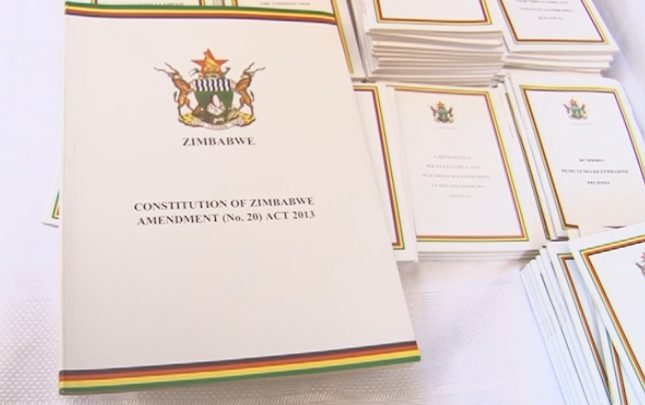
Gazetting the Bill, Speaker of Parliament Jacob Mudenda said the proposed law modernises and streamlines aspects of Zimbabwe’s Constitutional architecture while upholding the core values of the 2013 Constitution.
“THE following Bill is published with this Gazette in terms of Standing Order No. 142(2) of the National Assembly, Constitution of Zimbabwe Amendment Bill (No. 3) (H.B. 1, 2026),” Honourable Mudenda said.
He said the Bill introduces reforms aimed at reinforcing constitutional governance, strengthening democratic structures, clarifying institutional mandates and harmonising Zimbabwe’s constitutional framework with practices in other progressive jurisdictions.
The proposed amendments are described as part of a broader constitutional evolution focused on refining governance frameworks, improving institutional efficiency, enhancing political inclusivity and promoting long-term national stability. The reforms are also said to align Zimbabwe with contemporary African constitutional standards regarded as effective and resilient.
“This Bill introduces a set of constructive reforms that, taken together, reinforce constitutional governance, strengthen democratic structures, clarify institutional mandates, and harmonise Zimbabwe’s constitutional order with tested and successful practices in other progressive jurisdictions. The Bill modernises and streamlines various aspects of the constitutional architecture while upholding the values of the 2013
Constitution. The amendments form part of a broader constitutional evolution, one that is grounded in the deliberate refinement of governance frameworks and an increased focus on institutional efficiency, political inclusivity, and long-term national stability. It must be reiterated that many of the reforms incorporated into this Bill align Zimbabwe with contemporary African constitutional standards that have proven to be effective, resilient, and widely respected,” he said.
Among the key proposals is the introduction of a parliamentary method for selecting the President. Under the amendment, a candidate would be required to secure a majority of votes in Parliament. Where no candidate achieves an absolute majority, a run-off would be conducted. The process would be overseen by the Zimbabwe Electoral Commission to ensure compliance with constitutional and legal provisions.
“This amendment establishes a parliamentary method for selecting the President. It specifies that a candidate must secure a majority of votes, and if no one achieves an absolute majority, a run-off election will be held. The process is overseen by the Zimbabwe Electoral Commission to ensure it is conducted properly. These measures strengthen constitutional accountability by promoting fairness, openness and judicial oversight in the election. The procedure for the election shall be in accordance with Standing Rules and Orders of Parliament.”
The Bill states that these measures are intended to strengthen constitutional accountability by promoting fairness, transparency and judicial oversight in the presidential selection process.
The draft legislation is expected to be debated in Parliament in the coming weeks.

