



Story by Patience Nyagato
ZIMBABWE has joined the international community in congratulating the Islamic Republic of Iran on the 47th anniversary of the victory of the Islamic Revolution, marking a historic milestone in the nation’s pursuit of independence, unity and national dignity.
The anniversary commemorates the 1979 Islamic Revolution, which saw Iran transition from a monarchy to an Islamic Republic, a turning point that reshaped the country’s political and social trajectory.
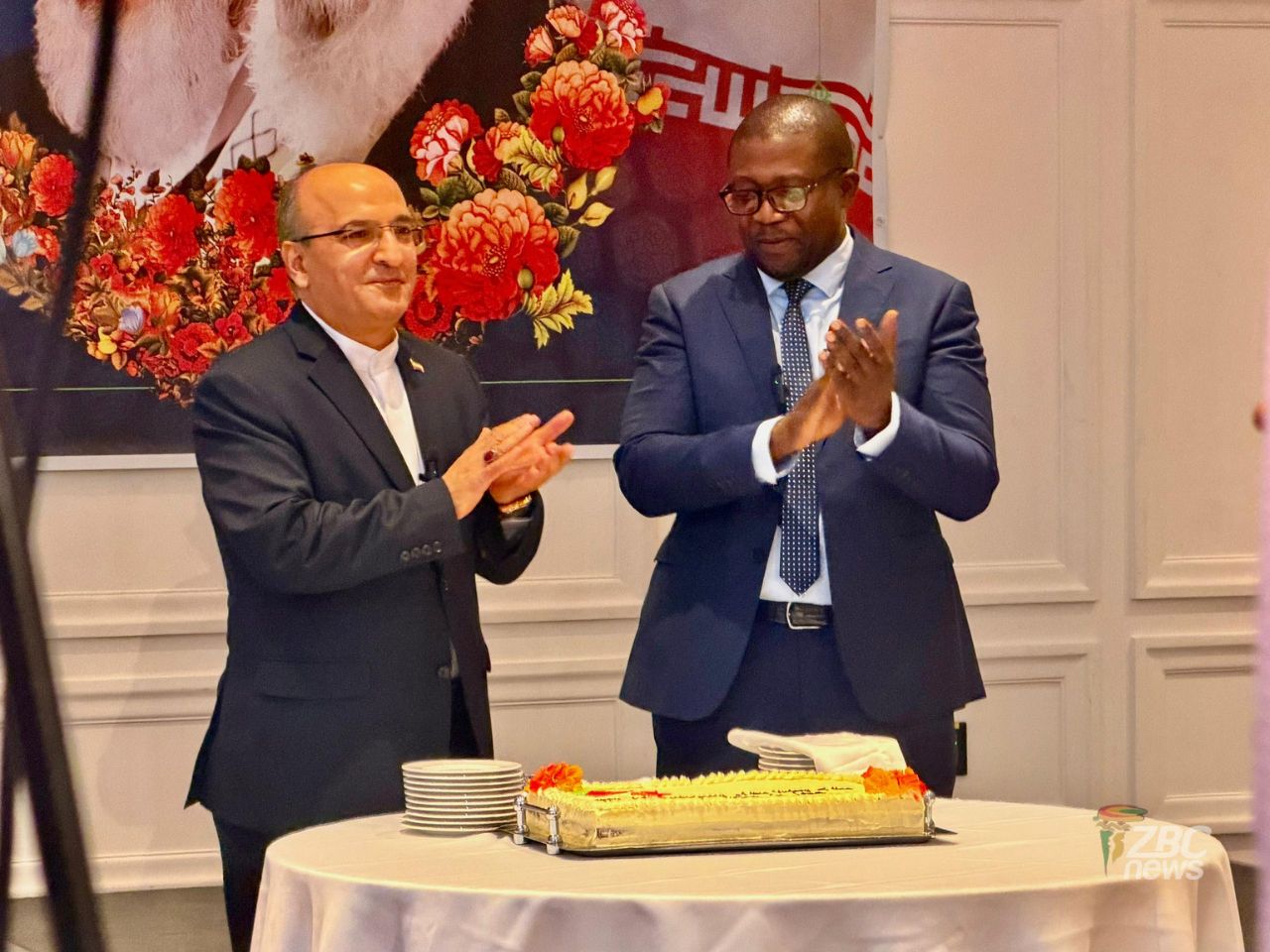
Government officials, members of the diplomatic corps and the Islamic community gathered in Harare to celebrate the occasion, highlighting the strengthening relations between Zimbabwe and Iran.
Iranian Ambassador to Zimbabwe, His Excellency Dr Amir Hossein Hosseini, described the 1979 revolution as a defining moment rooted in faith, identity and the quest for sovereignty.
“The Islamic Revolution of Iran in 1979 was the manifestation of a nation’s will, rooted in faith, historical identity, and the aspiration for independence, which triumphed over a dependent dictatorship that subordinated national interests to foreign powers,” Ambassador Amir said.
He added that the revolution marked the establishment of national sovereignty and popular governance, noting that the Islamic Republic has since pursued a path grounded in independence, justice and resistance to domination despite sustained external pressures.
The commemorations also provided a platform to reflect on the shared experiences of Zimbabwe and Iran, particularly in navigating the effects of sanctions, while exploring expanded cooperation in trade, investment and technical sectors.
Ambassador Amir said the scope of bilateral cooperation spans political, economic and investment fields, as well as oil and petrochemicals, healthcare, pharmaceuticals, agriculture, mining, technology, tourism and infrastructure development.
He revealed that the Permanent Joint Commission of Cooperation, which has held nine sessions to date, continues to guide institutional engagement between the two nations. The most recent intersessional meeting of the Ninth Commission was held in Tehran on 8 and 9 December 2025, with the next session scheduled for Harare later this year.
From an industrial perspective, Ambassador Amir said 2026 could mark a significant breakthrough in bilateral collaboration, particularly with plans to resume Iranian tractor manufacturing operations in Zimbabwe.
“We hope to transform this cooperation into a lasting and enduring partnership for the benefit of both countries,” he said.
Acting Minister of Foreign Affairs and International Trade, Honourable Mangaliso Ndlovu, said Zimbabwe remains committed to strengthening diplomatic and economic ties with Iran in line with its foreign relations and international trade policy.
He noted that both countries share a history of resilience in the face of sanctions and have deepened cooperation in pharmaceuticals, healthcare, satellite technology and agricultural mechanisation.
“Zimbabwe and Iran are companions in resilience as we strive to survive under sanctions. Our bilateral relations are anchored in a shared history of struggle against foreign interference,” Honourable Ndlovu said.
He added that Zimbabwe is prioritising economic and knowledge diplomacy as part of its broader development strategy, drawing inspiration from Iran’s heritage-based approach to science and technology.
Reaffirming the country’s development ambitions, the Acting Minister said Zimbabwe remains focused on attaining upper middle-income status by 2030, underpinned by its heritage-based philosophy and the mantra that Zimbabwe is open for business.
The bilateral relationship between the two countries has resulted in joint initiatives in agriculture, healthcare, education and technology, alongside knowledge exchange and vocational training programmes for Zimbabwean professionals in Iran.

