



Story by Bruce Chahwanda, Political Editor
PRESIDENT Emmerson Mnangagwa says Zimbabwe’s land reform programme was a corrective measure to address colonial-era dispossession, stressing that land ownership is a national issue rather than a racial one.
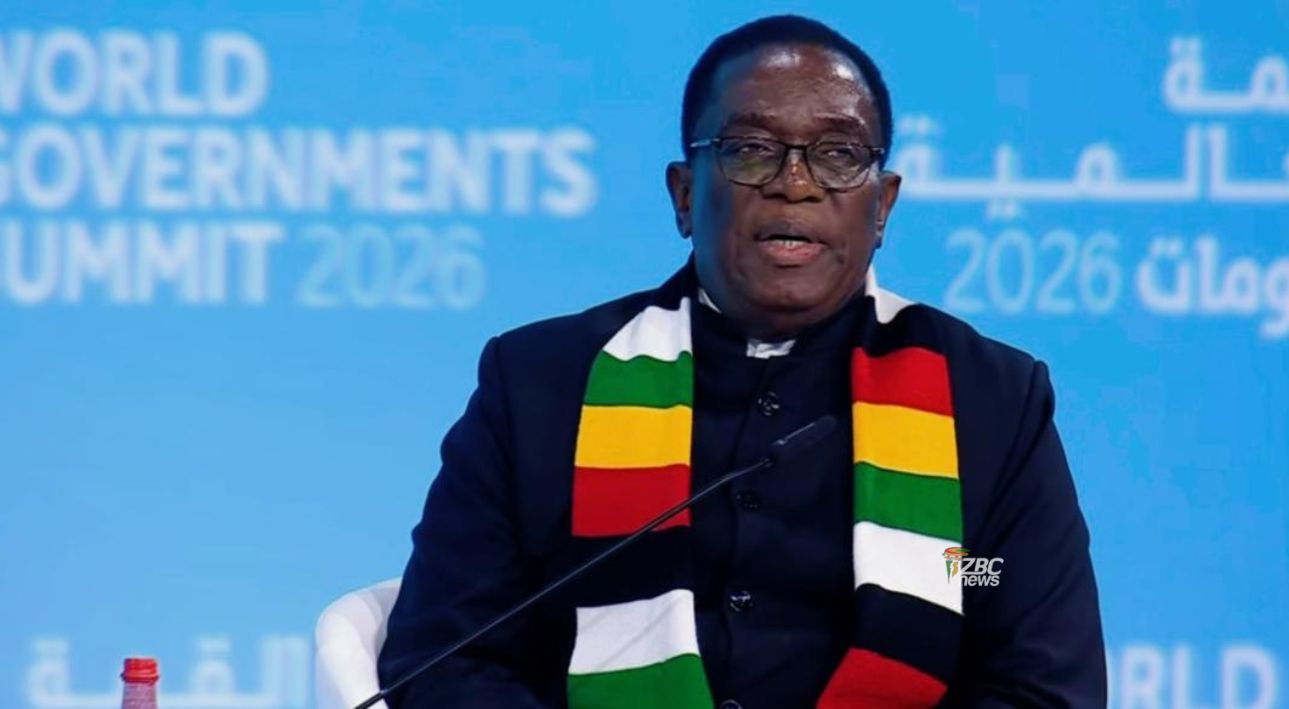
Speaking in an interview with American broadcaster Tucker Carlson on the sidelines of the World Governments Summit in Dubai, the President said the redistribution of land was rooted in historical justice and national sovereignty.
“Land did not belong to a race. It belonged to Zimbabweans,” President Mnangagwa said.
“When the colonialists took land from us, time came when we asserted ourselves and took back our land.”
The President said those who chose to remain in Zimbabwe on an equal footing with indigenous citizens were accommodated, while others left by choice.
“Those who wanted to have land on the same basis as the African people of Zimbabwe remained,” he said. “But those who felt they were superior left.”
President Mnangagwa said Zimbabwe’s decision to reclaim land triggered decades of economic sanctions, but noted that the country had endured and continued to develop despite external pressure.
“I’m sure you’re aware Zimbabwe has been under sanctions for decades as a result of us claiming our land from the British and making ourselves independent,” he said. “We seized the land and gave it to our people, so sanctions were imposed on us. But in spite of all that constraint we have developed, and we are happy that we have developed on our own and we feel very independent.”
Turning to international relations, President Mnangagwa rejected attempts to frame Zimbabwe’s engagement with China as a comparison with Western powers, emphasising sovereignty and national interest.
“Zimbabwe is a sovereign state,” he said. “And we move on the basis that gives us the best results of our resources. Whether it is in relation with the West or the East, what is primarily important is what we ourselves, as Zimbabweans, are satisfied with. We do not need to please the West or please the East. We please ourselves.”
He said Zimbabwe’s development partnerships had evolved since independence.
“Initially, as we became independent, we had most of our development thrust from the West,” President Mnangagwa said. “But as we evolved, we have also benefited from investment and cooperation from countries like China.”
The President added that international relations could not be judged using a single standard, as historical context played a central role.
“Relations cannot be measured country by country,” he said. “Relations depend on the historical background of countries between one country and another. That’s the basis on which relations grow and are nurtured. For us in Zimbabwe, yes, we are a former British colony, but we are very happy with the relations that have now developed with countries like China and so on, despite being a former British colony.”
Asked to comment on political developments in Venezuela, President Mnangagwa declined to make firm judgments, citing distance and limited information.
“Venezuela is very far away from Zimbabwe,” he said. “We don’t know what we really read in Zimbabwe actually happens in Venezuela, but from what we read, we are interested to know why it is happening.”
Zimbabwe is using the World Governments Summit to articulate its policy positions and engage international partners, as the Second Republic continues to pursue re-engagement anchored on sovereignty, equality and mutual respect.

