



Story by Tamuka Charakupa
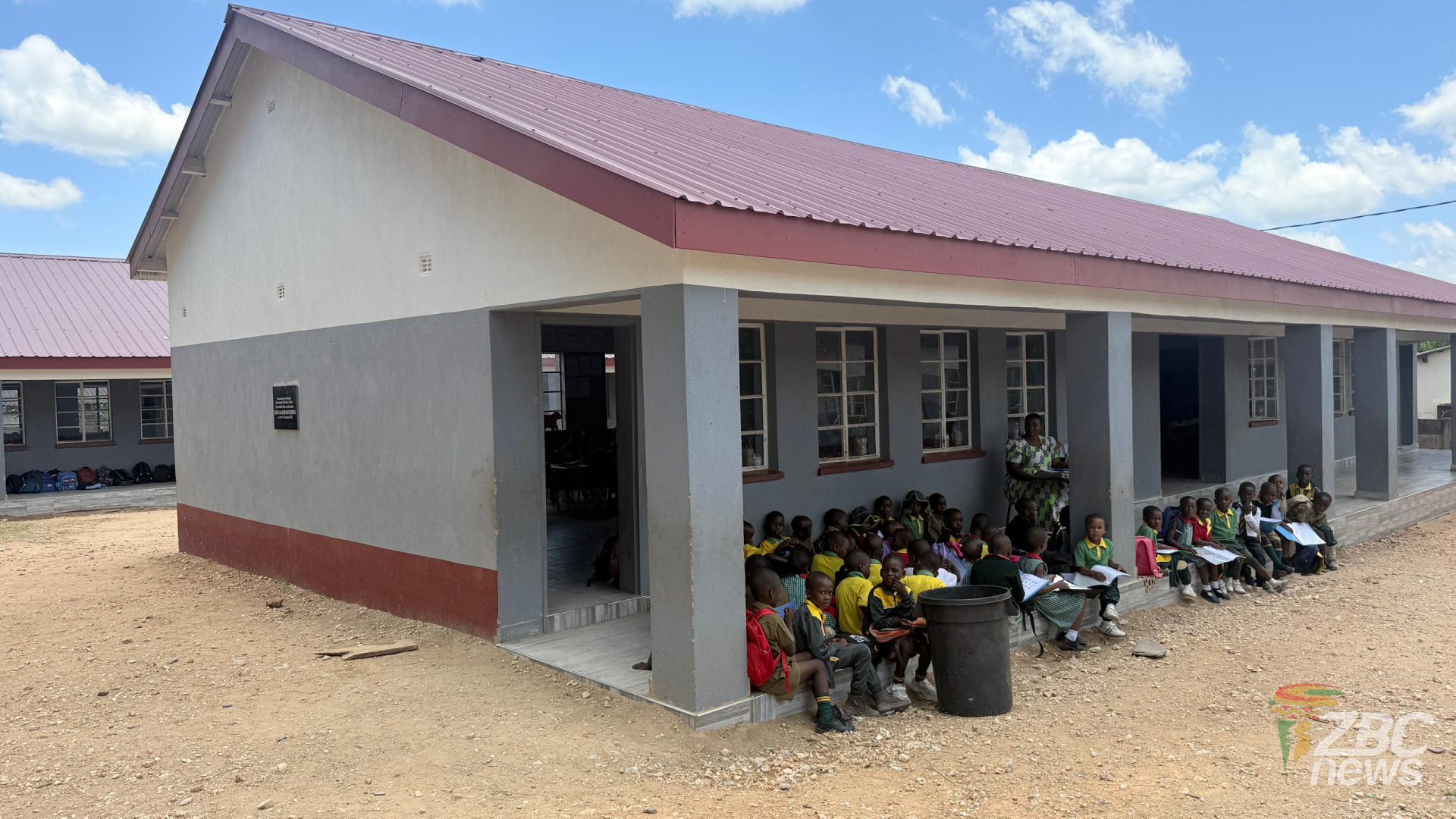
GOVERNMENT’s ongoing expansion of education infrastructure is beginning to ease pressure on overcrowded urban schools, with the commissioning of three new classroom blocks at Mhanyame Primary School in Chinhoyi significantly improving learning conditions.
The classrooms, commissioned in December 2024, were constructed under the National Development Strategy One (NDS1), which prioritised the decongestion of schools through targeted investment in additional learning facilities across the country.
For several years, rising enrolment in Chinhoyi’s urban schools had strained available infrastructure. At Mhanyame Primary School, congestion had forced some classes to share classrooms, limiting effective lesson delivery and placing sustained pressure on teachers and learners alike.
School head Mr Alphonce Shereni said the new infrastructure has brought immediate and tangible relief.
“These classroom blocks have come at a critical time. Our enrolment has now exceeded 1 600 learners, and congestion had become a serious challenge. Some classes were sharing rooms, while others were learning under pressure. With the new classrooms, we have managed to decongest, properly allocate learning spaces per grade and improve lesson delivery. We are already witnessing improved discipline, better lesson flow and increased morale among both pupils and teachers,” he said.
Deputy head Mrs Chipo Munetsi said the improved learning environment has also begun to reflect in academic outcomes.
“Our priority as school management is to provide a safe and enabling learning environment. These classroom blocks have allowed us to organise classes according to ministry standards. Parents and learners are happy, and we can now plan better as administrators. Our pass rate has improved from 76 percent to 84 percent in the past year,” she said.
The Ministry of Primary and Secondary Education said the development is part of a wider national infrastructure drive aimed at expanding access to education through devolution.
Makonde District Acting Schools Inspector Mr Crisphen Mtande said decentralised funding is enabling districts to address infrastructure gaps.
“The construction of these classroom blocks reflects government’s commitment to improving learning conditions. Through devolution, districts can prioritise their most urgent needs. This year alone, three new schools will be constructed in the district, which will significantly reduce enrolment pressures and ensure no child is excluded due to lack of infrastructure,” he said.
Mashonaland West Provincial Planner in the Ministry of Primary and Secondary Education, Mr Chance Mutambasere, said infrastructure development is guided by quality and sustainability.
“All new schools and classroom blocks are designed to meet approved standards, with a focus on safety, durability and resilience to natural hazards. Regular inspections are conducted during and after construction to ensure compliance,” he said.
The development also aligns with the objectives of the National Development Strategy Two (NDS2), which places emphasis on modern and adequate school infrastructure as a key driver of quality education delivery.

