



Story by Memory Chamisa
COMMUNITIES and young people across the country are intensifying efforts to restore degraded land as the national afforestation programme gathers momentum, supporting Zimbabwe’s drive to combat climate change and promote long-term environmental sustainability.
Years of extensive tree cutting, farming activities and land degradation have left large areas exposed and environmentally fragile. In response, communities are increasingly partnering with government agencies and development organisations to rehabilitate affected ecosystems.
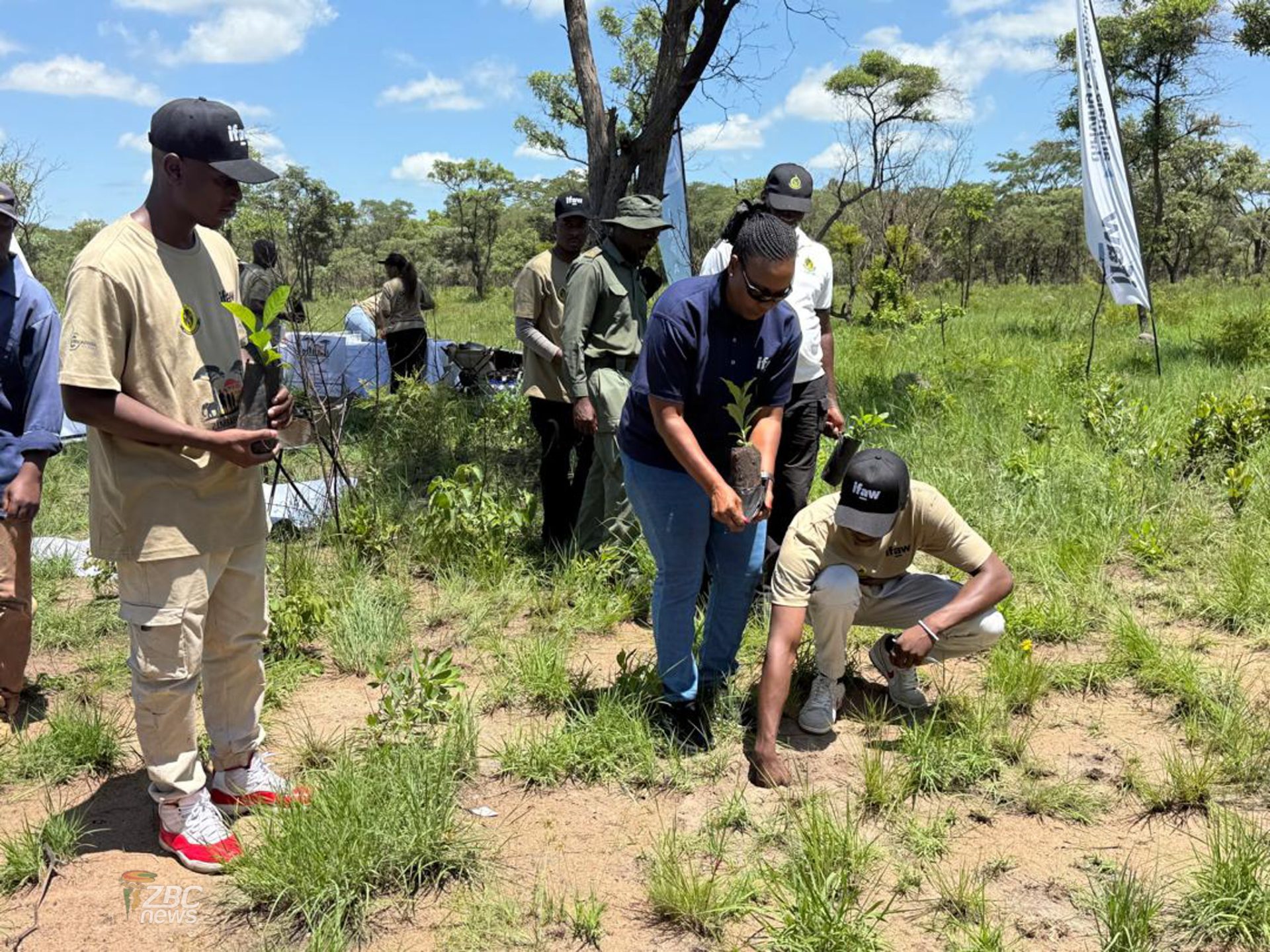
On Saturday, the Nyabadza community near Lake Chivero, working alongside youth environmental advocates, planted 300 trees as part of a restoration initiative aimed at reviving the degraded North Bank forest area.
Over the years, extensive tree cutting, farming activities, and land degradation have left large tracts of land bare and vulnerable.
Community members said deforestation had led to the loss of wildlife habitats, increased vulnerability to environmental hazards and worsening land degradation.
“This forest once had wildlife living in it, but it is all talk now as we have cut the trees for household use, exposing us to lightning when it rains, and land degradation. It is sad how this area has lost trees, hence today’s initiative will go a long way towards restoring it and the future generations,” one resident said.
Another community member said trees play a vital role in supporting livelihoods and biodiversity.
“Trees are life, not only do they give us shade, but some of the indigenous trees have medicinal purposes, of which if we continue doing this, come next year, we would have done quite a lot not only for ourselves but for wildlife as well.”
Youth participants said the initiative reflects growing awareness among young people of their responsibility to protect the environment.
“As young people, we are the custodians of tomorrow’s environment, hence we need to start now in conserving our forests and land,” a youth participant said.
The government, working with development partners, is stepping up efforts to reverse ecosystem degradation and sustainably restore forest cover nationwide as part of the National Tree-Planting Programme.
ZimParks Senior Wildlife Officer, Mr Maxwell Nyamvura, said afforestation efforts are critical to safeguarding the country’s ecological future.
“It is imperative that we act, because planting a tree today means offering a breath of life to future generations, sowing hope and making an act of faith in the planet. We are facing a historic turning point: either we act now, or we condemn our country to an ecological point of no return. The government’s aim is to create a medicinal plant nursery in each province of the country, to increase local capacity to look after their own health,” he said.
International Fund for Animal Welfare (IFAW) Zimbabwe Country Director, Mrs Alleta Nyahuye, said forest restoration is essential for wildlife conservation and economic sustainability.
“A symbol of life, the tree is a fundamental pillar of our existence. It purifies the air we breathe, nourishes our bodies, treats our illnesses, supports our cultures and traditions and stimulates our economy. We have come on to support youths in preserving the environment as an organisation that works with Wildlife. We must restore forests for wildlife preservation,” Mrs Nyahuye said.
Organisers said the initiative seeks not only to rehabilitate degraded land but also to instil a culture of environmental responsibility among communities, contributing towards the national target of planting at least one million trees annually.

