



Story by Tafara Chikumira, Midlands Bureau Chief
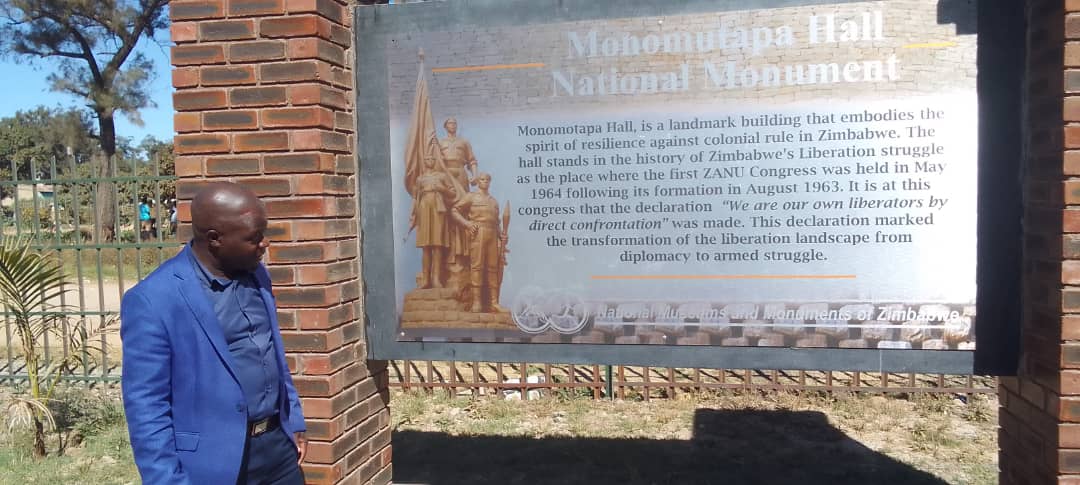
GWERU – THE story of Zimbabwe’s liberation struggle would be incomplete without the mentioning of ZANU’s first congress held at Gweru’s Mutapa hall in 1964.
The congress marked the beginning of direct confrontation to challenge the colonial regime in a protracted struggle that led to the liberation of the country.
In the middle of one of Gweru’s oldest suburbs, Mutapa is a hall named after the suburb that became home to ZANU’s first congress, a gathering that would turn out to be a defining moment for the country’s liberation struggle.
It is inside the Mutapa hall, which was named after Munhumutapa. This is where ZANU PF elected its leadership and the late national hero, Ndabaningi Sithole, was elected President, deputised by the late Cde Leopold Takawira while the late Cde Hebert Chitepo was elected National Chairperson.
The congress witnessed the election of the country’s former President, Robert Mugabe, as Secretary General, while the late Cde Morris Nyagumbo was elected National Organising Secretary among some of the powerful forces that would lead an armed struggle against the settler regime.
“It is here that a declaration was made that ‘we are our own liberators by direct confrontation’ was made. This declaration deviated from the previous endeavours, which were made in trying to win the country but were failing. I think you will realise that several negotiations had been made but nothing was coming to fruition. After this congress there was leadership that began to negotiate and saw Kenneth Kaunda of Zambia preparing a base for liberation fighters and Samora Michael of Mozambique also chipping in to help before some other countries also came on board to prepare liberation fighters to wage the liberation struggle,” Acting Regional Director for the National Museums and Monuments Southern Region, Mr Clapperton Gutu said.
The congress which was also attended by President Emmerson Mnangagwa after his return from China and after receiving military training had some dire consequences as it created room for the settler regime to begin the victimisation of the new movement leaders through imprisonments and torture as they began to lead some acts of sabotage as a way of resisting the colonial injustices.
“We then attended the congress in Gweru and were joined by the likes of President Mnangagwa who had returned from China. We pretended as if we did not know each other in the process as we were already active in our resistance as the crocodile gang. After the congress, we were deployed mostly in Masvingo. I was deployed to Gutu Bikita and the President to Masvingo South. As the crocodile gang was 11 members, most of the leaders were rounded up and detained at Hwahwa prison. I was also eventually beaten and no treatment with a lot of torture in the process,” War Veteran, Cde Thomas Ziki said.
The government, through the National Museums and Monuments of Zimbabwe, is currently in the process of turning the Mutapa Hall into a historical monument for future generations to understand the symbolic nature of the infrastructure as an emblem of resistance to colonial rule.

