



Story by Vivian Bangamu
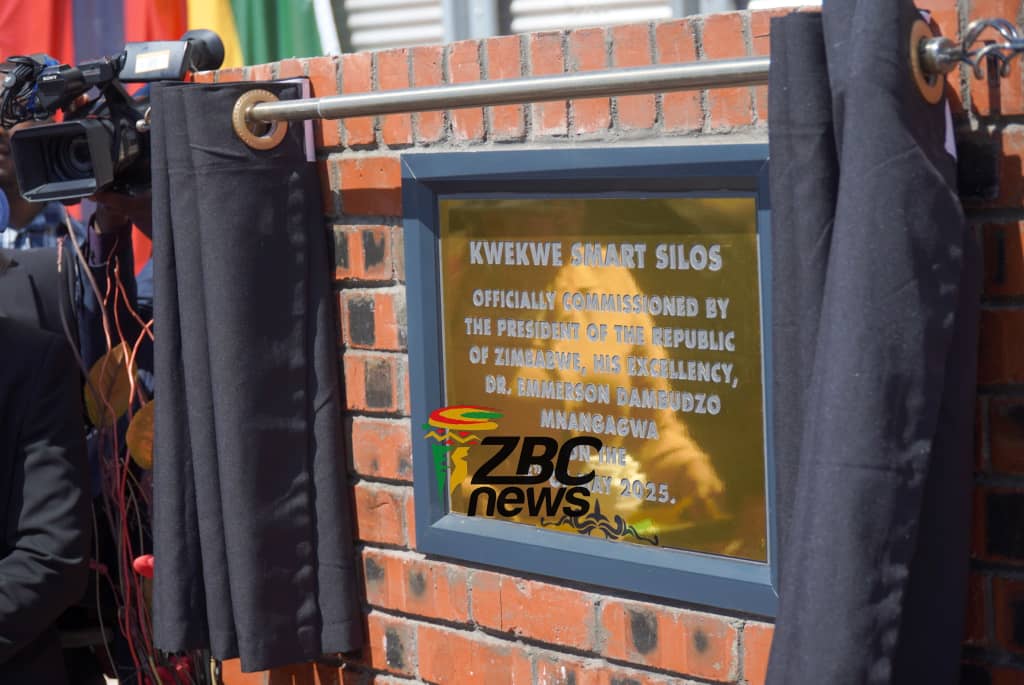
PRESIDENT Emmerson Mnangagwa today officially commissioned Zimbabwe’s first-ever Artificial Intelligence (AI)-powered grain silos in Kwekwe, Midlands Province, an initiative widely praised as a transformative step in the nation’s agricultural modernisation agenda.
The state-of-the-art facility, boasting a total capacity of 56 000 tonnes, comprises seven modern silos designed to enhance national grain storage, improve food security, and significantly reduce post-harvest losses.
Speaking during the commissioning ceremony, President Mnangagwa described the development as a reflection of the Second Republic’s commitment to embracing innovation and fostering climate resilience in the agriculture sector.
“This 56 000-tonne smart grain storage facility is yet another testament to the transformation unfolding in our country’s agriculture sector. The investments made under the Second Republic have placed Zimbabwe firmly on the path to becoming a food-secure and prosperous upper-middle-income economy,” he said.
The President highlighted that the commissioning of the Kwekwe silos is part of a broader strategy to increase Zimbabwe’s Strategic Grain Reserve from 750 000 tonnes to 1.5 million tonnes.
As part of this drive, 14 additional silo depots are being established across rural provinces, including drought-prone areas such as Beitbridge, Gwanda, Lupane, and Gokwe.
President Mnangagwa stressed that the integration of Artificial Intelligence into grain storage systems would improve efficiency, reduce wastage, and ensure food availability amid the growing threat of climate change.
“The effects of climate change have heightened the need for robust and holistic food security strategies. This AI-powered facility represents a turning point in how we manage and protect our food reserves,” he said.
The President also applauded the Grain Marketing Board (GMB) for spearheading the project, urging the agency to maintain the highest standards of management and professionalism. He emphasized the need for all government departments and public enterprises to adopt modern technologies to improve service delivery and align with the Vision 2030 agenda.
Further, he called on tertiary institutions and the private sector to innovate around on-farm grain storage solutions and appropriate home-grown technologies, as part of efforts to curb post-harvest losses and reduce transportation costs.
“Our institutions of higher learning must play a central role in developing practical solutions for our farmers. We must innovate, collaborate, and deploy technologies that make farming a viable commercial venture,” the President said.
In light of recent drought conditions, in the past four decades, the government has successfully distributed over 328 000 tonnes of grain through the Department of Social Welfare, while nearly 4 million learners benefited under the Schools Feeding Programme.
The commissioning of the Kwekwe facility comes as Zimbabwe continues its push to modernise agriculture, improve rural livelihoods, and strengthen food systems, ensuring that no part of the country is left behind.

