



Story by Memory Chamisa
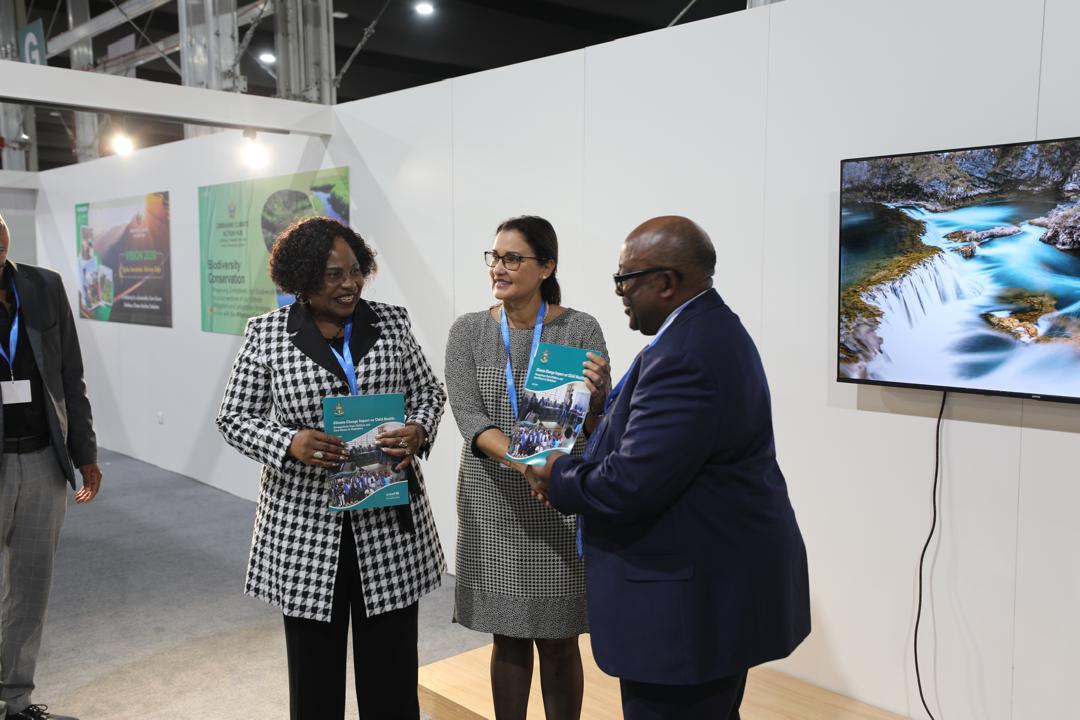
Government in partnership with UNICEF has launched the Climate Change Impact on Children’s Health Report at the Zimbabwe Pavillion on the sidelines of the ongoing United Nations Climate Change Conference in Azerbaijan.
Titled “the Perspectives from Children and Care Givers in Zimbabwe”, the report notes the need to prioritise children to be at the centre of the global response with key emphasis on environmental health.
Permanent Secretary in the Ministry of Environment, Climate and Wildlife Ambassador Tadeous Chifamba noted the need for a climate-smart education system and ensuring the nutritional needs of vulnerable populations in disaster prone provinces are met.
“The climate crises is in fact a child health crises given that it undermines children’s rights to safe water, housing, education and access to food, alive free from exploitation, violence and abuse. Urgent action is therefore necessary to mitigate these issues to ensure they realise their potential and fulfill their rights. This report captures the impact of climate change on children’s health through a series of consultations throughout the country with children whose views were noted and how they’ve been affected by climate change.
“The report findings will enhance policy and advocacy, support the development of early warning systems, provide climate rational for mobilisation. We expect that this report will equip government and stakeholders with increased knowledge on climate change impact on child health and enabling evidenced based planning and targeted interventions,” he said.
For UNICEF, the report is complemented by efforts to ensure the national social protection system is child sensitive, gender and shock responsive.
“Through harnessing the transformative power of the Net-Zero Climate Resilience for Children approach with our partners, we help children to identify, prepare and respond to climate risks within communities and when disasters do strike, we are one of the first on the ground to get childhood back on-track. Meeting the climate challenge and realizing a liveable future means championing climate resilience and green behaviour so all children can be agents of change for a better future,” said George Laryea Adjei, UNICEF Director Group Programmes
“UNICEF is bearing witness to the ways in which children’s health and communities are already being altered in a climate-changed world. When disasters strike and children have nowhere to turn, UNICEF is on the ground to get childhood back on track. Our emergency responses prioritize the reconnection of children with critical health, nutrition, education and sanitation services. We also focus on ensuring access to safe drinking water and protection from violence, abuse and other harm when they need it most,” highlighted Ms Zenaib Adam, UNICEF Zimbabwe Deputy Representative Programmes.
The devastating effects of climate change are being felt, with destructive weather events becoming the new normal globally, as each year, people tragically lose their lives, livelihoods, vital infrastructure being damaged and the economy hit.

