



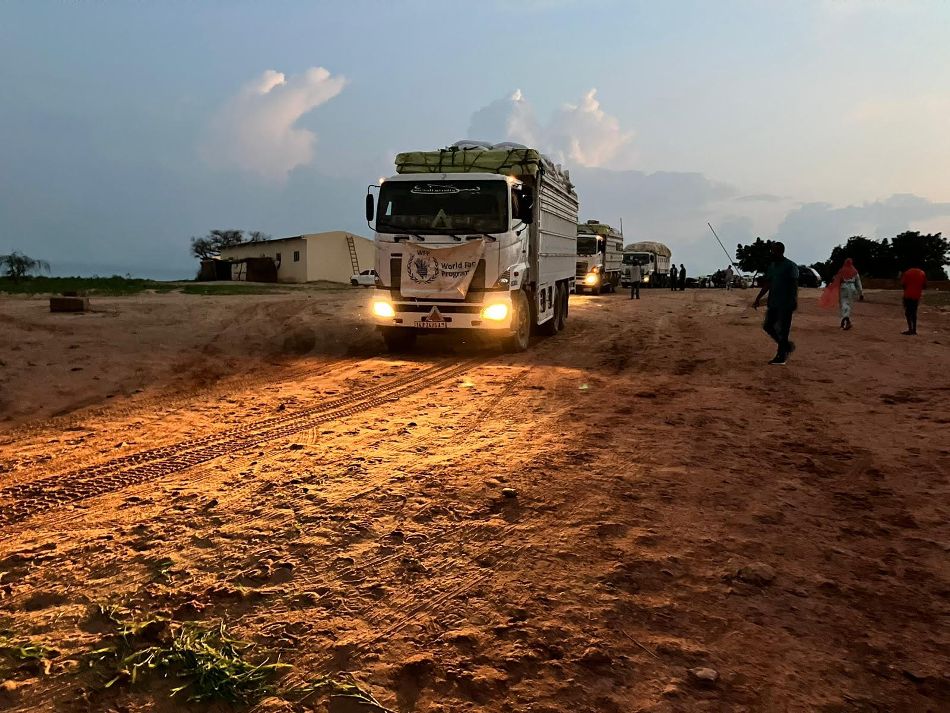
SUDAN’S sovereign council said yesterday it would extend the use of the Adre border crossing with Chad, seen as essential by aid agencies for the delivery of food and other supplies to areas at risk of famine in the Darfur and Kordofan regions.
Experts determined earlier this year that while more than 25 million people across the country face acute hunger, several parts of the country are at increased risk of famine and that one camp in the Darfur region was already in its throes, the consequence of the war between Sudan’s army and the paramilitary Rapid Support Forces.
Adre, which was closed by an order from the army-controlled government in February, was re-opened for three months in August until November 15, and it had not been clear whether that period would be extended.
Members of the government have protested against the opening, saying it allows for the RSF to deliver weapons. However, the Sudanese army is not in physical control of the border crossing which lies within territory seized last year by the RSF, which controls most of Darfur.
The United Nations welcomed the decision to keep Adre open for another three months.
UN Secretary-General Antonio Guterres spoke with Sudan’s army chief Abdel Fattah al-Burhan on the sidelines of the COP29 summit in Azerbaijan earlier yesterday “on the importance of facilitating humanitarian distribution in Sudan and in particular through the Adre crossing,” said a UN spokesperson.
“Adre is a critical lifeline for millions of people, but alone it is not sufficient,” UN spokesperson Stephane Dujarric told reporters.
“As needs continue to spiral in Darfur and across Sudan, it is more important than ever that all necessary routes, including those crossing borders and those crossing conflict lines inside Sudan, are available for the rapid and efficient movement of humanitarian supplies and personnel into areas of greatest need,” he said.
Aid agencies decided against ignoring directives from the internationally recognised government, and had been bracing themselves for closure of the corridor, seen as a more efficient route than cross-line deliveries from army-controlled Port Sudan or the more remote al-Tina border crossing.
(Reuters)

