



Story by ZBC News Reporter
As more and more Chinese investors find their way into Zimbabwe, communities are benefiting from their corporate social responsibility initiatives.
China Minmetals Corporation (Bikita Lithium Mine Project) for example, has partnered several local industries, in addition to investing $200 million to upgrade and build new production lines.
The new project is anticipated to result in the creation of more than 1 000 jobs, on top of another 1 000 local employees already working for the company, the majority of whom come from local communities such as Bikita, Gutu and Masvingo. Moreover, the company has established a CSR committee to actively participate in community affairs.
Another Chinese mining firm, Huayou Prospect Lithium, has made a cumulative investment of approximately $220,000 towards Zimbabwe’s education sector, donating classrooms and teacher apartments to nearby schools, as well as thousands of textbooks and hundreds of sets of furniture.
Similarly, in July 2023, Southern Mining Company spent over $500,000 to donate a community library to the town of Hwange. The library can accommodate approximately 120 people for reading. It includes both a traditional book reading area and an electronic device reading area, equipped with eight computers and other digital devices, providing a modern learning environment for local children.
Sinomine was involved in the investment and construction of 132 KV high-voltage transmission line, which was completed at the end of 2023 and formally electrified in March. The high-voltage transmission line connects Tokwe to Bikita via Masvingo, with a total length of 110 kilometers and a total investment of about US$22 million.
The company has provided assistance for 36 wells, including 17 wells in Bikita West, 14 wells in Masvingo North and 5 wells in Masvingo West, with a total cost of about $104,000. These wells provide enough clean water for community residents and improve household sanitation. In view of the increasingly serious local drought in recent years, our company plans to continue to assist the construction of community wells in Bikita area in the next step.
In addition, Bikita Lithium Mine, SABI Star Mine, MiningChang Mine in Gutu, and Southern Mining in Hwange Town have initiated the “Water is Life” public welfare project. They have drilled wells in nearby communities, providing stable sources of clean water.
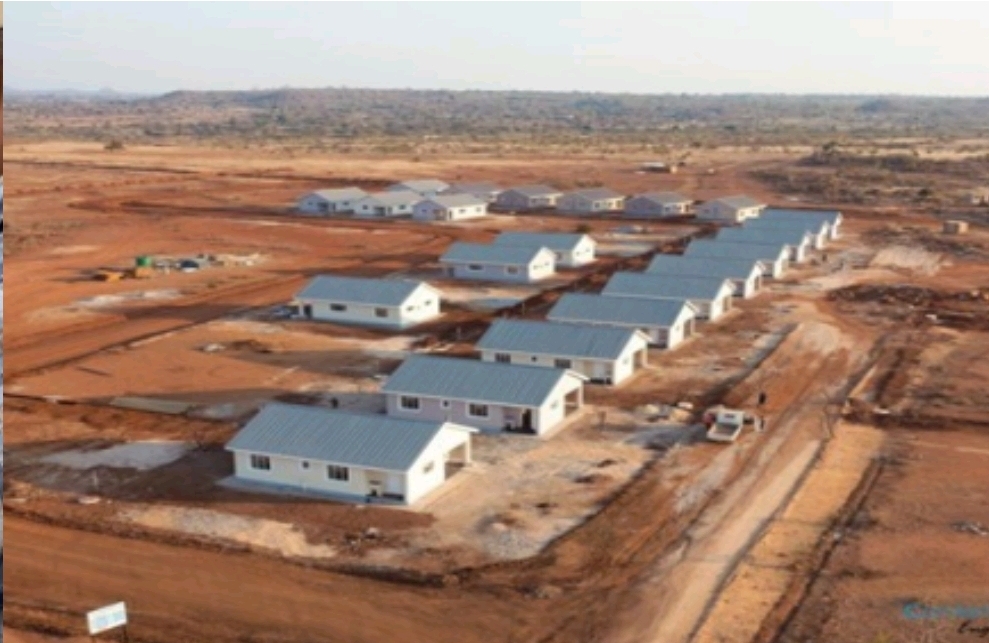
The joint venture company of Shengxin Lithium Energy – Max Mind Investment has constructed a clinic for the local community and provided access to water and electricity, enabling villagers who previously had to travel seven kilometers for medical treatment to receive healthcare services right at their doorstep.
Max Mind Investment signed agreements with 40 families potentially affected by mining operations. According to the villagers’ preferences, they have been relocated to three different locations, where new residences have been provided with water and electricity connections. The company has also committed to employing at least one person from each family in the Sabi Star project.
Dinson Steel Plant has constructed new houses for affected villagers and provided free housing for local impoverished families. Additionally, they supply monthly food and daily necessities.
Sinomine has built hundreds of employee and residential houses, as well as a restaurant and a sewage treatment system, to facilitate the living conditions of local workers.
IIn June 2023, China Mining Resources repaired a 7km road between Bikita and Gutu.
Southern Mining expanded the residential roads in local villages and repaired and cleaned the main roads. Total repaired road is about 25 km.
.
In May 2023, Sinomine invested $24 million to construct a 120km (132KVA) transmission line and substation from Bikita to Tokwe. This project will provide electricity to rural areas including Bikita, Gutu, and Zaka, effectively promoting local economic and social development.
Max Mind Investment renovated and widened a 37km road from the mining area to the main road, installing signboards along the road. The previously potholed and narrow road has become smooth and spacious, providing convenience for local villagers.
In the same vein, Yahua Group, which is mining lithium Kamativi community of Hwange District in Matabeleland North province, has revitalized the remote area which had been dormant for over 30 years.
To date, the firm has channelled more than US$2 million towards various community development projects with positive impact on ordinary people’s lives.
President Mnangagwa officially commissioned the repurposed Kamativi Mining Company (KMC)’s Phase One Lithium Processing Plant while construction of the second plant was underway.
The company is now galvanizing production levels to rise to 2,3 million tonnes of raw ore and 300 000 tonnes of lithium concentrate per annum.
In a statement, the company said it is forging ahead with Community Social Responsibility.
“With the restart of the Kamativi amining in September 2022, KMC has revitalized this community that had been dormant for nearly 30 years. By creating more than 300 jobs directly and more than 1,000 jobs indirectly through contractors, KMC has made an important contribution to local economic development.
“The company has been active in assuming social responsibility, with a total investment of approximately US$2.2 million, focusing on improving the community’s infrastructure, including roads, water supply, electricity supply, etc., and repairing community schools, hospitals, churches, bus stops, street lights and other public facilities.
“These investments have not only improved the quality of life of residents, but also laid a solid foundation for the long-term development of the community,” reads the statement.
KMC’s investment has excited traditional leaders in the district and the local community who are already feeling its impact.
KMC started operations in 2019 with construction for Phase One of the project commencing in March 2023 focused on lithium exploration, mining and processing within Kamativi, a former tin mine that closed in 1994 when international prices of tin plummeted to unsustainable levels.
At that time more than 3 000 people were employed by the mine, which still had a 40- year lifespan.
KMC expects in the long run to invest a total of US$249 million with US$100 million already injected into the first phase.
For three decades, Kamativi turned into a ghost town and infrastructure that included roads, buildings, water and power facilities were vandalised.
However, in his remarks during the commissioning of the plant, the Yahua Group president, Mr Meng Yan, said the revival of Kamativi Mine was a grand moment for communities that had been isolated for almost 30 years.
He said so far significant resources have been invested in community projects while millions more have been paid in taxes.
“We take corporate social responsibility seriously and we have so far invested US$2 million in various community projects and these include rehabilitation of roads, resuscitation of electricity and water supplies and assisting local schools and clinics,” said Mr Meng.
“KMC has contributed significantly to Zimbabwe’s fiscus as it has paid more than US$8 million in taxes and after the completion of Phase Two, this project will create more jobs and pay more in taxes.”
Mr Meng said the company’s CSR efforts are meant to instill confidence and have a community buy-in so that the community shares the company’s vision.
The company is employing 300 people directly and approximately 1 000 others indirectly through subcontracts.
KMC is a Joint Venture company operated and controlled by Sichuan PD Technology Group, a subsidiary of the Chinese-listed entity Yahua Group and a local partner, Defold Mine (Private) Limited.
The group is resuscitating Kamativi Mine, which closed in 1994 and for three decades Kamativi had become a ghost town.
Mr Meng said the cordial relations between China and Zimbabwe, which date back to the pre-independence times, remain anchored in the operation principle of consultation, collaboration, construction, shared prosperity and win-win co-operation.

