



Story by Tichaona Kurewa
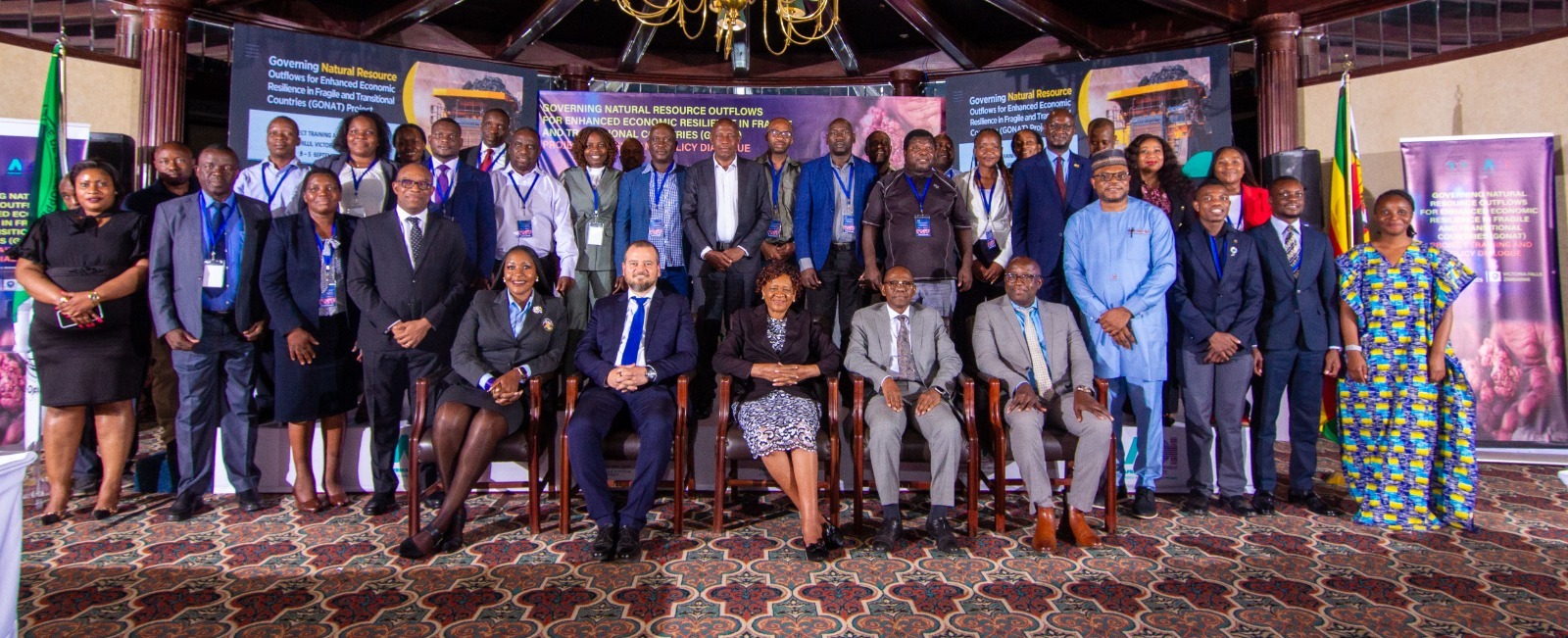
THE three-day Governing Natural Resource Outflows for Enhanced Economic Resilience in Fragile and Transitional Countries (GONAT) training programme concluded in Victoria Falls this Friday, with the Zimbabwean government praising the initiative as a transformative step toward better natural resource governance.
Africa holds nearly 30 percent of the world’s mineral reserves, including cobalt, platinum, diamonds, uranium, and extensive gold deposits.
Yet, the continent attracts only 3.5 percent of global foreign direct investment, much of which is heavily skewed toward extractive industries.
The GONAT programme seeks to reverse this trend by promoting sustainable, transparent, and equitable management of natural resources.
“The project involves three key activities that are central to its success. First, through Policy Analysis and Diagnostics, the project has produced comprehensive reports and policy briefs on the illicit natural resource trade and resource-backed loans, covering all six beneficiary countries.
“Building on this foundation, the Capacity Building and Country Support component has provided targeted training to enhance analysis, tracking, monitoring, and oversight of illicit resource outflows and resource-backed loans. Furthermore, a knowledge hub will be established to serve as a platform for policy analysis, training, and continuous knowledge exchange among stakeholders.
“It also incorporates the use of innovative technologies such as geospatial mapping and blockchain to improve the accuracy and effectiveness of tracking and reducing illicit resource outflows,” Minister of Environment, Climate and Wildlife, Dr Evelyn Ndlovu said.
For Zimbabwe, the GONAT platform has created an opportunity to realign its resource governance strategy, enhance transparency, and adopt smart financial instruments that safeguard national sovereignty while driving long-term economic growth.
“Today’s policy dialogue follows two intensive days of technical capacity-building that brought together experts, public officials, and practitioners from within Zimbabwe. The intention was to develop practical tools for identifying, analysing, and curbing illicit financial flows (IFFs), while promoting responsible use of resource-backed lending (RBLs),” Chief Natural Resources Officer, ADFB, Dr Innocent Onah noted
The GONAT programme is one of the African Development Bank’s flagship interventions in the natural resources sector.
It aligns closely with the Bank’s Ten-Year Strategy (2024–2033) and the Natural Resources Management and Investment Action Plan (2025–2029), both of which aim to assist Regional Member Countries in strengthening governance, reducing resource leakages, and promoting value addition across the continent.

