



Story by Abigirl Tembo, Health Editor
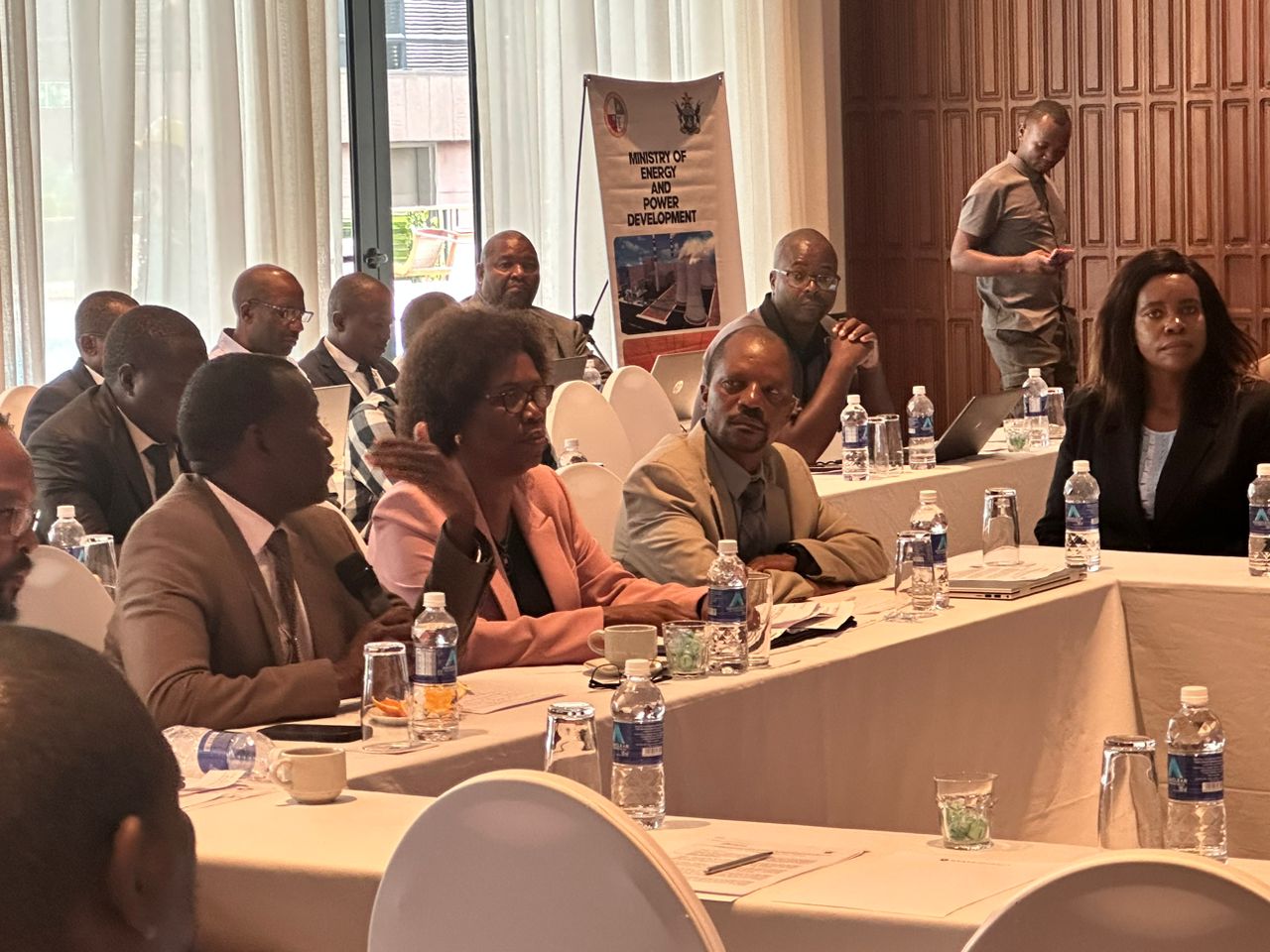
Government has partnered with the International Renewable Energy Agency (IRENA) to conduct an assessment and design need-based renewable energy systems to enhance healthcare delivery in the country.
A study by the International Renewable Energy Agency (IRENA) has highlighted the significant demand for Distributed Renewable Energy solutions in Zimbabwe’s health sector, particularly in rural areas.
To address this, government is reviewing the National Energy Policy of 2012 to develop a national electrification strategy, as the country targets achieving universal access to modern energy by 2030.
“Today we are meeting with the Ministry of Health and various stakeholders to look into the ability to accelerate the distribution of renewable energy solutions for healthcare institutions. This is key to ensure that there’s continuous health service and there’s a lot of work which has already been done. We have been doing a lot of work regarding the review of the National Energy Policy of 2012, where we are looking at what our priorities are, what are the forms of energy which we want to develop going forward. And at the same time, we’re also doing a national electrification strategy, which came from a national electrification analysis, where we identified what’s the level of access in the country, and we also identified how do we accelerate access to modern energy and ensure that we have universal access by 2030. Attainment of Vision 2030 is key especially if the population is healthy and access to energy in health care facilities ensures sufficient and efficient provision of the health care to the population. For us energy and the health sector have a very close relationship where in the case where you have a health care center which has the necessary facilities this way you then have a healthier nation. And energy is one of the key requirements for any health care centre,” said the Permanent Secretary Ministry of Energy and Power Development, Dr Gloria Magombo.
The health sector is a critical component of this initiative.
“When you have power on a regular basis it means that services are provided throughout the day if you look at quite a lot of our services do require power particularly you consider theater services you need power, you consider maternal and child health services you need power. You realise that maternal mortality is too high and perinatal mortality is too high and some of the interventions do require power, like if you look at premature babies who require incubators need power, they’ll need heating systems like your heaters for their own, those need power just consistently. Go up to secondary, tertiary and quaternary where you also need to use oxygen concentrators, they need power, intensive care units have to be powered throughout the day, where you realise that a lot of patients in those units will be on throughout. That requires energy, so, really, as far as we are concerned, having reliable energy across the board will make sure that one, access is there, the quality of access will be better and also health care workers working in an environment where there is power and where there is good lighting. It does motivate them. Studies have shown that when people work in dark environments, they are also demotivated and errors do happen during a service provision, so to a greater extent, we would enhance the access, the quality and also embrace the motivation of our healthcare staff,” said Ministry of Health and Child Care representative, Dr Celestino Dhege.
The International Renewable Energy Agency (IRENA) has partnered with Zimbabwe to develop a comprehensive sustainability roadmap, aimed at facilitating the country’s transition to universal access to energy in a sustainable and environmentally-friendly manner.
“As IRENA we are mandated to support all our member states in energy transition. As of now, IRENA has membership of over 168 countries including the whole of the European Union including and Zimbabwe which is also a signatory to IRENA. IRENA is supporting member countries moving from use of fossil fuels and integrating a lot of renewables into their energy and energy use across all sectors. Not only health, but we also support energy use in industry, support energy transfer in industry, also in water sectors, in agriculture like particularly for Zimbabwe we are supporting two work streams, for health and for agriculture and we believe that the work that we are doing in terms of creating a sustainability roadmap will really augment and reinforce and support the work most of the partners are already doing in the country. As mentioned, there are over 40 percent facilities that already enjoy the benefit of renewables and with this work we foresee that the country can work towards having universal access in a very sustainable way,” said Programme Officer at the International Renewable Energy Agency, Dr Wilson Matekenya.
With support from the United Nations Development Programme (UNDP), Zimbabwe has already made significant progress in promoting renewable energy in healthcare, with over one thousand healthcare centres having been equipped with distributed renewable energy solutions.

