



Story by Abigirl Tembo
SPECIAL Economic Zones (SEZs) are increasingly emerging as key drivers of industrial growth, investment attraction and export expansion globally, with Zimbabwe now seeking to adopt successful international models to accelerate its industrialisation agenda.
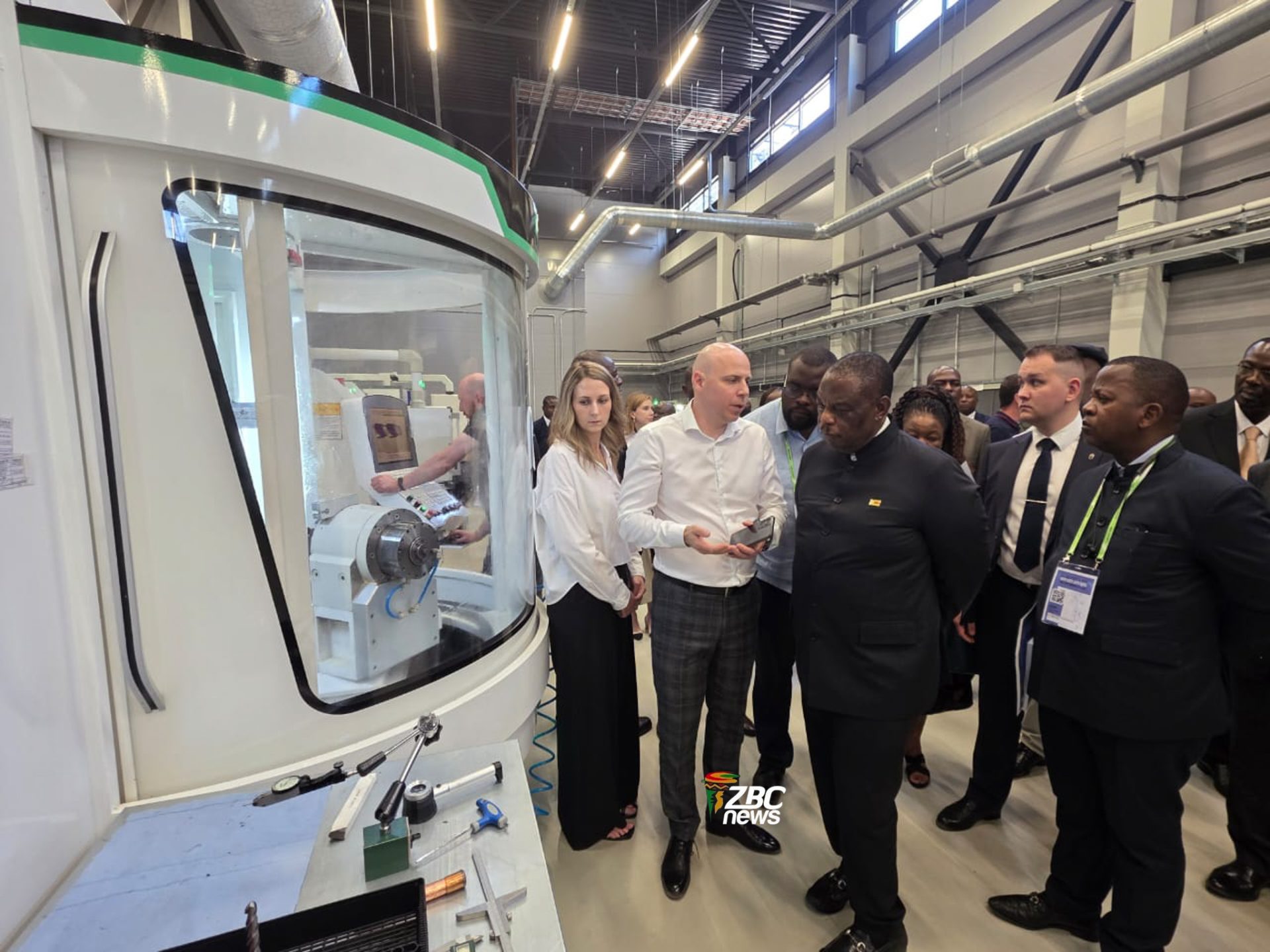
It is against this background that Vice President General (Rtd) Dr Constantino Chiwenga toured the Kulibin Special Economic Zone in Nizhny Novgorod, Russia, on the sidelines of the CIPR International Technology Conference.
The Kulibin SEZ has become one of the major industrial hubs in Russia’s Nizhny Novgorod region since its establishment in 2020.
Covering more than 724 hectares, the industrial zone focuses on high-value sectors including chemicals, pharmaceuticals, automotive components and advanced manufacturing technologies.
Authorities in the region say the rapid growth of the zone has already forced plans for expansion into neighbouring districts as investor interest continues to rise.
Vice President of the Kulibin Special Economic Zone, Mr Antonio Garanin, said the project has attracted significant investment and industrial activity within a short period.
“We currently have 58 companies registered as residents within the zone, while 12 companies are already fully operational. Total investments now exceed US$2 billion. We believe every project must be commercially viable because this is about business and economic growth. We construct the necessary infrastructure and attract progressive companies that contribute to the development of the regional economy,” he said.
Zimbabwe is now looking to draw lessons from the Russian model as Government intensifies efforts to strengthen the Zimbabwe Special Economic Zones Authority and promote industrialisation under Vision 2030.
Vice President Dr Chiwenga said Zimbabwe sees Russia as an important strategic partner in industrial and economic development.
“Russia is one of the most developed countries and, as a BRICS member, we want to work with them in our Special Economic Zones. There is no need to reinvent the wheel when successful models already exist. That is why we came here — to understand how they planned and developed their Special Economic Zone,” he said.
The Vice President noted that Zimbabwe intends to adopt some of the successful strategies implemented at Kulibin, particularly in infrastructure planning, industrial clustering and export-oriented manufacturing.
“This Special Economic Zone covers more than 6 000 hectares, with phase one already under development. We have seen flagship projects producing specialised industrial equipment, alongside small-to-medium enterprises involved in manufacturing products for both domestic use and export markets,” he added.
The visit is expected to strengthen economic cooperation between Zimbabwe and Russia while accelerating Zimbabwe’s efforts to position Special Economic Zones as engines for investment, manufacturing growth and job creation.
Government believes the adoption of efficient industrial frameworks and investor-friendly policies will help transform Zimbabwe’s local economic zones into strategic hubs capable of driving industrial modernisation and economic growth in line with Vision 2030.

