



Story by Tanyaradzwa Magamu
ZIMBABWE is exploring innovative ways to reduce livestock feed costs and improve waste management through insect-based feed production.
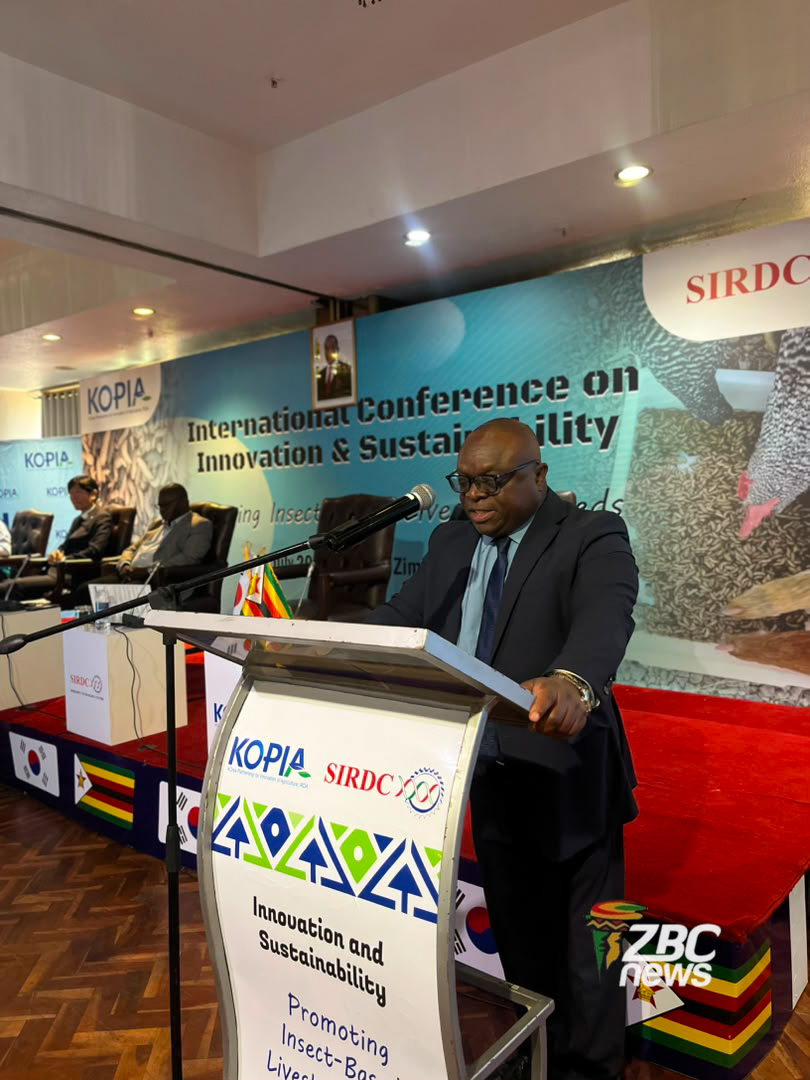
The Scientific and Industrial Research and Development Centre (SIRDC), in partnership with the Korea Partnership for Innovation of Agriculture (KOPIA), hosted an international conference in Harare on Thursday to promote the use of insects as a sustainable source of protein for livestock feed.
The conference brought together researchers, farmers, policymakers and industry experts to examine how technologies such as black soldier fly production can convert agricultural and food waste into valuable resources for the livestock sector.
SIRDC Chief Executive Officer Dr Leonard Madzingaidzo said the technology offers a practical solution to waste management while lowering livestock feed costs.
“We are converting agricultural residues, kitchen waste and other food waste into valuable resources that can be used to feed livestock and poultry, while reducing greenhouse gas emissions and promoting a cleaner circular economy.
“Countries such as Kenya and Uganda have already made significant progress in commercialising this technology. In Zimbabwe, the project is focusing on indigenous chicken production through affordable feed solutions that will reduce production costs and improve the livelihoods of rural farmers,” he said.
KOPIA Zimbabwe Centre Director Dr Sung Ho Park said agricultural by-products provide a reliable and sustainable resource for black soldier fly production.
“Food waste alone is not sufficient to sustain a bio-industrial plant. Agricultural by-products are produced in large quantities every day, making them a dependable resource for black soldier fly production.
“Beyond producing larvae for livestock feed, black soldier fly technology also generates by-products that can be used as organic fertiliser, creating additional value for farmers,” he said.
Stakeholders said the technology has the potential to improve waste management, create new business opportunities and promote sustainable livestock production in Zimbabwe and across the region.
The initiative is targeting indigenous chicken production in Zimbabwe, with researchers developing affordable feed solutions aimed at improving productivity and increasing incomes for rural farmers.

