



Story by Oleen Ndori, Foreign Desk Editor
PRESIDENT Emmerson Mnangagwa’s tenure as Chair of the Southern African Development Community (SADC) has been marked by a series of historic engagements that propelled regional integration and pushed the silencing of guns, particularly in Eastern Democratic Republic of Congo (DRC).
The SADC region continues to advance peace and security which are vital in socio-economic and political growth of the bloc.
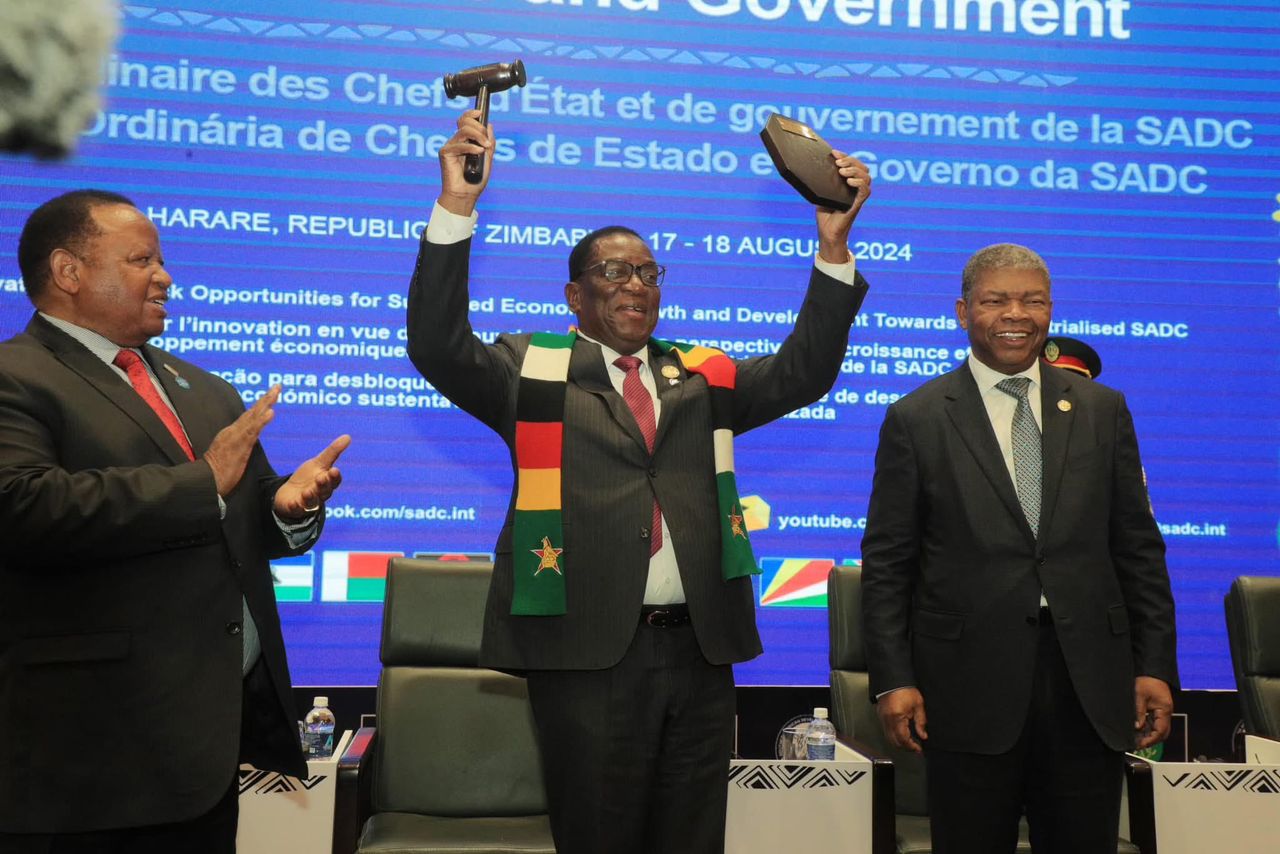
As soon as he took over as the regional chair from his Angolan Counterpart; President Joao Lourenco in August last year, President Emmerson Mnangagwa highlighted how enhanced regional integration can leap-frog the modernisation and industrialisation of SADC towards improved quality of life for its citizens.
“This year’s theme, “Promoting Innovation to Unlock Opportunities for Sustainable Economic Growth and Development towards an Industrialised SADC”, brings to the fore the role of innovation in sustained economic transformation and development. It is a clarion call for our respective countries to leverage the region’s human capital, to spur technology and innovation that will leap-frog the modernisation and industrialisation of SADC towards a higher quality of life of our citizens. To this end, it has become critically important and urgent to harness the potential of innovation to produce goods and services through value addition and beneficiation of our rich mineral and related natural resources. The peoples of the region fought for our liberation, freedom and independence as well as the economic value of our land and that which is under it. The time is now, we must realise maximum value from our God given rich natural endowments. The importance of deploying innovative strategies, across all sectors of our economies to accelerate the realisation of our collective development agenda cannot be over-emphasised,” he said.
While integration for economic growth is vital, regional peace and security was a key deliverable under the chairmanship of President Mnangagwa.
“Peace is the cornerstone of all our collective endeavours towards sustainable development. It will unlock potential for our economic integration agenda. In that regard, it is our collective responsibility to ensure that we do all we can to address the common threats that jeopardise our peace and security, and, consequently, undermine our development efforts and aspiration. Together, we must stand resolute against common challenges, honouring the legacy of our Founding Fathers, who demonstrated that unity and cooperation as critical to achieving durable peace and prosperity for our peoples.”
From the extraordinary November Summit, further talks were held in search of peace and security within the region.
In January 2025, an extraordinary summit was held to deliberate on the situation in Eastern DRC while in February the Chairperson went on to lead the region to an historic joint summit of SADC and the East African Community (EAC).
The historic meeting was an expression of commitment to ending the conflict in Eastern DRC.
In March this year, a virtual indaba between SADC and EAC agreed on the appointment of five facilitators to trace implementation of the agreed roadmap to end the conflict in the DRC.
These include former President of Nigeria His Excellency Olusegun Obasanjo, former President of Kenya His Excellency Uhuru Kenyatta, former President of South Africa His Excellency Kgalema Motlanthe, former President of Central African Republic Her Excellency Catherine Samba Panza and former President of Ethiopia Her Excellency Sahle-Work Zewde.
On the first of this month, the facilitators met with SADC and EAC chairpersons Presidents Emmerson Mnangagwa and William Ruto in Nairobi, Kenya.
In his remarks during the joint summit, SADC chairperson President Emmerson Mnangagwa expressed hope that the joint efforts will help to achieve peace, relief and reconciliation in the Eastern DRC.
“Collaboration between your esteemed panel of facilitators, the African Union and the SADC and EAC regional blocs, is key in delivering a lasting solution to this conflict that has negatively impacted the lives and livelihoods of the people of Eastern DRC, for far too long. Allow me to underscore my readiness and that of our two regional blocs to constantly engage with you and facilitate your important work until peace and stability is realised in Eastern DRC. Such a step is essential for the delivery of the much needed humanitarian assistance and to lay a firm foundation for lasting peace for the people of eastern DRC. The need for support and solidarity beyond our two regions is indisputable. Collaboration and synergies with other institutions such as the UN and the African Union commission will be key, given their vital role in facilitating the execution of your mandate,” he indicated.
While the guns are yet to completely go silent in the DRC, Zimbabwe’s efforts as chair of the regional grouping have seen massive progress being recording in ending the conflict that has plagued the country for decades.
Apart from the crisis battering the DRC, during his tenure as SADC chairperson, President Mnangagwa officially received the SADC House from Bongwe Investments Proprietary Limited, a Private Party to the Public-Private Partnership (PPP) Agreement which included the Government of Botswana as guarantor to the agreement and the SADC Secretariat.
President Mnangagwa thanked the Government of Botswana for the generous donation of the plot for the SADC Headquarters and for providing an enabling environment that facilitates the Secretariat to effectively execute its mandate.
As the chairmanship of Zimbabwe draws to an end, the regional integration agenda remains central on how SADC countries engage in driving the growth and transformation of the regional bloc.

