



Story by Abigirl Tembo ,Health Editor
ZIMBABWE’S health sector entered a new phase of reform in 2025 following the rollout of key programmes under the National Development Strategy Two (NDS2), including the Presidential Hospital Renovation Scheme and the expansion of rural health centres aimed at improving access to quality healthcare.
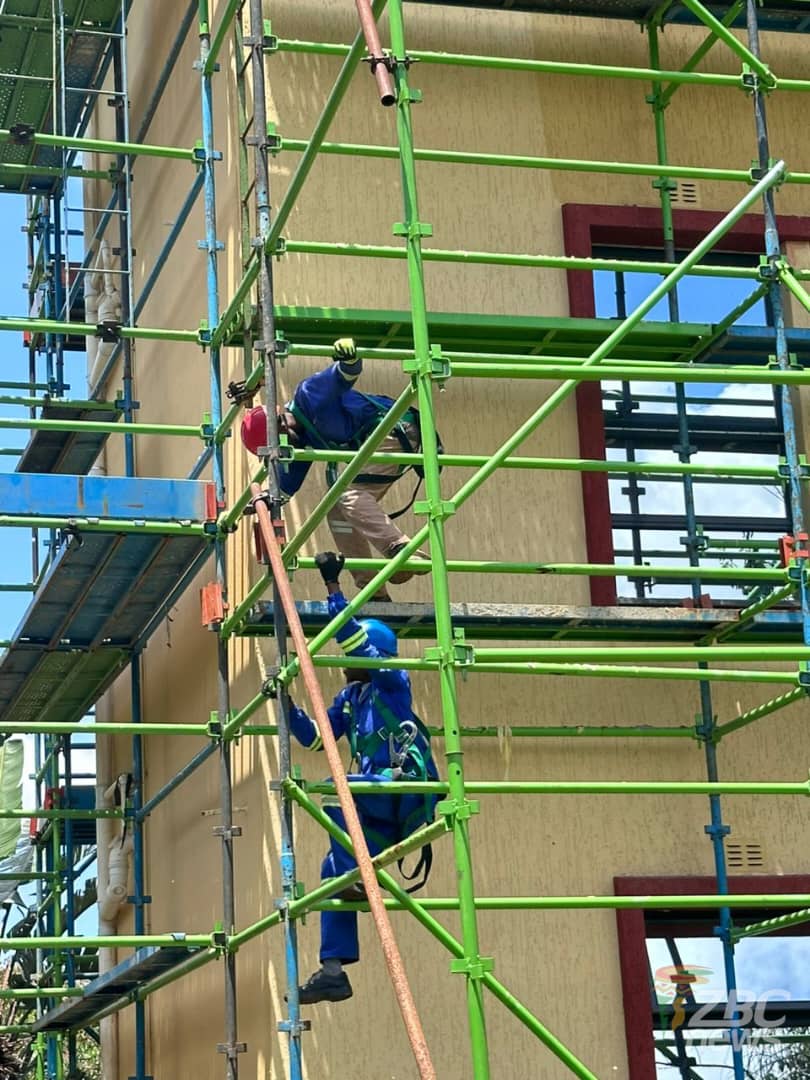
The Government has begun a phased refurbishment of major public health institutions, starting with the Parirenyatwa Group of Hospitals’ School of Nursing and extending to Mpilo Central Hospital, as part of broader efforts to modernise infrastructure and improve conditions in public hospitals.
Permanent Secretary in the Ministry of Health and Child Care, Dr Aspect Maunganidze, said the renovations were designed to ensure that central and provincial hospitals are equipped with infrastructure suitable for current and future healthcare demands.
“2025 saw a rollout of the Presidential Hospital Renovation Scheme, starting with Parirenyatwa School of Nursing, and now we have moved to Mpilo. The intention is to make sure all central hospitals and provincial hospitals, for starters, have infrastructure that is fit for purpose, particularly as we move from NDS1 to NDS2. This is our last leap for us to achieve Vision 2030,” Dr Maunganidze said.
He added that the reforms are aligned with national development goals as the country works towards Vision 2030. Dr Maunganidze said groundwork is underway for additional health centres in Manhize, Paradza, Rudhanda and Bulilima, with construction set to progress from 2026.
In addition to major hospitals, the Government has expanded investment in primary healthcare facilities, particularly in rural and previously underserved areas. Several pilot health centres have been completed and commissioned in recent years, including Mataga in Mberengwa, as well as facilities in Runyararo, Cowdry Park and Stone Ridge.
“You are aware that in 2025, we commissioned and opened Mataga in Mberengwa. It was the fourth of the four pilot centers which were opened in the last two to three years, which includes Runyararo, Cowdry Park and Stone Ridge. We are now at the groundbreaking for the next four, which are at various stages. Some are going to start in 2026: Manhize, Paradza, Rudhanda, and Bulilima. We are going to roll out those in 2026. If we have this infrastructure in the provinces, where the people need the services, we’ll be able to achieve our goal of reducing walking distance for our people, particularly in the rural areas, from 10 kilometers to 5 kilometers,” Dr Maunganidze added.
Alongside infrastructure development, the Government is also focusing on strengthening the health workforce. Authorities have decentralised the recruitment of nurses into training, allowing provinces to play a greater role in selecting trainees.
Dr Maunganidze said the approach is intended to improve retention by encouraging health professionals to serve in their home communities
“We have devolved recruitment for nurses coming into training. Each province is now able to speak to who is being trained. We are aware that people are more likely to serve the communities they grew up in, and this will help the spirit of development,” he said.
President Emmerson Mnangagwa has emphasised on the importance of a functional health sector in driving sustainable development, noting that access to quality and affordable healthcare is critical, particularly for vulnerable communities.
“A viable health sector is not only an indicator, but also a precondition and outcome of the social, economic and environmental dimensions of sustainable development. My Administration is implementing programmes that will guarantee access to quality and affordable health services, when and where people need them, especially for the most vulnerable,” President Mnangagwa said.
The Government says the combined focus on hospital rehabilitation, rural clinic expansion and workforce development is intended to build a resilient and inclusive health system under NDS2, delivering improved healthcare services as the country advances towards Vision 2030.

