



Story by ZBC Reporter
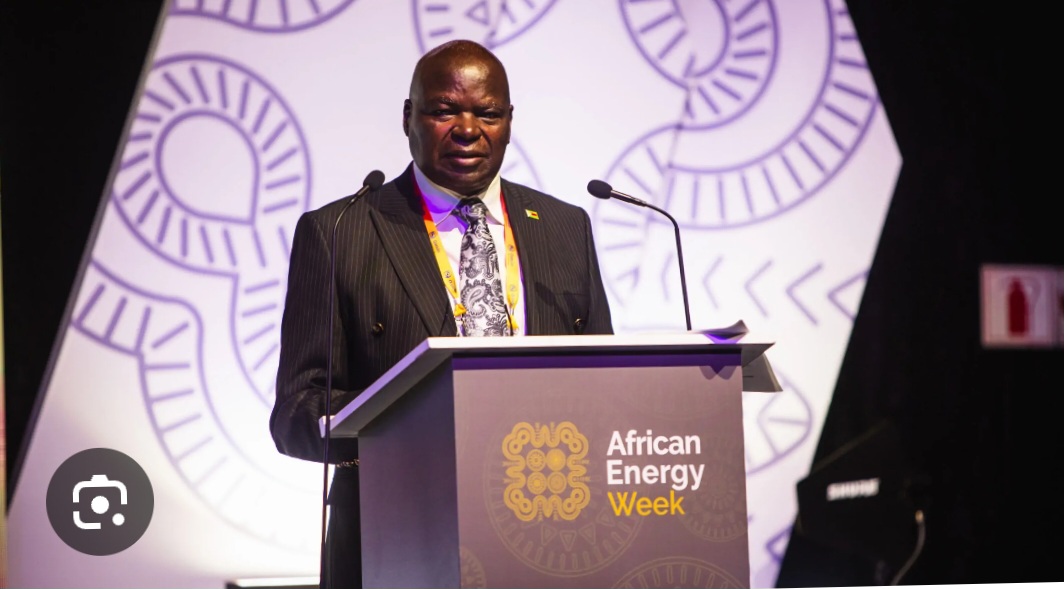
ZIMBABWE has outlined an ambitious plan to expand access to energy and attract investment into its power sector through the National Energy Compact, presented by the Minister of Energy and Power Development, Honourable July Moyo at the Africa Capital Markets Forum in Sandton, South Africa.
The compact sets out the country’s strategy to strengthen infrastructure, promote renewable energy, and drive industrial growth in line with regional commitments made at the Dar es Salaam Summit earlier this year.
Developed through extensive consultations with over 200 stakeholders from the private sector, government, and development partners, the framework reflects both national ownership and international alignment.
“We made sure this compact was not just a government document but a national and international commitment,” he said.
“The process drew insights from our partners, the World Bank, African Development Bank, and the United Nations system, to ensure it addresses Zimbabwe’s priorities while aligning with global energy goals,” he added.
“Following Cabinet’s formal adoption of the compact in March, it was presented to international financiers in April and June for further engagement. Each stage added value and strengthened the framework. Your insights continue to shape the compact’s success,” he went on.
To ease pressure on the national grid and encourage self-sufficiency, the government has introduced a policy requiring large power consumers to develop their own captive power systems within two years.
“Several companies have already begun implementing solar and thermal solutions,” said the Minister, noting that independent lower producers are now a key part of Zimbabwe’s energy landscape.
The compact also supports agriculture by securing dedicated power for over 21 000 hectares of wheat production, achieved through coordination between the Ministries of Energy and Agriculture, utilities, and private stakeholders.
“This is about powering productivity and ensuring food security,” Honourable Moyo said.
He also acknowledged the challenge of “Dark Cities”, housing developments that remain without electricity.
Zimbabwe currently has 371 such unreticulated areas. To address this, the government is licensing private players to build infrastructure and recover investment through prepaid billing models, while interim power solutions are deployed before full grid connection.
“No community should remain in the dark when solutions are within reach,” he said.
To attract renewable energy investment, the government has rolled out tax exemptions, VAT deferments, and national project status for qualifying initiatives. Licence fees for renewable technologies have been reduced, while the Government Implementation Support Agreement guarantees investor protection should off-takers default on payments.
“This is a clear signal that Zimbabwe is open for business and committed to investor confidence,” Moyo said.
Major projects under the compact are being financed through a blend of public, private, and concessional models. These include a US$350 million hydro power extension funded through concessional loans and the Hwange 670 MW expansion, completed in 2023 at a cost exceeding US$1 billion through a joint equity arrangement between government and private partners.
Overall, Zimbabwe estimates that US$9.13 billion will be required to fully implement the compact, with US$4 billion expected from partners and investors.
“The National Energy Compact is more than a policy, it is a blueprint for energy security, economic growth, and social progress,” noted the Minister.
“We invite investors, financiers, and development partners to join us as we light up Zimbabwe and strengthen Southern Africa’s energy landscape.”
The National Energy Compact forms part of Zimbabwe’s broader efforts to modernise its energy sector and advance the goals of Vision 2030, which seeks to transform the country into an upper-middle-income economy.
It also aligns with regional and global climate ambitions, positioning Zimbabwe as an active player in Africa’s transition toward sustainable and inclusive energy systems.

