



Story by Fairstars Mukungurutse
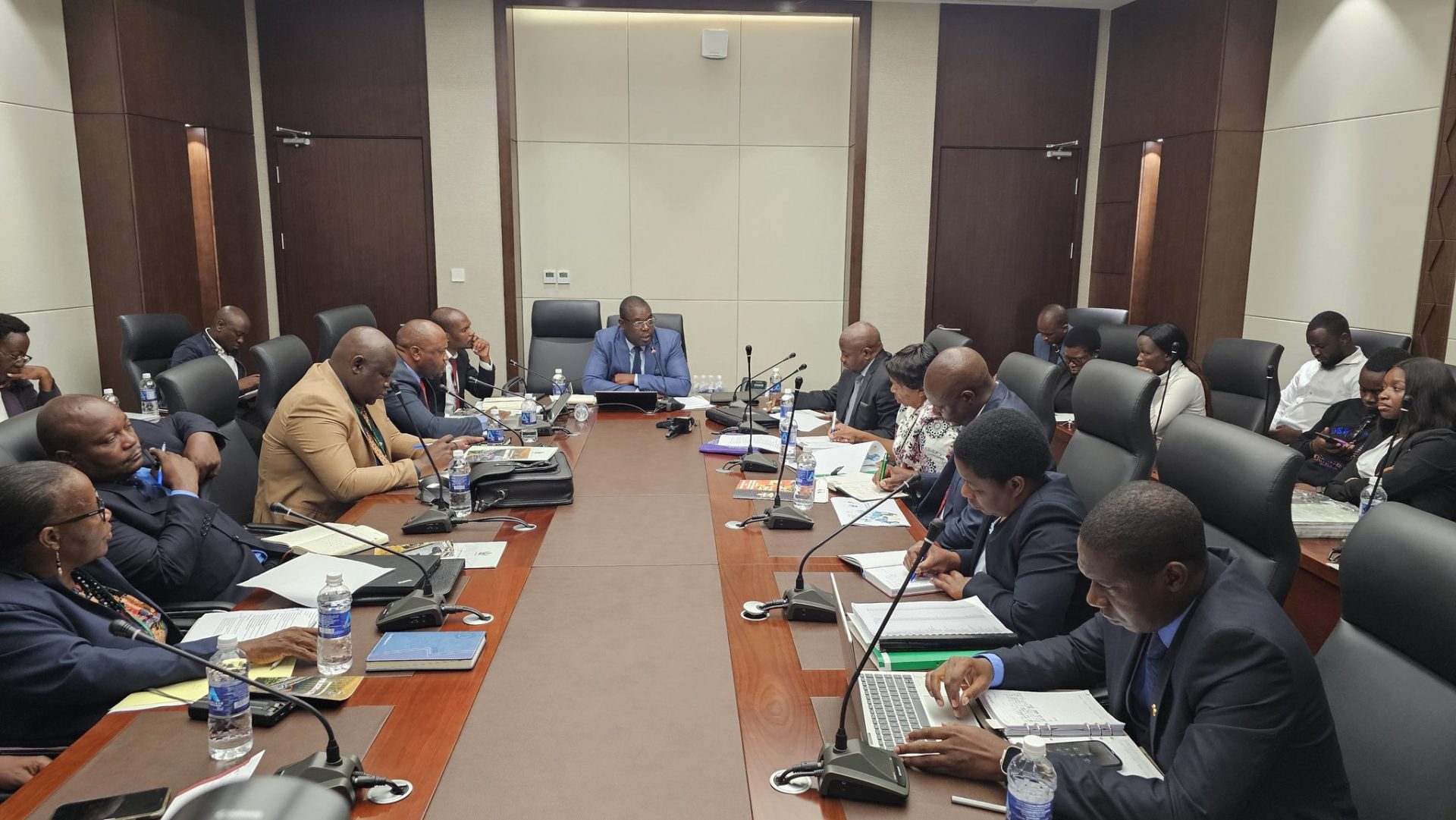
INVESTMENT in the fertiliser production value chain took centre stage when the Ministry of Industry and Commerce appeared before the Parliamentary Portfolio Committee on Industry and Commerce at the New Parliament Building in Mt Hampden this Tuesday.
With the country’s fertiliser industry operating below capacity due to various macroeconomic factors, Zimbabwe has become a perennial importer of fertiliser.
Appearing before the Parliamentary Portfolio Committee on Industry and Commerce, officials from the Ministry of Industry and Commerce attributed the reliance on imports to a number of challenges.
“On the fertiliser issue, we do have a five-year fertiliser roadmap, which we have always been implementing together with the fertiliser companies. I think the key issue, as far as the fertiliser companies are concerned, is the timeous payment, you know, it does affect the cash flows.
“The issue of electricity, as well as the foreign currency availability for them to bring in raw materials also included. What is key from the value chain of the fertiliser, we know that Sable Chemicals is the key company that is to produce ammonium nitrate in a timeous manner, we have actually been advising them that it is not good for us to be importing when we actually have the resources locally,” said Industry Development chief director, Ms Florence Makombe.
“So it’s an area, you know, which we have to accelerate policy intervention, assisting that sector, because they also need financing to some extent and timeous payment so that at least they can efficiently place orders on raw materials because we’ve been competing with other countries in the region.
“They have indicated to us that they would require something, I think, Sable Chemicals would require something in the region of about US$3 million per month. But I think the challenge is, that they decided to retool the company. So they are focusing at the moment on an Afreximbank loan for them to retool their company, which has taken, some time. But we are monitoring them and trying to see if they can come back to be producing timeously.
“They have indicated to us that maybe starting in March they should be able to start producing uranium nitrate. Dorowa, I think, is a company also that has got raw materials, but there is financing that is required for Dorowa to be up and running, and also the issues of challenges of electricity are also affecting Dorowa,” she said.
“We have, I think, 200 years of resource of phosphate in the Dorowa. What it takes is a dozer, an excavator, a tipper, and perhaps a conveyor belt into the plant, and an unlimited or uninterrupted quality supply of electricity in the plant.
“We have a five-year road map which our chipper has maintained. And that five years have been derailed because of poor funding and also corrected directly, taking measures that might not need money because if we say, for instance, we are going to take three weeks of uninterrupted supply to Dorowa so that we can manufacture the cement, the fertilizer we need, we will do that. And the total demand of the country and utilisation of power is not affected.
“We can shut them out for another three weeks by giving them power for three hours, which is exactly the time they need to power up their plant. And then it goes. Then whatever is inside goes to waste, because when they power up that has got to be taken as waste,” said Permanent Secretary in the Ministry of Industry and Commerce, Dr Thomas Utete Wushe.
“So we need to be serious about fertilizer as a nation so that we can be self-sufficient and therefore be able to give our input. Agriculture and mining are the mainstays of the economy, and this is where the ministry comes in to value add. We should make sure that these input costs are maintained at lower levels. So, chairman and members, we have work to do. And I am very happy because, at the very first cabinet meeting, His Excellency came out very strongly about the cost of the process, about looking at how we should be competitive,” he said.
Chairperson of the Parliamentary Portfolio Committee on Industry and Commerce Honourable Clement Chiduwa underscored the need to accelerate investment in the fertiliser value chain.
“If you look at NDS1, there is the issue of value chains and the localization of production. And we have said out of the value chains that have been identified, I think there is a need for us to make sure that we come up with specific targets and timelines. And of note is the one for fertilizer, we said as a committee, that we have got Dorowa and why is it that as a country we continue to import fertilizer when we have got Dorowa?
“So that’s one value chain that has taken our interest as a committee, and we are going to follow through on that. Other value chains are there, but obviously for us as a committee, we had expressed a lot of interest in fertilizer. We have shown interest in iron and steel. And these again are very critical as we move our industrialisation agenda,” he said.
The Ministry of Industry and Commerce also implored businesses to prioritise the procurement of locally-produced products to promote self-reliance and industrial growth in line with Vision 2030.

