



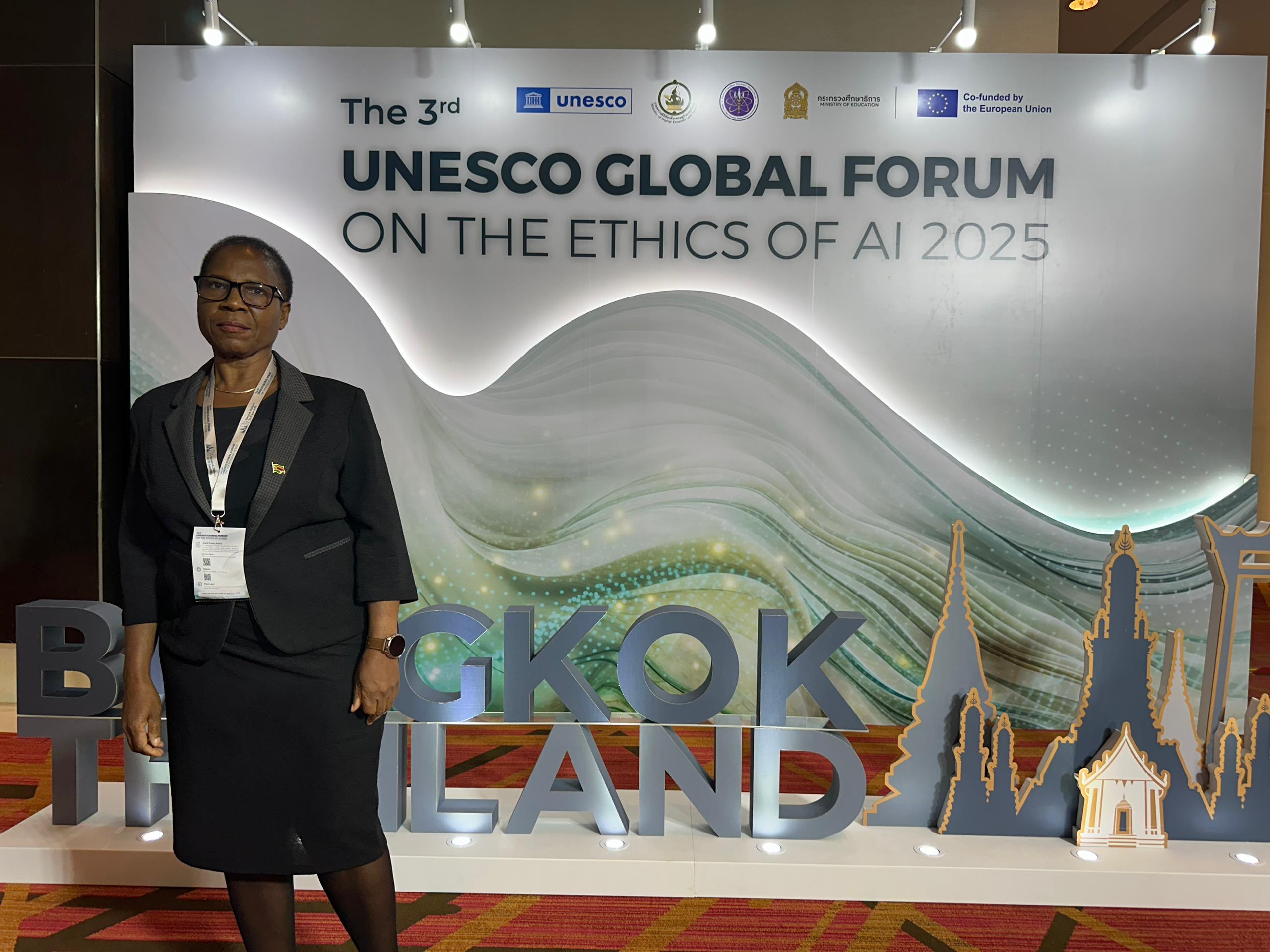
Story by Wellington Makonese
THE third UNESCO Global Forum on the Ethics of Artificial Intelligence (AI) is currently underway, with Zimbabwe among a select group of African nations participating in piloting the global framework for responsible AI deployment.
Running from June 24 to 27, the international forum seeks to promote the ethical and inclusive application of Artificial Intelligence under the guidance of the 2021 UNESCO Recommendation on the Ethics of AI a landmark international framework adopted by Zimbabwe in the same year.
Speaking on the sidelines of the Forum, Dr Beaullah Chirume, Permanent Secretary in the Ministry of ICT, Postal and Courier Services, outlined Zimbabwe’s multi-faceted approach to embedding ethics in AI development and deployment.
“We have quite a number of legislation talking to how best we can actually utilise AI in an ethical manner. Chief among them being the Cyber and Data Protection Act, the Consumer Protection Act, and of course access to information and other pieces of regulations that come into the fore. When you look at the scientific or education part, we are saying let us use our universities. We have the brains, our techno-savvy young graduates are ready to go, including our start-ups, innovation hubs. Let’s utilise them to develop our own locally acceptable or context specific AI solutions and we are thinking that as Zimbabwe we are ready to actually do that,” she said.
Zimbabwe is among six African countries selected by UNESCO to pilot the Readiness Assessment Methodology (RAM) tool an initiative aimed at identifying strengths and gaps in national AI ecosystems while encouraging inclusive, culturally relevant, and rights-based deployment of the technology.
Dr Chirume also stressed the importance of digital infrastructure, inclusivity, and public awareness as key pillars in Zimbabwe’s ethical AI journey.
“We also need to raise awareness on cultural aspect and making sure that we are as inclusive as possible, bringing everybody on board and this is why when we go into the next pillar of technical issues, we are saying that all the areas of Zimbabwe must be reachable, must be accessible in terms of connectivity by our people so that you know they are part of this, not only connectivity but making sure that the connectivity is at the right speeds in order for that to accommodate AI use. We are also seeing economically what are the use cases, health, education, mining, agro, all these are use cases that we can actually work on in order to improve service delivery and to improve productivity,” she added.
The Forum is addressing critical themes, including ethical governance, human rights, gender equality, sustainability, cultural considerations, and AI’s potential to enhance sectors such as healthcare, education, agriculture, and mining.
Zimbabwe has already conducted a national AI landscape diagnosis, which stakeholders view as a major milestone in the country’s journey to harness AI as a catalyst for socio-economic transformation.

