



Story by Bruce Chahwanda
YOUNG scientists and researchers were awarded for their sterling work which impacted positively on communities and the nation at large with government institutions currently funding 34 projects across the country.
In a bid to accelerate the modernisation and industrialisation of the country, stakeholders are pushing innovators and researchers to come up with life-changing solutions.
The 13th Zimbabwe International Research Symposium hosted in Harare this Monday is meant to encourage young people and those in tertiary institutions to look for ways to enhance modernisation and industrialisation.
The government has honoured more than 10 innovators who came up with innovations that will drive communities towards a middle-income society by 2030.
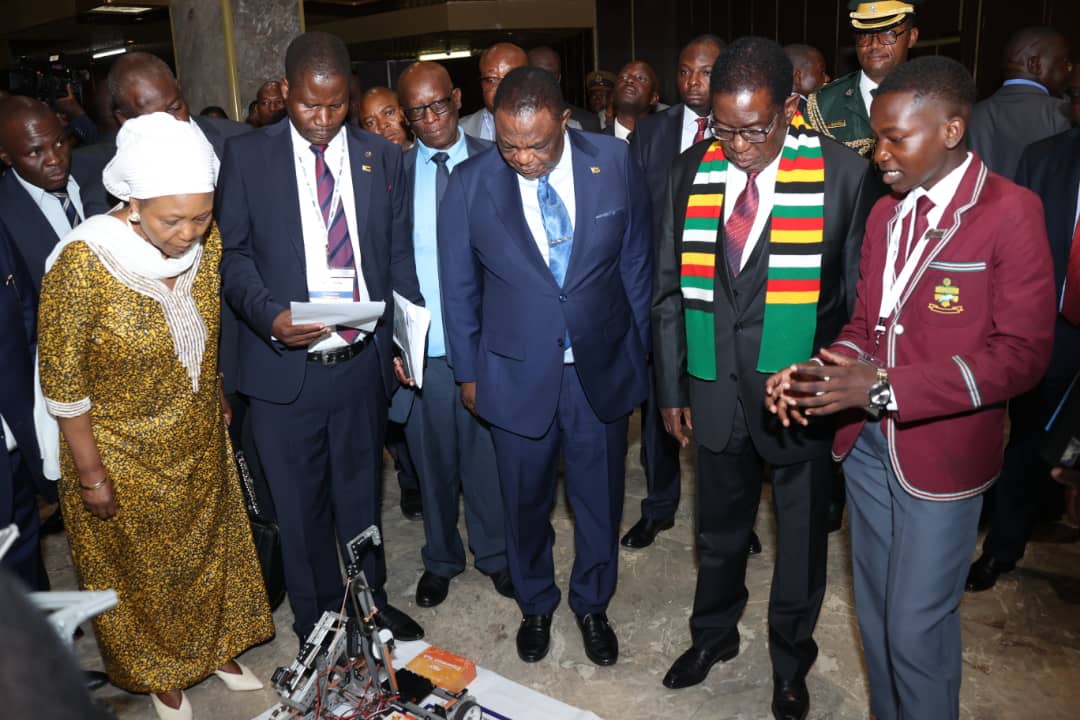
“As a robotics club, we came up with new technologies for demining of land mines which are still detrimental to communities along the country’s borders,” said Tynwald High School Robotics Club vice president, Tanatswa Taremba.
An innovator, Mrs Hilda Kaitano said, “We are developing ways of ensuring that lithium batteries are produced locally considering the availability of the resource here. This will bring lithium battery prices down, while the government will also benefit through taxation.”
A researcher, Professor Jephat Chifamba spoke on the importance of the nation embracing local foods.
“We are encouraging the uptake of local foods, indigenous foods are good for our health and those highly processed foods are destroying our health as a nation and our research is meant to bridge the gap,” he said.
The Research Council of Zimbabwe (RCZ) and the Zimbabwe Energy Regulatory Authority are funding 34 projects in the country though more funding is needed.
“Research Council of Zimbabwe is funding 23 projects and ten of the projects are currently on exhibition ranging from agriculture, mining, and artificial intelligence among others and this platform creates relations among researchers and innovators,” explained RCZ researcher, Professor Chifamba.
“We are funding 11 research projects from tobacco curing to carbon capture. We need to scale up funding while deploying critical technologies,” noted ZERA board chairperson, Dr David Madzikanda.
The Zimbabwe International Research Symposium attracted 18 schools and 36 learners with over 80 research papers set to be presented, which is fodder for policymakers.
Mrs Kaitano scooped the most prestigious award with her innovation towards locally manufacturing lithium batteries, while Coglan Primary School was recognised for the self-irrigating robot system, with Tynwald High School getting an award for a robot meant for demining.

