



Story by Fungai Jachi
IN the corridors of the University of Zimbabwe, innovation has become more than just a buzzword, it’s a blueprint for the country’s socio-economic transformation.
Through the Heritage-Based Education 5.0 Model, the education sector is being transformed into a hub of creativity and problem-solving, with students developing practical solutions to national challenges across various sectors, including agriculture and energy.
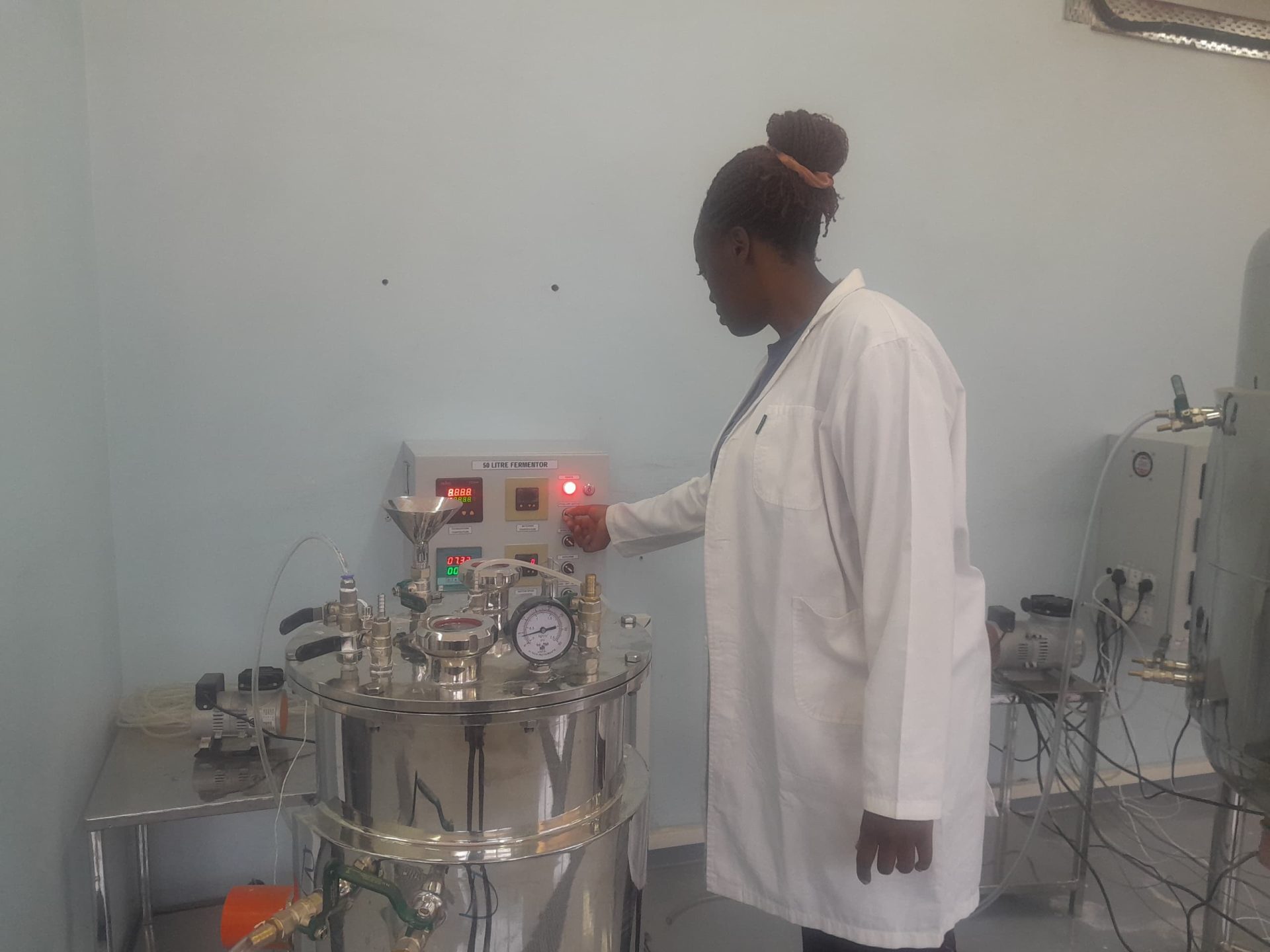
One such innovator, Isheanesu Mukombe, has developed a bio-fertiliser designed to improve the production of legumes while restoring soil health.
“That concept that I learnt in school is what I have applied and enhanced so that we can move away from synthetic fertilisers that harm our soils. With these bio-fertilisers, we aim to increase crop production and rejuvenate our soils. The maximum capacity is 500 litres every three days, and we are targeting legume farmers,” she explained.
Another student, Peter Mafukidze, has developed an energy-saving incubator that is particularly useful for small-scale poultry farmers operating in rural areas.
“A farmer using solar power will find this incubator very useful because it consumes less energy but delivers high output. Even with a small battery, it can handle a capacity of up to 700 eggs,” he said.
University of Zimbabwe Executive Director of Research and Innovation, Professor Florence Mutambanengwe, said the innovations are part of the university’s broader mission to drive local industrialisation and reduce reliance on imports.
“We are starting from the laboratory all the way to the market. These innovations are being funded so they can produce goods and services as guided by the Heritage-Based Education 5.0 model. Alongside innovation, there is technology transfer, and because of the capabilities of our students, we no longer need to import certain products as we can now produce them locally,” she said.
As these projects move from concept to commercialisation, they represent a key step in Zimbabwe’s journey toward industrial and technological growth, anchored in local ideas, local talent, and a shared national vision.

