



Story by Wellington Makonese
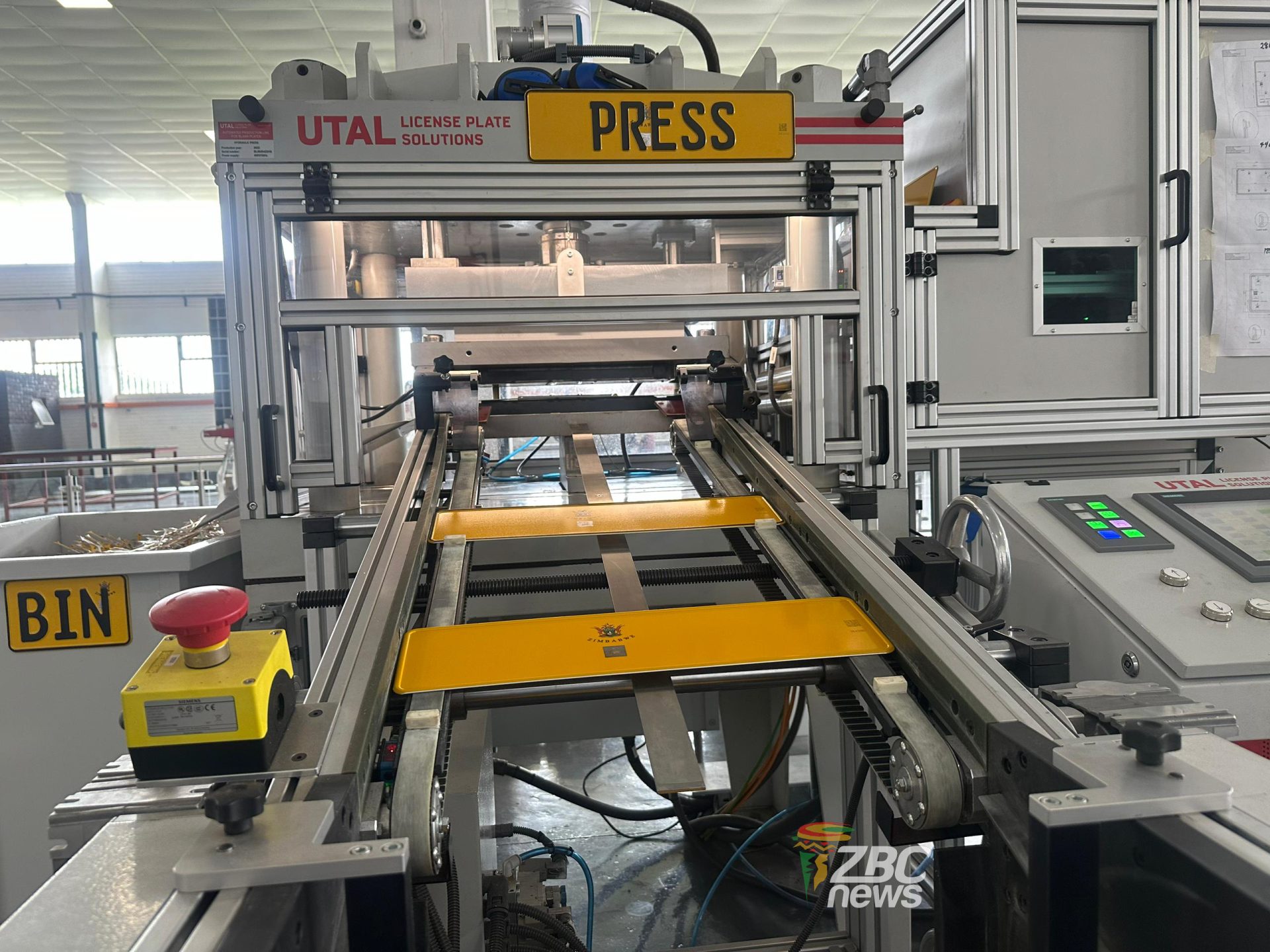
ZIMBABWE is advancing its industrialisation agenda through the local production of smart vehicle number plates, with output scaling up at the University of Zimbabwe-led National Transtech Solutions plant.
Until recently, the country relied on imports for vehicle number plates, a practice that placed sustained pressure on foreign currency reserves. That dependence has since been reduced following the establishment of a consortium of eight tertiary institutions operating under National Transtech Solutions, housed at the University of Zimbabwe.
The locally produced plates incorporate advanced smart features that assign each vehicle a unique digital identity. Authorities say the technology enhances national security, improves traffic management and replaces manual systems with a secure digital platform, aligning with broader efforts to modernise public services and strengthen the economy.
National Transtech Solutions Plant Supervisor Ms Esther Guranungo said the facility produces plates for private, public and commercial vehicles, each embedded with multiple security features.
“We make all kinds of number plates from private, public and commercial vehicles in different colours. They carry security features such as a secure hologram which is temper proof embedded with laser engraved Zimbabwe bird. The second is a unique QR code and secure number. We have the capacity to produce about 13 000 plates a day and so far, we have supplied almost 300 000 since the project began,” Ms Guranungo said.
Local production is cutting the import bill, serving millions of dollars in the economy and creating jobs for young Zimbabweans.
“We came into existence following the challenges the country faced in securing plates. We led the establishment of the National Transtech Solutions Private Limited with other tertiary institutions, backed up by our innovation hubs. The plant has the capacity to produce and expand and can meet the country and regional requirement. We are able to produce about 30 plates per minute. The idea of government is to have local institutions providing solutions for national challenges,” University of Zimbabwe’s Vice Chancellor, Professor Paul Mapfumo stated.
As Zimbabwe transitions from the National Development Strategy 1 to NDS2, initiatives such as National Transtech Solutions underscore a renewed focus on sustainable, home-grown industrial solutions, with research increasingly translated into tangible economic output.

