



Story by Fairstars Mukungurutse
GOVERNMENT has renewed its focus on workplace wellness as a key driver of productivity, human capital development and inclusive economic transformation under Vision 2030.
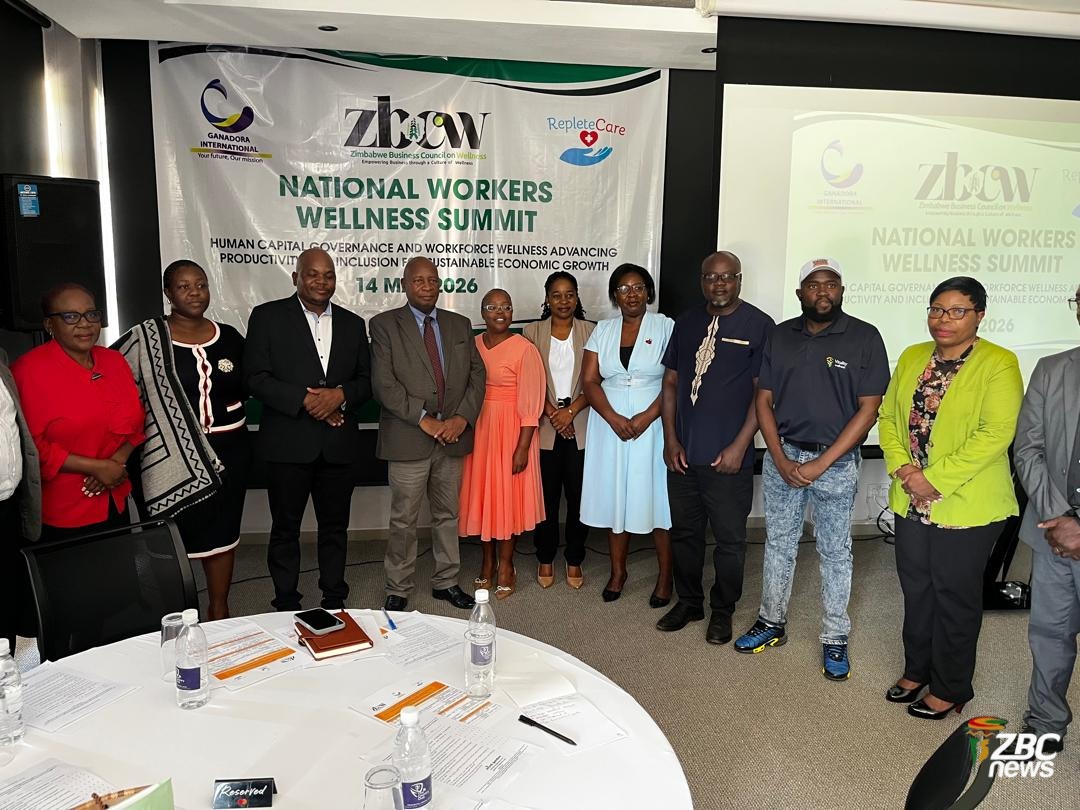
Stakeholders from government, labour and the private sector gathered in Harare this Thursday for the National Workers Wellness Summit, where discussions centred on strengthening workplace wellbeing and aligning wellness programmes with national development goals.
Executive Director of the Zimbabwe Business Council on Wellness, Mr Reason Machengere said the summit seeks to promote collaboration between stakeholders in improving workplace health standards.
“Our aim is to have the private sector, government, labour and other partners constantly discussing workplace wellness and strategies to ensure alignment with the national vision of attaining an upper-middle-income society by 2030,” he said.
Human Capital Strategist, Mrs Ropafadzo Sibanda said the discussions focused on major workplace challenges affecting productivity.
“Today we are looking at HIV and AIDS, mental health, occupational safety, non-communicable diseases and how they impact the productivity of employees within organisations,” she said.
Marketing and Wellness Director for Replete Care, Mr Benmark Jemwa stressed the importance of creating supportive working environments.
“We need every organisation to commit to making the workplace safer and ensuring workers are comfortable. The healthier the worker is, the more productive the company will be,” he said.
Addressing delegates, the Minister of Public Service, Labour and Social Welfare, Honourable Edgar Moyo said a healthy and resilient workforce is essential for sustainable economic growth.
“As Zimbabwe advances towards becoming an upper-middle-income economy, we must recognise that sustainable development cannot be achieved without a healthy, productive, motivated and resilient workforce,” he said.
Honourable Moyo added that human capital development remains central to economic transformation, innovation, competitiveness and social stability.
The workplace wellness agenda also aligns with the National Development Strategy Two (NDS2), which prioritises social development, social protection and high-performance work cultures.

