



Story by Yolanda Moyo
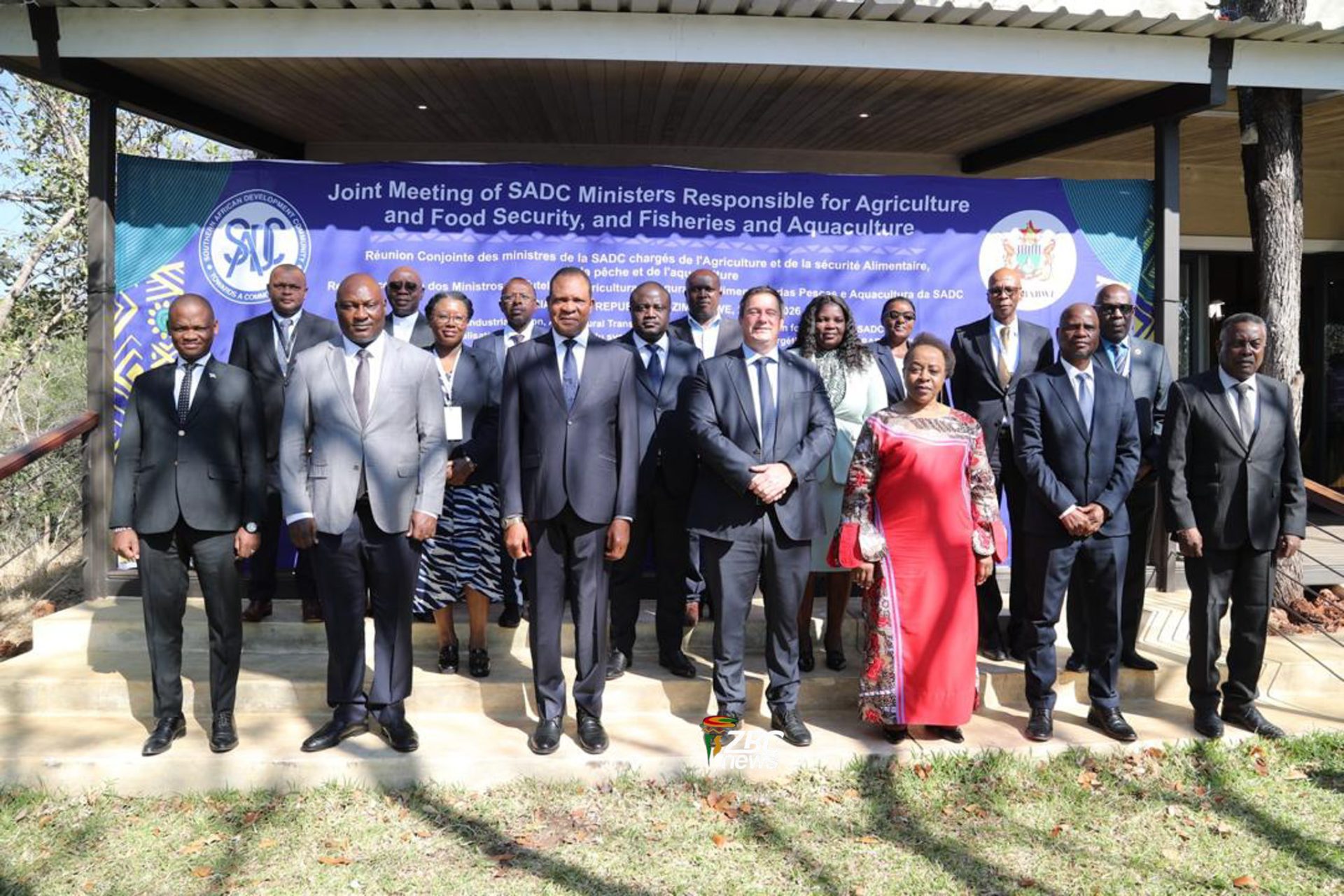
AGRICULTURE ministers from the Southern African Development Community (SADC) have signed an 18-point agreement designed to shield the region from a convergence of severe climate shocks, soaring cross-border animal disease outbreaks, and volatile global supply chains.
SADC ministers responsible for Agriculture, food security, and the blue economy locked themselves behind closed doors, confronting a growing list of interconnected threats facing the region: escalating food insecurity, the looming return of El Niño-induced drought conditions, soaring fertilizer costs linked to global geopolitical instability, and livestock disease outbreaks affecting trade and food systems.
Rather than issuing another declaration of concern, these ministers emerged with what they describe as a concrete regional action plan aimed at transforming Southern Africa’s agricultural resilience.
“There were eighteen resolutions that we have taken today. These are resolutions focused on food security, harmonisation of fertilizer standards, joint fertilizer buying, and, importantly, a regional approach to Foot-and-Mouth Disease. We have agreed to establish a regional vaccine bank so that SADC countries can respond more rapidly to outbreaks.
“This is about protecting livestock industries, preserving trade markets, and ensuring long-term agricultural growth across the region. When we look back five or six years from now, I believe this meeting will be remembered as a catalytic turning point where SADC countries made firm decisions to move forward together,” Chairperson of the Joint Committee of SADC Ministers of Agriculture and Food Security, Fisheries and Aquaculture Honourable John Henry Steenhuisen said.
A major focus of the summit was reducing dependence on imported agricultural inputs, particularly fertiliser, whose prices have surged globally in recent years.
Zimbabwe says it is already advancing domestic fertilizer production strategies that could be expanded across the region, while also positioning the Africa Centre for Fertilizer Development as a continental hub for soil health and fertilizer innovation.
“In Zimbabwe, we are already discussing localisation of the fertilizer industry, and cabinet-level discussions are underway. This model can be upscaled to the regional level. Zimbabwe also hosts the Africa Centre for Fertilizer Development, and we want it recognized as Africa’s premier institution for fertilizer development and soil health management,” Minister of Agriculture, Mechanisation and Water Resources development Dr Anxious Masuka said.
The joint ministerial meeting caps off days of intense negotiations, which began on Wednesday ending this Friday.
The resolutions adopted in Victoria Falls also extend into the region’s marine economy, with ministers approving measures to strengthen the SADC Fisheries Monitoring Centre in Mozambique as part of efforts to combat illegal fishing and protect regional aquatic resources.
If these policies succeed, this Victoria Falls Summit will be remembered as the moment Southern Africa stopped moaning about the climate crisis and decisively adapted to survive through it.

