



Story by Yolanda Moyo
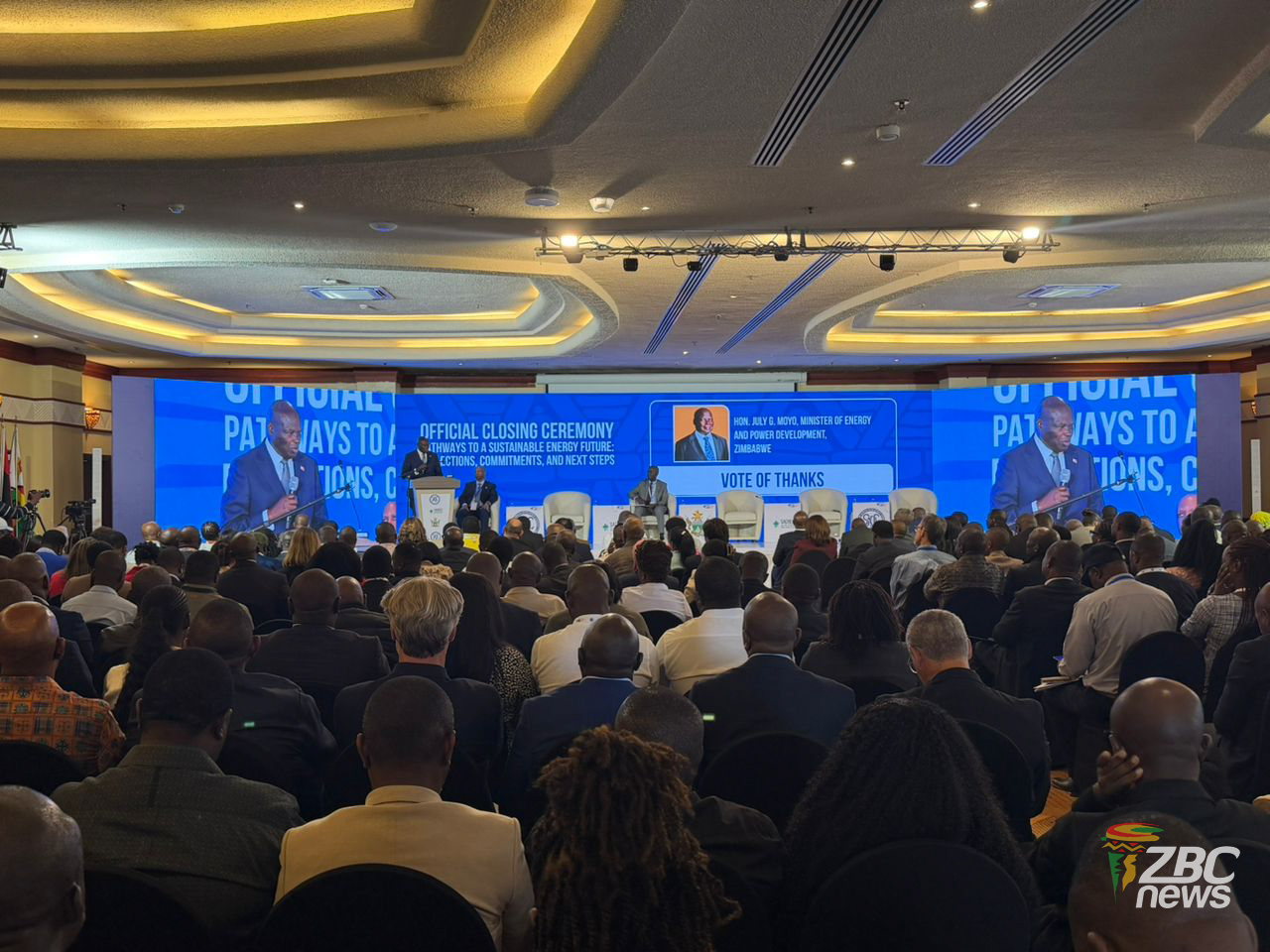
THE second edition of the SADC Sustainable Energy Week has delivered a strong and action-oriented set of outcomes, with member states agreeing to move decisively from policy dialogue to implementation of agreements.
After days of deliberations in Victoria Falls, the focus has shifted from promises to performance, with leaders pushing for deadlines on regional energy projects. At the centre of the outcomes is implementation.
Delegates say Memoranda of Understanding and summit resolutions must now translate into deliverables without delay.
“There should be facilitation of implementation of memoranda of understanding and agreements and convert them into time-bound deliverables without further delays,” SADC Secretariat’s Senior Programme Officer for Energy, Mr Moses Ntlamelle noted.
Regional power interconnection emerged as a priority. Delegates reaffirmed commitments to complete key interconnectors linking Angola, Malawi, and Tanzania to the Southern African Power Pool by 2028, with full interconnection of all 12 participating SADC member states targeted for 2030.
“A major outcome was renewed momentum to complete power interconnectors linking Angola, Malawi and Tanzania to the Southern African Power Pool, with targets set for 2028 and full regional interconnection of all 12 SADC member states by 2030. Delegates said stronger grids are central to reliability, trade and regional energy security,” Mr Ntlamelle stated.
Energy access was framed not only as a social imperative but as a driver of industrialisation and job creation. The meeting called for harmonisation of policies and regulations to unlock private sector participation across the energy value chain.
“The SEW further recommends review and harmonisation of policies and regulations that will allow the private sector to participate in the development and implementation of all energy projects from upstream generation, planning and design through to implementation. Promote productive energy use through Micro, Small and Medium Enterprises (MSMEs). Foster green jobs and economic growth, particularly in rural and peri-urban areas. Promote gender mainstreaming and youth inclusion in the energy sector to ensure that no one is left behind,” Mr Ntlamelle said.
Delegates also called for diversification of the region’s energy mix, including expanded solar capacity and emerging technologies such as green hydrogen and modular nuclear power.
As the meeting closed, the emphasis was on delivery. Officials said progress would ultimately be measured in megawatts generated, cross-border connections completed, and jobs created, benchmarks that will define the region’s transition towards a more integrated and resilient energy system.

