



Story by ZBC Reporter
Victoria Falls – ARTIFICIAL Intelligence (AI) is no longer an abstract concept, but a practical tool that can redefine legislative processes and strengthen democratic governance across the SADC region.
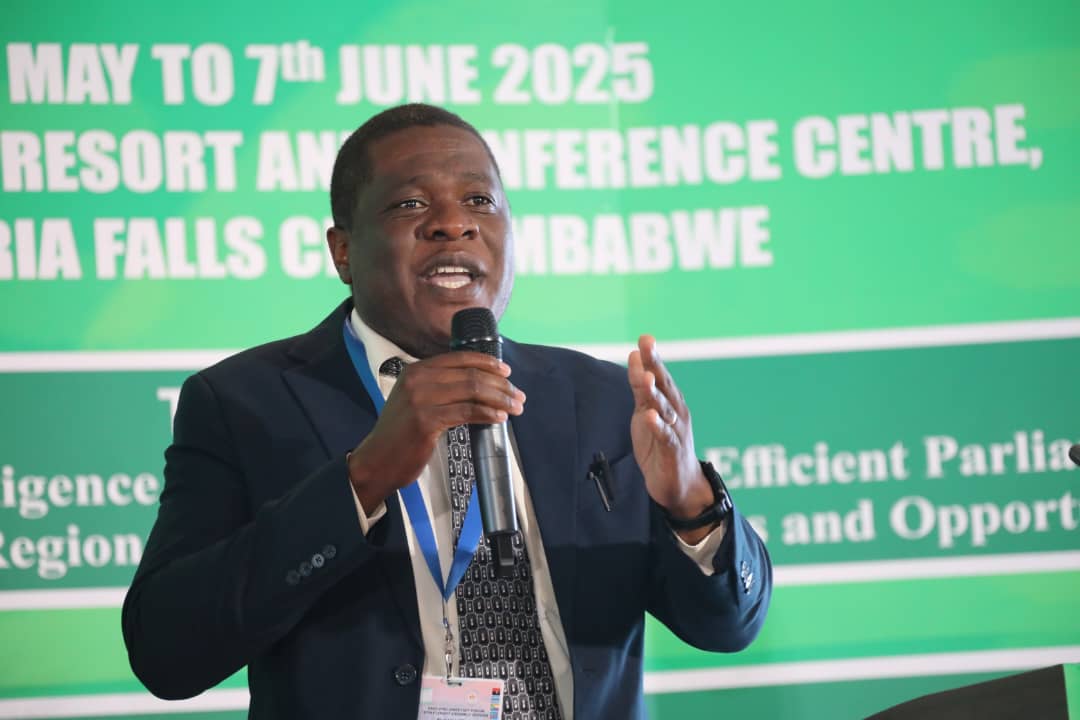
This was the recurring message during expert presentations delivered at the 57th Plenary Assembly Symposium of the SADC Parliamentary Forum in Victoria Falls.
Presentations by leading academics emphasised that parliaments across the region must embrace AI not only as a technological trend but as a strategic imperative to improve efficiency, transparency, and citizen engagement.
Dr Magadza, in a presentation titled “AI Transformation Begins with Purpose, Not Platforms”, dismissed the common misconception that AI will replace human jobs, noting instead that people who understand and utilise AI will define the future of work, including in legislatures.
“AI won’t take your job. It is somebody using AI that will take your job,” Dr Magadza explained.
He outlined a range of AI tools already in use globally, including those applied to post-legislative scrutiny, natural language processing for document drafting, and machine learning for budget analysis and fraud detection.
Tools such as CoCounsel, BillAnalyzer, and Robot Alice (Brazil) were cited as examples of how AI is being used to analyse legislation, predict policy outcomes and detect procurement irregularities.
Professor Eddie Mwenje, Vice Chancellor of Bindura University of Science Education, also addressed the symposium, presenting on how academic institutions can support parliaments through home-grown AI solutions.
He described AI as a “tectonic shift” for parliaments seeking to meet their constitutional obligations more efficiently.
“Parliaments that master AI will shape the future, those that don’t will be shaped by it,” Professor Mwenje warned.
His presentation highlighted pilot projects underway in partnership with the Parliament of Zimbabwe, including AI-powered Hansard transcription, MP attendance tracking, and document digitisation.
Professor Mwenje praised Parliament’s collaboration with universities as a model for the region.
The experts also acknowledged barriers such as infrastructure gaps, lack of digital skills among MPs and staff, and slow adoption due to traditional work cultures. Despite these challenges, they said the benefits of AI, such as enhanced legislative quality, real-time citizen feedback, and cost-effective operations, far outweigh the risks.
With academic support and regional cooperation, SADC parliaments were urged to start small, build on existing successes, and develop roadmaps to ensure sustainable AI adoption.
“The true power of AI lies in its ability to transform and reimagine core functions,” Dr Magadza concluded.
The symposium ended with consensus that digital leadership is no longer optional. As AI becomes increasingly central to global governance, SADC’s legislative institutions must take bold steps to ensure they are not left behind.

