



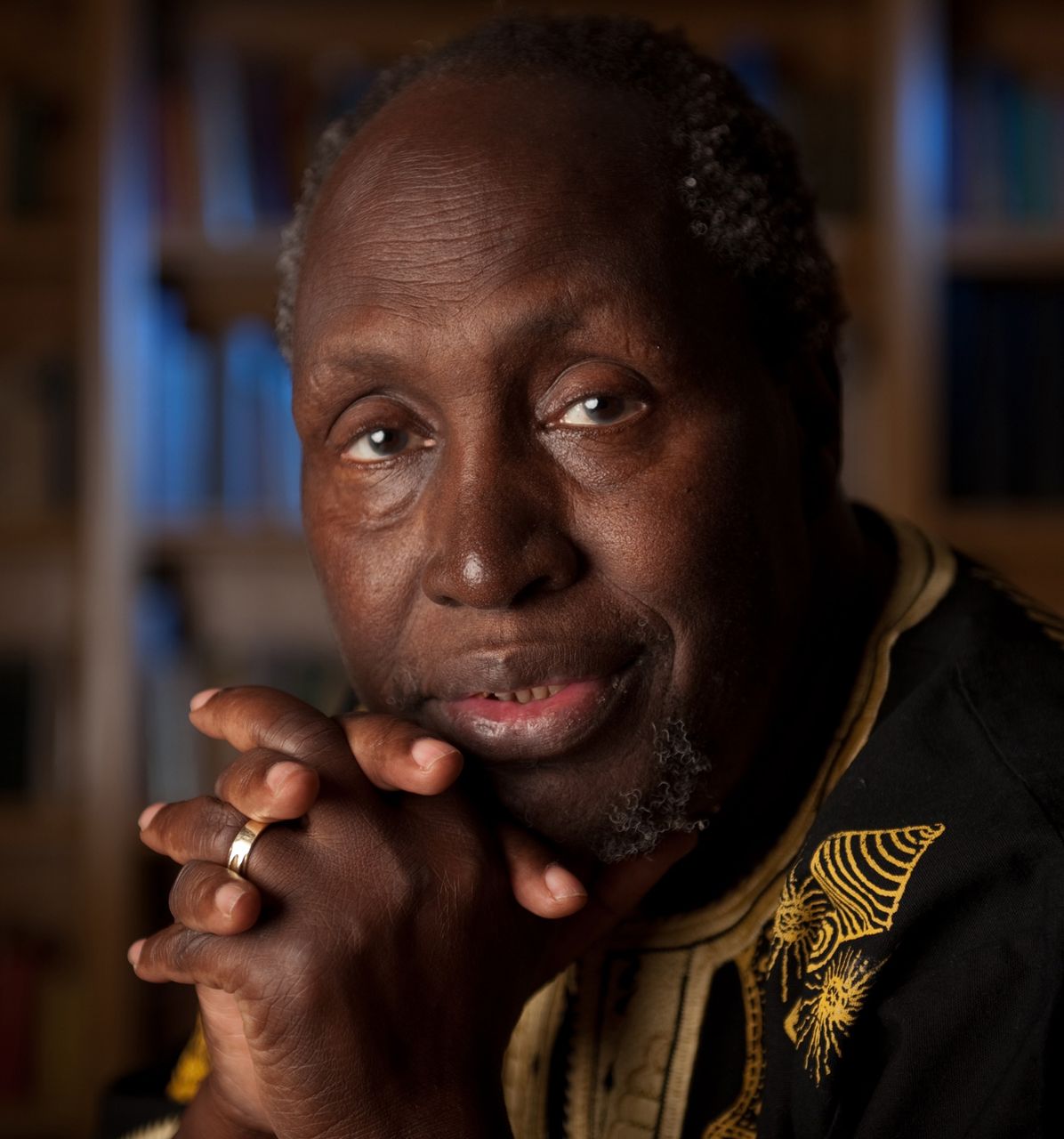
Story by Patience Nyagato
KENYA-RENOWNED Kenyan author, academic, and cultural activist, Professor Ngũgĩ wa Thiong’o, has died at the age of 87.
A towering figure in African literature and one of the continent’s most influential intellectuals, Ngũgĩ passed away on Wednesday morning, as confirmed by his daughter, Wanjiku wa Ngũgĩ, via a Facebook post.
Further details regarding his passing are expected to be released in due course.
Ngũgĩ wa Thiong’o was widely revered for his unapologetic commitment to African identity, language, and decolonisation.
His seminal works, including Decolonising the Mind, Weep Not, Child, and Petals of Blood, challenged colonial ideologies and centred the African experience, earning him acclaim across the globe.
Born in 1938 in Kenya during the colonial era, Ngũgĩ’s literary journey spanned more than six decades. He emerged as a fierce critic of imperialism and neo-colonial structures, advocating for the cultural and linguistic liberation of Africa.
Notably, he made the bold decision to cease writing in English, opting instead to write in his native Gikuyu language a move that sparked international debate and reaffirmed his ideological stance on the power of indigenous languages.
Throughout his lifetime, Ngũgĩ spent extended periods in exile due to political persecution, but remained steadfast in his advocacy for the African continent through literature, education, and political discourse.
His writings continue to inspire generations of writers, scholars, and activists, particularly in countries such as Zimbabwe, where post-colonial identity remains a central theme in national dialogue.
Tributes have continued to pour in from across the world, with many describing him as “a father of African literature” and “the conscience of the continent.”
His legacy is immortalised not only in his writings but in the countless lives he touched through his enduring message of resistance, resilience, and reclamation.
Ngũgĩ wa Thiong’o leaves behind a formidable body of work and a legacy of intellectual and cultural defiance that will resonate throughout African literature and history for generations to come.

