



Story by Oleen Ndori
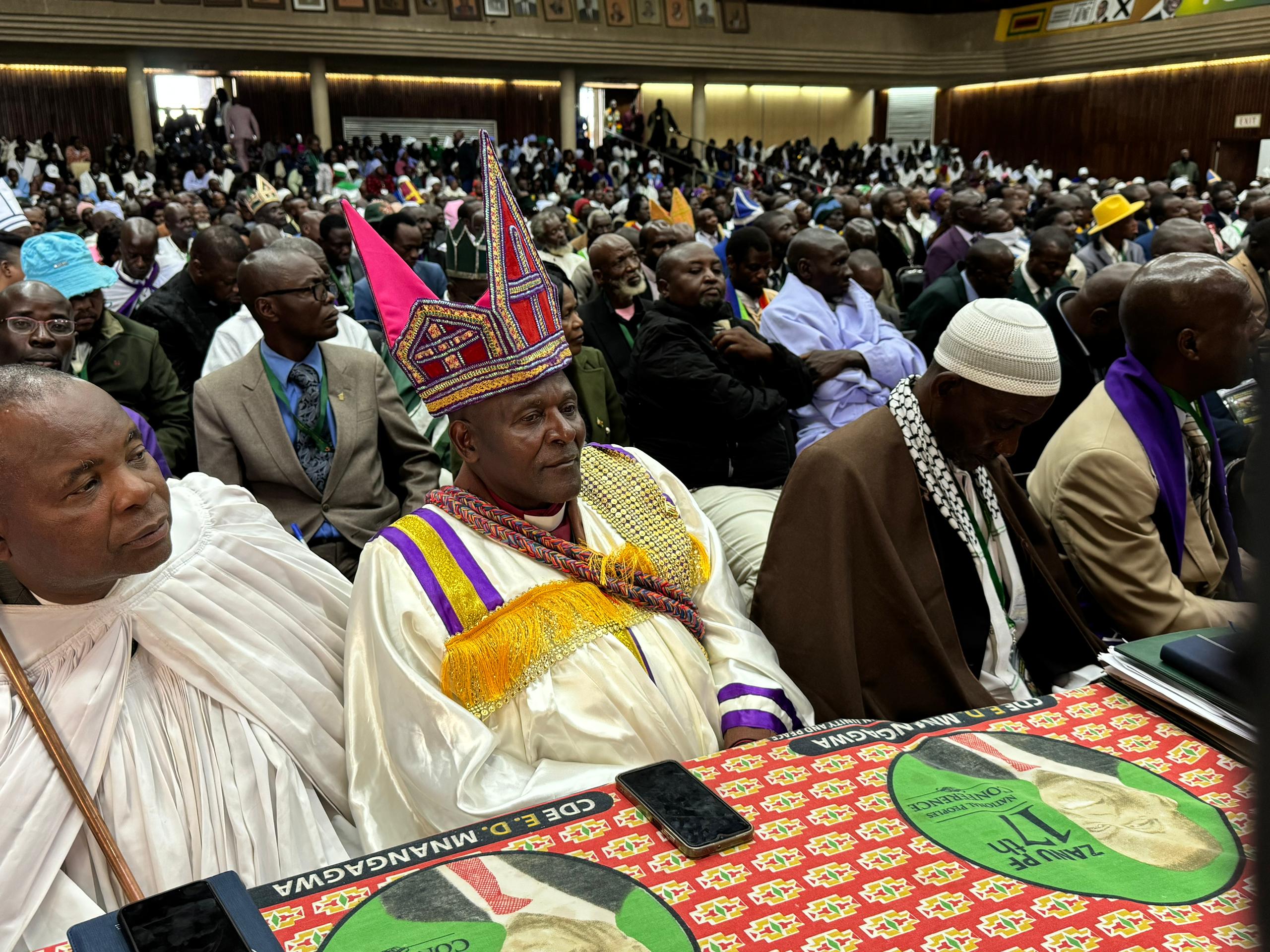
HARARE – THE two-day National Multi-Faith Economic Dialogue has ended with agreements to push the church’s participation in the country’s economic activities.
As part of its broader inclusive development thrust, the ruling ZANU PF party has been engaging religious stakeholders to ensure their participation in national economic activities.
The latest dialogue session, which brought together representatives from various faith-based organisations, ended with delegates pledging to support the government’s economic vision.
Bishop Nehemiah Mutendi affirmed the church’s active role in national growth.
“As the church we are not listening in and observing, but we are taking part in this growth of the economy.”
“The meeting was important in shaping and exchanging ideas in how the church can support Government vision,” Sheikh Ishmael Duwa said.
“With empowerment we can strengthen community – government cooperation,” Luxod Mutova said.
“As the church we applaud the inclusion of our voices in shaping the country’s economic outlook,” Apostle Biggy Mutazu said.
The Special Presidential Advisor, Dr Paul Tungwarara, says the inclusion of everyone feeds directly into the “leaving no one and no place behind” vision by President Emmerson Mnangagwa.
“People from different churches are spread across all provinces. If they are empowered, we will see development across the entire country—including in remote areas. That is what the President wants: inclusive development involving everyone. He remains the President for all churches and he wants everyone to be involved in development,” he said.
ZANU PF National Political Commissar, Cde Munyaradzi Machacha, enunciated the goal of the interface in bridging the gap between government, the party, and interfaith groupings.
“We had a productive two-day engagement between the party and various church and faith-based organisations. Our aim was to build bridges, so churches can better understand national development frameworks such as NDS1 and NDS2, and identify roles they can play to help achieve Vision 2030’s goal of becoming an upper-middle-income economy. We are encouraged that the message has been well received.”
Cde Machacha noted that faith-based organisations are already contributing in key sectors including education and agriculture.
“I know the Zion Church under Bishop Mutendi is involved in farming and runs private schools. The Catholic Church also owns agricultural land and operates other business ventures. This model, where the church is a player in the economy, is one we want to encourage and scale up.”
The meeting forms part of ongoing nationwide engagements aimed at promoting the active involvement of religious institutions in achieving Zimbabwe’s socio-economic targets under Vision 2030.

