



Story by Tapiwa Machemedze
THE Government’s ecological tailoring initiative in agriculture is beginning to yield significant dividends, with farmers in drought-prone regions such as Muzarabani expecting a bumper harvest of traditional grains.
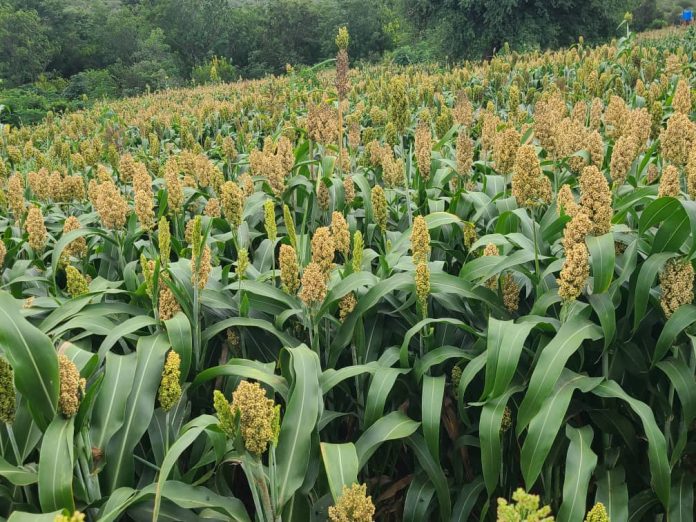
Ephraim Mugoniwa, a farmer from Utete Ward in Muzarabani, exemplifies the success of traditional grain cultivation in the Lowveld.
Despite a delayed start to the rainy season, Mugoniwa’s sorghum crop has flourished.
“I dry planted this sorghum on December 7, and because of the late rains, the seeds lay dormant. On the night of January 3, it rained, and by January 8, all of the sorghum had germinated. I planted 4.5 hectares,” Mugoniwa explained.
Mugoniwa’s consistent success over the past few years has earned him recognition in government circles.
He has also been contracted by seed producer Farmbiz to cultivate parent seeds for traditional grains.
“There is currently a challenge in sourcing traditional grain seed due to the drought and limited growing areas. However, by 2027, we can assure the nation that we will have sufficient seed. We urge seed growers to treat this industry seriously to ensure quality seed production,” said Mr Misheck Maravanyika, Director of Farmbiz Genetics.
The Permanent Secretary for Lands, Agriculture, Water, Fisheries and Rural Development, Professor Obert Jiri, recently assessed the progress of traditional grain farming in the traditionally dry areas, urging farmers to work closely with their agricultural extension officers.
“We do not want a country that has hunger when we have agriculture extension officers. Listen to your officers. All that is planned by the ministry, this concept of ecological tailoring is implemented by extension officers. If you want to see households that have hunger this year, they did not listen to their extension officers,” Professor Obert Jiri said.
The government’s ecological tailoring drive focuses on encouraging farmers to cultivate crops that are naturally resilient to the specific climatic and soil conditions of their regions.

