



Story by Mhlomuli Ncube
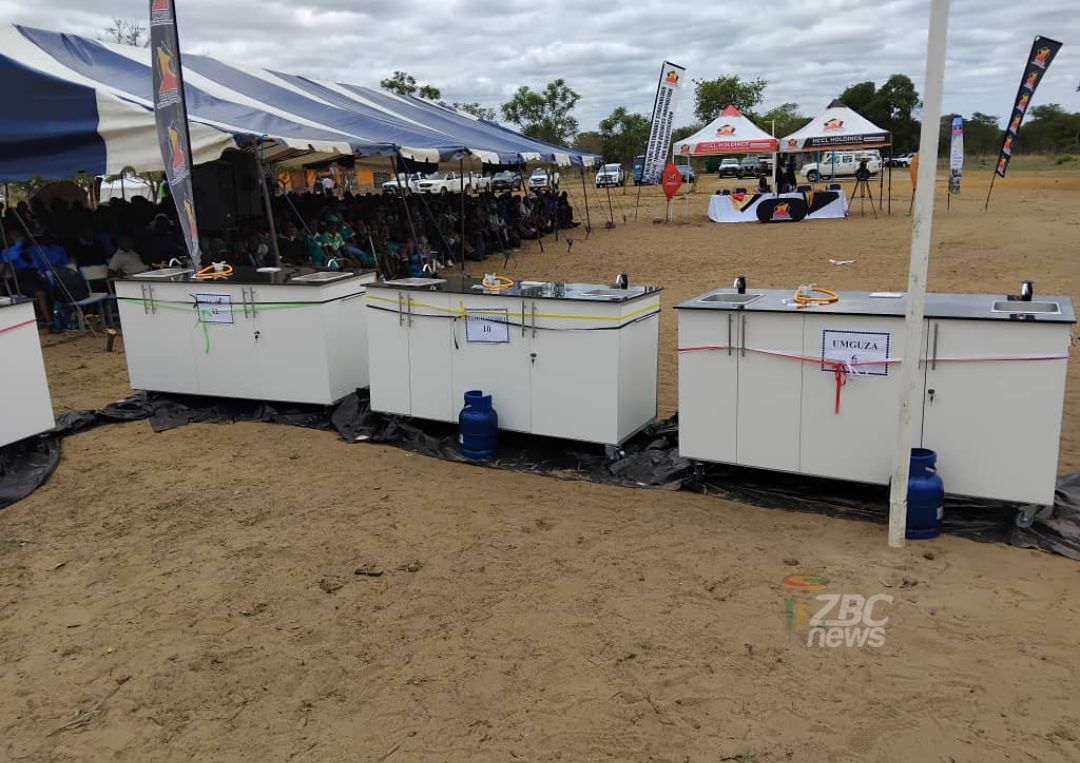
SEVENTY-five secondary schools in Matabeleland North have received mobile science laboratories as part of Government’s ongoing effort to strengthen STEM education in underserved districts.
The laboratories, distributed across Binga, Tsholotsho, Nkayi and other parts of the province, are expected to significantly improve learners’ access to practical experiments long constrained by the absence of fully equipped science facilities. The initiative is intended to align classroom instruction with hands-on learning, a key requirement of the national Heritage-Based Curriculum.
Parents, teachers and community representatives welcomed the intervention, noting that it marks a shift from theoretical instruction to practical engagement in subjects such as physics, chemistry and biology.
“The children are not going to learn from imagination now; they will be practically working with what they can see and do all that is necessary. It is an important intervention.
“This is very critical in learning, we are already excited that the children will be able to touch and see with their own eyes the physical and the real. That is what STEM is all about, and now it is happening in exactly the same way it should,” beneficiaries of the programme said.
In Matabeleland North, there has been strong collaboration between the government and various stakeholders to promote the STEM approach by pooling resources together. Hwange Colliery Company funded the purchase of the 75 laboratories, a move described as significant and transformative.
“We want STEM here for every school and every child, this is what will be our new normal, and we will work together to ensure our learners have access to all STEM tools,” Stemlady Holdings Founder, Ms Sicelo Dube said.
“By equipping these secondary schools today with mobile science laboratories, we strive and endeavour to bridge the gap between potential and opportunity. We are ensuring that learners, regardless of their geographic location, have access to practical science education that nurtures curiosity, innovation, and problem-solving skills. This initiative is also aligned with the United Nations Sustainable Development Goals (SDGs), particularly SDG 4: Quality Education. We believe that quality education is the cornerstone of sustainable development,” Hwange Colliery Company Managing Director, Engineer William Gambiza said.
Matabeleland North Minister of State for Provincial Affairs and Devolution, Honourable Richard Moyo, said the laboratories mark a decisive step towards equalising education standards across the province.
“The introduction of these mobile science laboratories is not merely the distribution of equipment, it is the opening of new doors of opportunity for our rural learners. For too long, many of our rural secondary schools have operated without adequate science laboratories, limiting the full delivery of the Heritage-Based Curriculum.
“Today, that barrier begins to fall. This programme is firmly aligned with our national agenda of ensuring access to modern technology and quality education, regardless of location. By bringing state-of-the-art equipment to rural communities, we are narrowing the technological divide and creating a fair platform for all learners to succeed,” he said.
The bulk of the mobile laboratories has been allocated to schools in Binga and Tsholotsho, districts that historically record some of the lowest pass rates in science subjects.
In total, the equipment will benefit more than 269 000 learners across the province, supporting the government’s continued vision of not only teaching STEM but producing measurable results.

