



Story by Abigirl Tembo, Health Editor
Government’s Mobile One-Stop Centres are intensifying the fight against Gender-Based Violence (GBV) through delivering critical services to rural communities and empowering survivors to seek help and rebuild their lives.
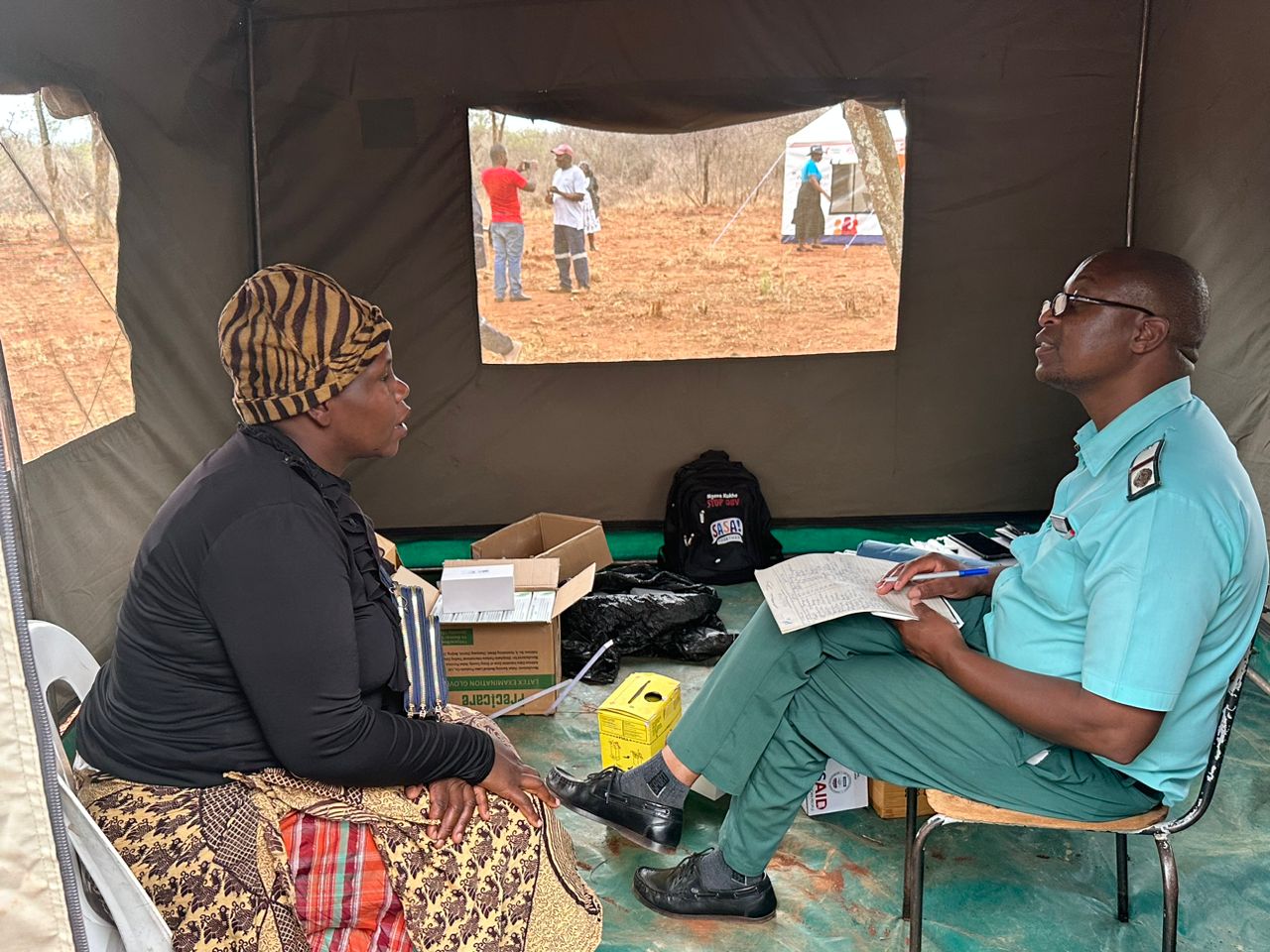
From counselling services to legal and health services the mobile one stop centres bring GBV services within reach, providing critical services to survivors of the social ill.
“I came here a few weeks back when the first mobile one-stop centre came. My husband was abusive and he would use anything available to him even a matchete. I left my children with my mother and he went there and forcibly took them. He threatens my mother and me whenever we try to take the children. I got counselling at the mobile one-stop centre and today I received money for transport so that I can go to Inyathi and they can help me get custody of my children,” said Florence Ndlovu, a beneficiary of the programme.
Another beneficiary, Lindokuhle Khumalo also said,”I got help when the first mobile one stop-centre came and they gave me counselling and advised me to think about the next step. Today I received transport money to travel to Inyathi to sue my former husband for maintenance because he no longer takes care of his children. Women often fear to access GBV services but I encourage all women who are suffering to come forth and get assistance form these one stop centres.”
Through the Women at the Centre Programme, the Ministry of Women Affairs, Community, and Small and Medium Enterprise Development has partnered with the United Nations Population Fund (UNFPA), Musasa, and other stakeholders to create a safe haven for survivors of gender-based violence.
“UNFPA Zimbabwe is working with the support of Takeda, a Japanese pharmaceutical company. We are supporting the Women at the Centre Programme, piloted here in Bubi district, which we identified because it is a hard-to-reach district with high cases of gender-based violence. It’s a mining district, and we know we have artisanal mining that is happening here in the district.
“Women are traveling long distances to access services. A lot is happening. There is high rates of child marriages. Teen pregnancies are happening. So we felt that it was ideal to identify this district to pilot this particular program here. So once we have piloted this program, it is our plan to roll out this nationwide,” highlighted Ms Magdalene Chavunduka- UNFPA Zimbabwe Country Office.
Musasa Regional Manger Angelina Munangwa weighed in, At the Mobile One-Stop Centre, the survivors start with the trauma counselling, and then they go through the trauma counselling with the counsellor who provides the trauma counselling, where she’ll be able to then identify other key services that should be accessed by the survivor. So psychosocial support is very key.
“We also have the platform as part of the services, or I would say the information sharing platform for which the community have the opportunity. So it is at that platform where the key service providers also have the opportunity to talk about the services they are providing at the site, and then the community will then become the survivors, or the survivors themselves. So all of that information is now available for the community to access. The project has been helpful to the community because, for obvious reasons, we’ve seen women having difficulties or mobility challenges to access the services at the centre. So taking the services to the people, we’ve seen how they have responded to the mobilisation.”
The programme, which was launched in February this year will be cascaded to other parts of the country as government intensifies efforts to end gender-based violence.

