



Story by Gay Matambo
CLIMATE-smart livestock farming is emerging as a key driver of rural livelihoods in Nyanga, with drought-tolerant cattle breeds helping communities build resilience against climate change while improving household incomes.
The benefits of climate-resilient livestock production were showcased during a livestock field day held in Tendanayi Village, Nyanga District, on Wednesday.
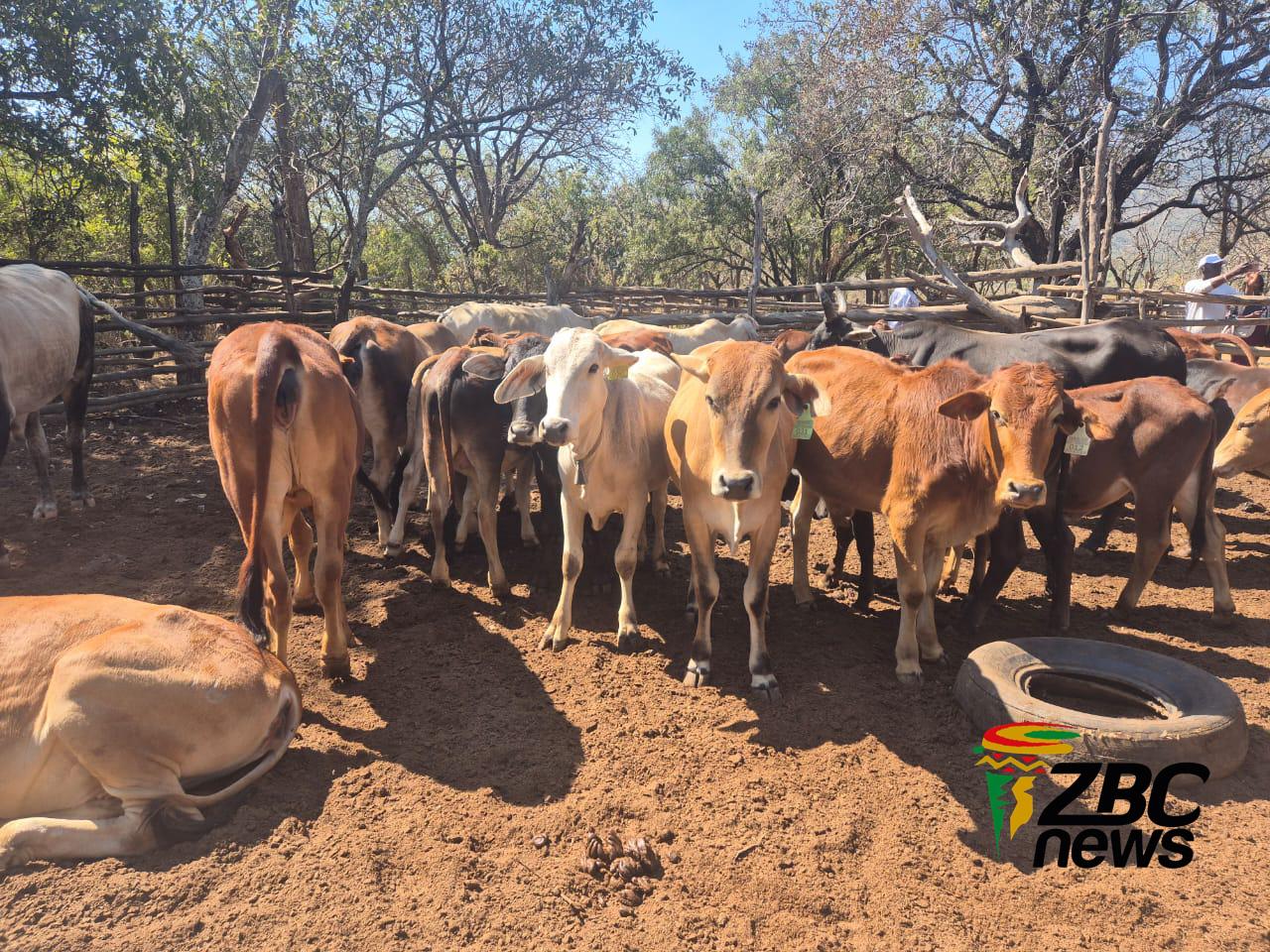
Among the highlights was the Duri family’s thriving Mouzi Boran cattle breeding enterprise, which has grown into a herd of 104 animals.
Host farmer Takudzwa Maturure said the project has demonstrated the value of investing in resilient livestock breeds.
“The Boran breed has completely changed the game for us here in Tendanayi. Managing a herd of 104 cattle, including 37 cows, 30 junior heifers and 17 calves, has shown us that with the right genetics, dry regions can be incredibly productive.”
Farmers attending the field day said drought-tolerant breeds such as the Boran offer a reliable source of income in areas where crop production is increasingly affected by erratic rainfall.
One farmer said adopting resilient breeding practices could transform livelihoods across Nyanga.
Another noted: “Seeing what the Duri family has achieved here is a real eye-opener for us. In these dry parts of Nyanga, crops often fail us due to poor rains, but this Boran breed thrives on minimal forage.”
A third farmer said the training had equipped participants with practical knowledge to improve their own herds.
“The knowledge we received today on breeding the Mouzi Boran has given us a clear roadmap. We are ready to upgrade our own herds using these genetics.”
The initiative supports the Second Republic’s Agriculture and Food Systems Transformation Strategy and the Livestock Recovery and Growth Plan, which promote climate-smart livestock production.
Manicaland Provincial ARDAS Director Mr Nhamo Mudada said drought-tolerant breeds offer a sustainable solution for dry ecological zones.
“In dry ecological zones, traditional crop farming is risky due to climate change. The sustainable way forward is climate-smart livestock production. This breed is highly tick-resistant, heat-tolerant and converts pasture efficiently, making it ideal for our provincial herd-building strategy.”
Manicaland Minister of State for Provincial Affairs and Devolution Advocate Misheck Mugadza said the project reflects the government’s devolution and rural industrialisation agenda.
“What we are witnessing here at the Duri homestead is devolution and rural industrialisation in action. By choosing resilient breeds like the Boran, this family is proving that dry regions are not a constraint but an opportunity. This is exactly how we build our provincial economy, household by household, as we march towards Vision 2030.”
The project contributes to Zimbabwe’s national strategy to increase the country’s cattle herd to more than six million, supporting rural transformation and food security under Vision 2030.

