



Story by Abigirl Tembo
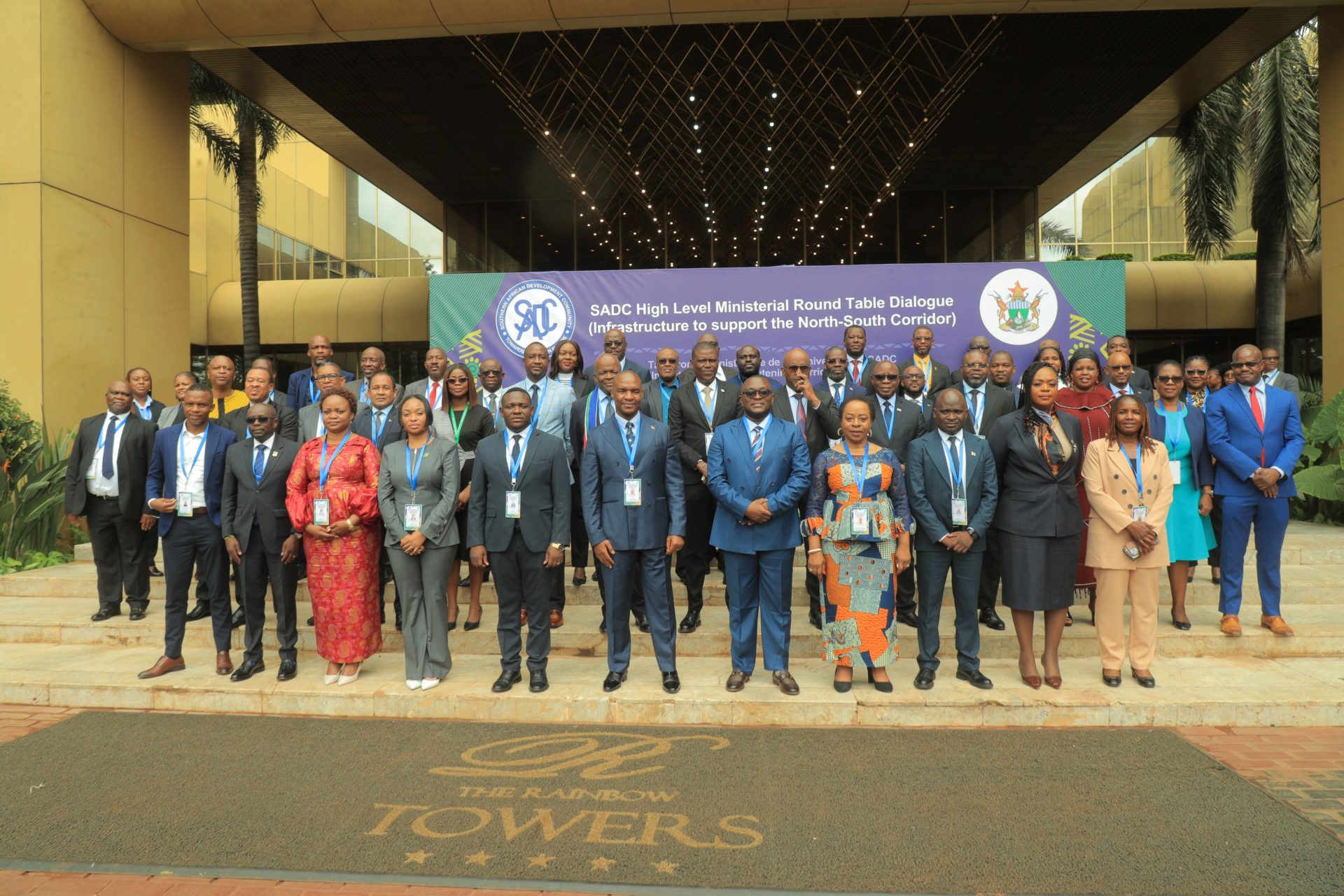
THE need to prioritise infrastructure development along the North-South Corridor, a critical trade route connecting Southern Africa, dominated discussions when SADC ministers converged in Harare for a High-Level Ministerial Round Table Dialogue this Thursday.
Zimbabwe is hosting the SADC Cluster meeting of Ministers responsible for Transport, ICT, Information and Meteorology has come to an end. this week, bringing together ministers from the region, including Zimbabwe’s Minister of Information, Publicity and Broadcasting Services, Dr Jenfan Muswere, and Minister of Information Communication Technology, Postal and Courier Services, Honourable Tatenda Mavetera.
The meeting, which also includes permanent secretaries and private players, aims to review progress on programmes supporting regional integration, with a focus on creating an integrated network of transport, ICT, information, and meteorological services to foster economic growth and enhance the quality of life for SADC citizens.
In his opening address at the SADC High-Level Ministerial Round Table Dialogue on Infrastructure to Support the North-South Corridor, the Minister of Transport and Infrastructural Development, Honourable Felix Mhona, who is also the Chairperson of the Joint Committee of Ministers responsible for Transport, ICT, Information and Meteorology, emphasised the need for SADC member states to strengthen collaboration efforts to achieve regional integration and socio-economic growth.
“The time is now for us to build more and better roads, bridges, airports, railway networks and border crossing facilities. But we cannot do it in silos. We need each other in every stride of our journey. Let us as governments be proactive and be at the forefront of the North-South corridor initiatives. Non-state actors are crucial, but they can only do much when we demonstrate political will and commitment to collaborate,”
Honourable Mhona said.
“Let us work together as partners in progress. Let us share knowledge and expertise and forge new pathways towards sustainable infrastructure development. Let us envision a Southern Africa where infrastructure is not a barrier, but a bridge connecting people, ideas, and opportunities.
“The need for improved transportation systems and access to digital connectivity promotes a region where investments in infrastructure are aligned with our sustainable development goals, ensuring that no one is left behind. These elements are critical to enhancing the quality of life for our citizens, enabling businesses to flourish, and ensuring our economies thrive,” he said.
SADC Deputy Executive Secretary Ms Angele Makombo N’tumba emphasised the importance of infrastructure development in regional integration and socio-economic growth.
“The trade carrying infrastructure and development corridors remain the prime movers of the region’s integration and overall socio-economic development,” she said.
“Infrastructure development, therefore, continues to receive the utmost political attention at national, regional and global levels. It is in this regard that the SADC High-Level Ministerial Round Table Dialogue on Infrastructure to Support the North-South Corridor, has been introduced as part of what we hope will become a regular annual event to build momentum on infrastructure development as a key pillar of regional integration.”
The dialogue focused on the critical role of corridors in planning frameworks for infrastructure development, regional integration, trade facilitation and industrialisation.
The North-South Corridor is a vital trade route spanning over 3 000 miles, connecting the port of Durban in South Africa to the Democratic Republic of Congo.
Zimbabwe has made significant strides in enhancing regional connectivity and trade facilitation, particularly through the Beitbridge Border Post Upgrade and Modernisation Project.
The upgrade has exponentially increased the border’s handling capacity, efficiently managing thousands of trucks, buses, and tens of thousands of people traveling in light vehicles.
Additionally, Zimbabwe has invested in rehabilitating and modernising the 600-kilometre Harare to Beitbridge Road, among other infrastructural projects.