



Story by Kenias Chivuzhe
THE government says it is committed to supporting independent power producers, which is expected to play a crucial role in reducing the country’s reliance on non-renewable energy sources.
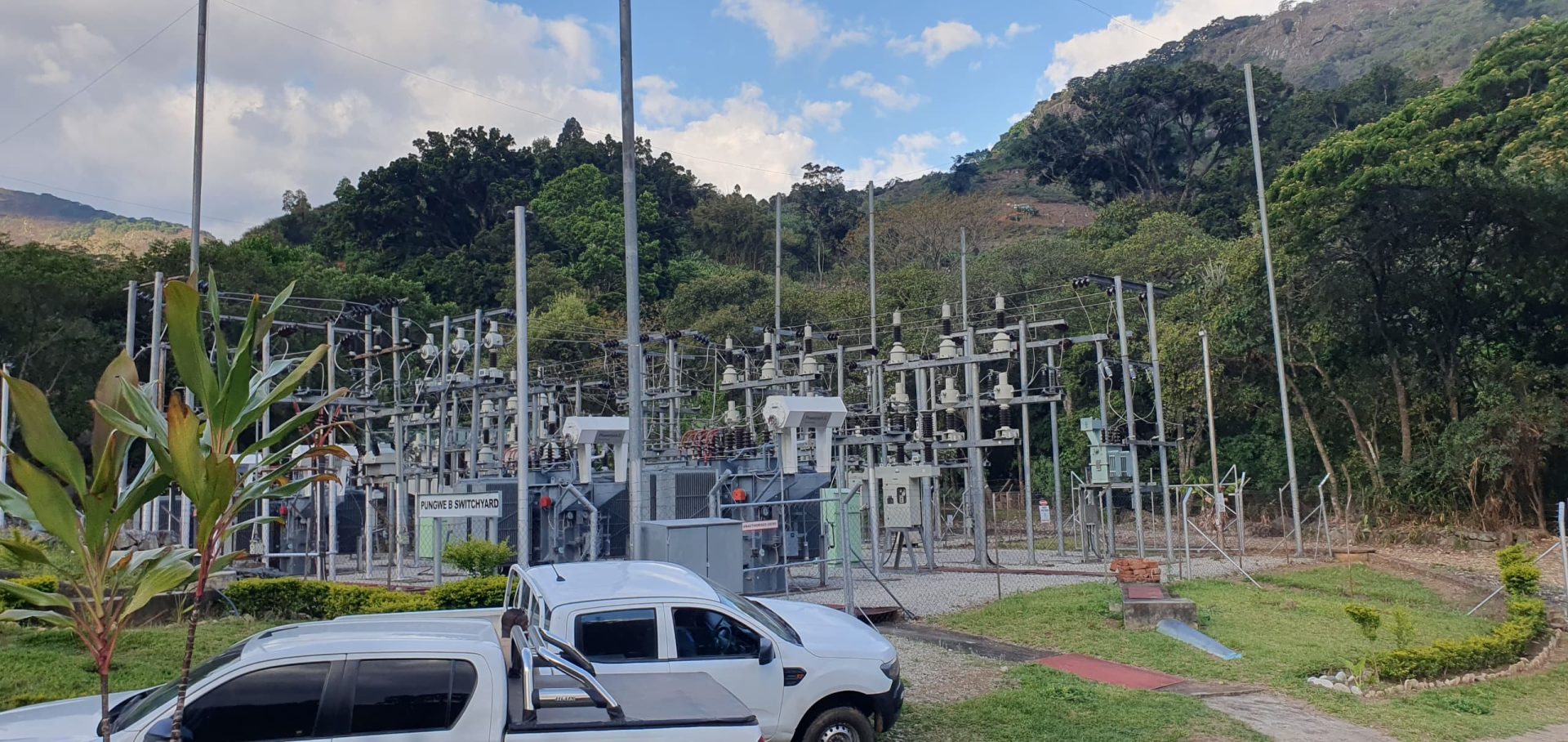
This was revealed by the Minister of Finance, Economic Development and Investment Promotion, Professor Mthuli Ncube during the tour of the Nyangani Renewable Energy Pungwe B plant in Honde Valley this Saturday where he opened up on plans to further incentivise power generation investments under the Government Project Support Agreement.
“The investments by the Nyangani Renewable Energy is encouraging. Independent power producers need support and as the government we have put in place a government implementation agreement, but we know that there are certain areas that will be fine-tuned such as having the right level of tariff and being able to provide government guarantee on the power production agreement.
“The third pillar is to make sure that foreign currency is available to the investors and that is where we need to do more as a government. We are already hard at work to see how we can establish an account mechanism that can then support the independent power producers within this sector and in the next budget we should be able to go somewhere in putting that mechanism in place.
“There should be different sources of power including hydro, coal, thermal, solar and maybe nuclear “ he said.
Independent power producers have welcomed the government’s introduction of viable and investor-friendly tariffs, citing positive returns on their investments.
“Currently in Pungwe B, we do 15MW, and Honde Valley needs around 3.75 MW, and all the excess goes to the national grid,” said Engineer Chigwande.
“We cannot exist as an IPP without a strong ZEDTC, and the move by the government to have a viable tariff for ZEDTC sends a strong signal to investors that Zimbabwe is open to investors.
“We have a number of investments that we want to undertake. In Honde Valley we have six power stations and generating a total of 27 MW, in Nyanga we have 7 MW and in Mutoko we have a solar pilot project,” said Renewable Energy Managing Director, Ian Mckersie.
Local Leaders highlighted the region’s significant energy investment prospects.
“In the Second Republic when we see a whole minister coming to share and interact like this it shows that the cabinet is not sleeping but they are working overnight following footsteps of our President that we need to deliver value to the community.
“The power generated here is also serving Mutasa North and we are normally 90 percent live largely due to this investment,” noted Mutasa North Legislator, Honourable Obey Bvute.
“This has been an important visit for Manicaland. We are unique because of our terrain and there is a lot of potential to do more projects of this nature and we invite all investors to come to Manicaland and establish more solar plants and more mini hydro plants,” noted Mr Abiot Maronge, Manicaland Secretary for Provincial Affairs and Devolution.
In a bid to increase domestic power production and reduce dependence on imported electricity, Zimbabwe’s government has awarded licenses to 10 new Independent Power Producers (IPPs), enabling them to contribute to the national grid through the Government Project Support Agreement.

