



Story by Kenias Chivuzhe
THE government is introducing incentives to revitalise trout fish production, which has plummeted to its lowest levels in recent years.
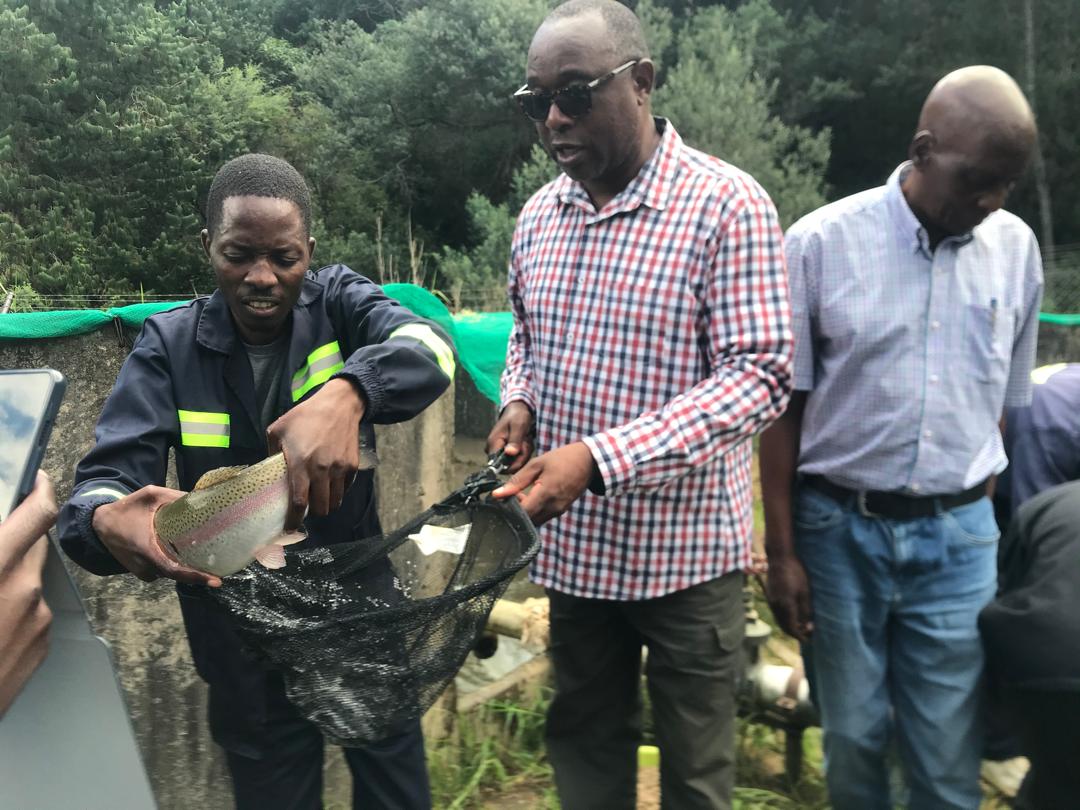
Trout farming is primarily conducted in Nyanga, Manicaland Province, due to its unique climatic conditions, which are essential for the breeding of this specialised fish species.
However, production has significantly declined, dropping from an annual average of 120 tonnes to just 20 tonnes. The government’s intervention aims to restore and enhance output, ensuring sustainable growth in the sector.
“Nyanga Trout has the capacity to produce more than 50 tonnes per year, but we are producing less than 15 tonnes mainly due to shortage of feed and eggs,” aquiculture technician, Tinashe Chapinduka said.
The government has pledged to incentivise Trout fish production to increase output.
“We want to go back to 50 tonnes in the next 12 months. We will allow producers to import eggs and they will be given permits and clear them in a reasonable time so that trout will not die at the airport.
“We are going to make sure that the farmers get the correct feeds so that they can make profits and we have to make sure that this facility is modernised,” Deputy Minister of Lands, Agriculture, Fisheries, Water and Rural Development, Honourable Davis Marapira said.
The government believes the country has enough dams to be a major producer of fish in the region with the 1 billion dollar production target by 2030 on track.
“We are setting up breeding areas in Masvingo, Manicaland, Mashonaland East, Mashonaland Central, and Matabeleland South. These breeding facilities will help us produce the best fingerlings like the ones we are producing in Kariba. We are consuming about 60 000 tonnes of fish in Zimbabwe but our production is not meeting demand,” Honourable Marapira noted.
Trout fish was first introduced in Zimbabwe in 1902 with several trials from 1902 to 1921 failing, only for success to be recorded in Nyanga in 1929.

