



Story by John Nhandara
THE Government is aiming to double national fish production to over 60 000 metric tonnes annually under the ongoing Presidential Community Fisheries Scheme.
The scheme has rapidly expanded its footprint across the country, with an increasing number of communities and institutions adopting the initiative.
Designed to enhance food security, create employment, and promote rural development, the programme continues to make a significant impact in both communal and institutional settings.
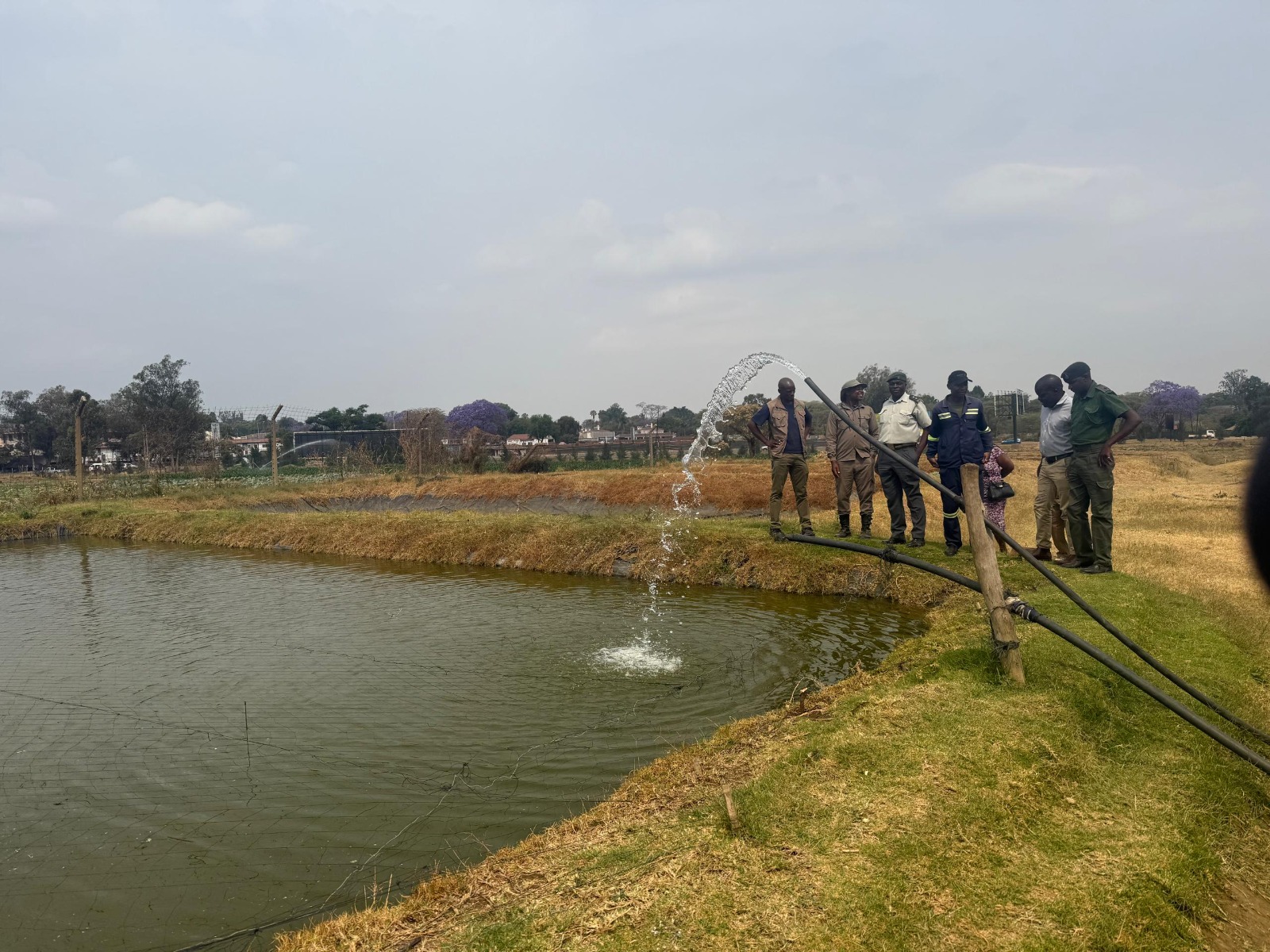
One of the institutions that has joined the bandwagon is the Zimbabwe Prisons and Correctional Services, which has now adopted the viable commercial enterprise after setting up fishponds.
“We are doing fish production for commercial and domestic consumption. This is our second cycle. We harvested 500 kilograms in our pond with a stock density of 2 000 fish. We are using this project as an income generation project,” fish farmer, Lewane Robert said.
“We put fingerlings in our pond and started feeding them with fish starter 1 to 3. We are now feeding the fish with grower and also duck weed,” inmate, Tatenda Dzakatira said.
To ensure full participation of communities in fish farming, the government is decentralising the production of fingerlings to different centres across the country.
“We are looking at decentralising our fingerling production units. We are in the process of upscaling, for example, Henderson research, which is in Mazowe. We have also set up a new site at Matopo Research Institute. All in the interest that we produce fingerlings close to the farmers,” Director Fisheries and Aquaculture Resources Production, Mr Milton Makumbe said.
Meanwhile, stakeholders in the aquaculture sector have met to deliberate on how they can ensure wider participation of communities in farming and deliberate on ways of improving access to markets.
“There is a need to open up markets. In the last assessment, we only produced 31 000 metric tonnes of fish as a country; we need to upscale that to a minimum of 60 thousand metric tonnes. So we are putting a lot of measures to improve production, nutrition and income for the livelihoods of communities. We are encouraging communities to assist farmers with fingerlings. We are also stocking dams,” Acting Chief Director ARDAS, Leonard Munamanati said.
“What we have done is to look at sustainable aquaculture in terms of addressing challenges that stifle aquaculture. We have done an aquaculture Value chain analysis, which identified hot spot areas constraining the development of aquaculture, and these include the fingerling supply chain, feed, marketing and technical capacity for farmers. These are the gals we are addressing,” National Professional Officer Fish 4 ACP, Mr Paul Mwera said.
“Farmers do not know where to sell their produce. Who is producing the fish who are the off-takers within the country?” Acting CEO AMA, Mr Jonathan Mukuruba asked.
These and other developments are in line with the government’s thrust to foster sustainable development through a more inclusive and resilient aquaculture sector.

