



Story by Providence Maraneli
GOVERNMENT continues to support the full adoption of the heritage-based education curriculum through the provision of solar-powered piped water schemes and internet connectivity at schools.
The major thrust of the heritage-based education curriculum is innovation and creativity which leads to industrialisation.
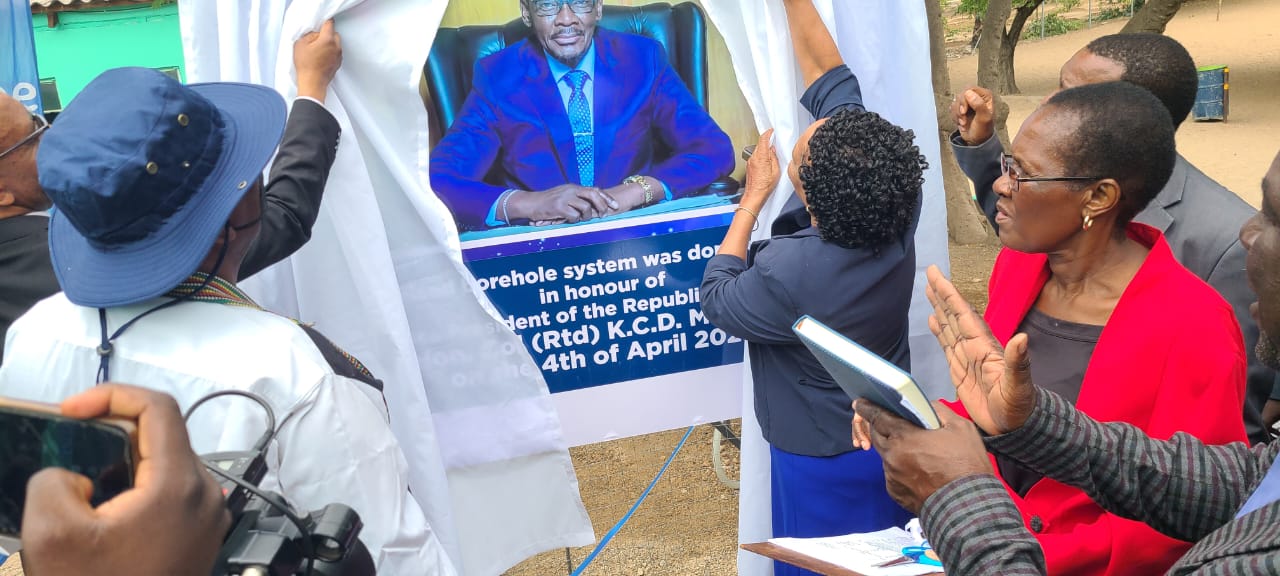
It is against this background that Vice President Colonel (Retired) Kembo Mohadi has overseen the installation of a solar piped water scheme and internet connection project at Beitbridge Mission School.
“This solarised borehole will be a permanent source of clean and safe water for consumption and its connectivity to ablution systems will ensure the maintenance of prescribed health standards. Now that TelOne has provided Starlink services, effective and efficient ICT programmes will be conducted,” Beitbridge Mission Primary School’s Headmistress Mrs Monica Ndlovu said.
Stakeholders who attended the commissioning of the piped water scheme at Beitbridge Mission Primary this Friday are convinced that the initiative will ensure inclusive education and productivity at the institution.
“Our ministry’s vision, which focuses on providing a heritage-driven education for a socially and economically empowered society by 2030, aligns perfectly with these objectives,” Matabeleland South Provincial Director Finance, Administration and Human Resources in the Ministry of Primary and Secondary Mr Aaron Marizani said.
“As we hand over this borehole today, a vital resource for education and community empowerment, we reaffirm our commitment to community development. This borehole will provide safe drinking water for the school while supporting the school’s income-generating projects,” Telone’s Chief Executive Officer, Engineer Lawrence Nkala noted.
Matabeleland South Minister of State for Provincial Affairs and Devolution, Dr Evelyn Ndlovu represented Vice President Kembo Mohadi at the commissioning of the projects.
“The borehole will support the sustainability and environmental stewardship of agricultural programmes at the institution. Learners will acquire skills on the value of producing their own food and how solar-powered water systems work. The project represents more than just infrastructure, it embodies our belief in the potential of every child to thrive through improved hygiene and health.
“Clean water will enable students to practice proper hygiene reducing the risk of waterborne diseases. This also contributes to a healthier learning environment where students can focus on their studies without the constant threat of illness. This is in line with the Disaster Risk Management and Resilient Plan for the Education Sector in Zimbabwe 2021-2025.”
The partnership also saw the school receiving 5 000 exercise books for use by the learners, while 60 learners and teachers were trained in first aid.

