



Story by John Nhandara
THE government has extended the Emergency Road Rehabilitation Programme (ERRP) until the end of December 2027, as part of efforts to consolidate milestones achieved in modernising Zimbabwe’s road network under the National Development Strategy One (NDS1).
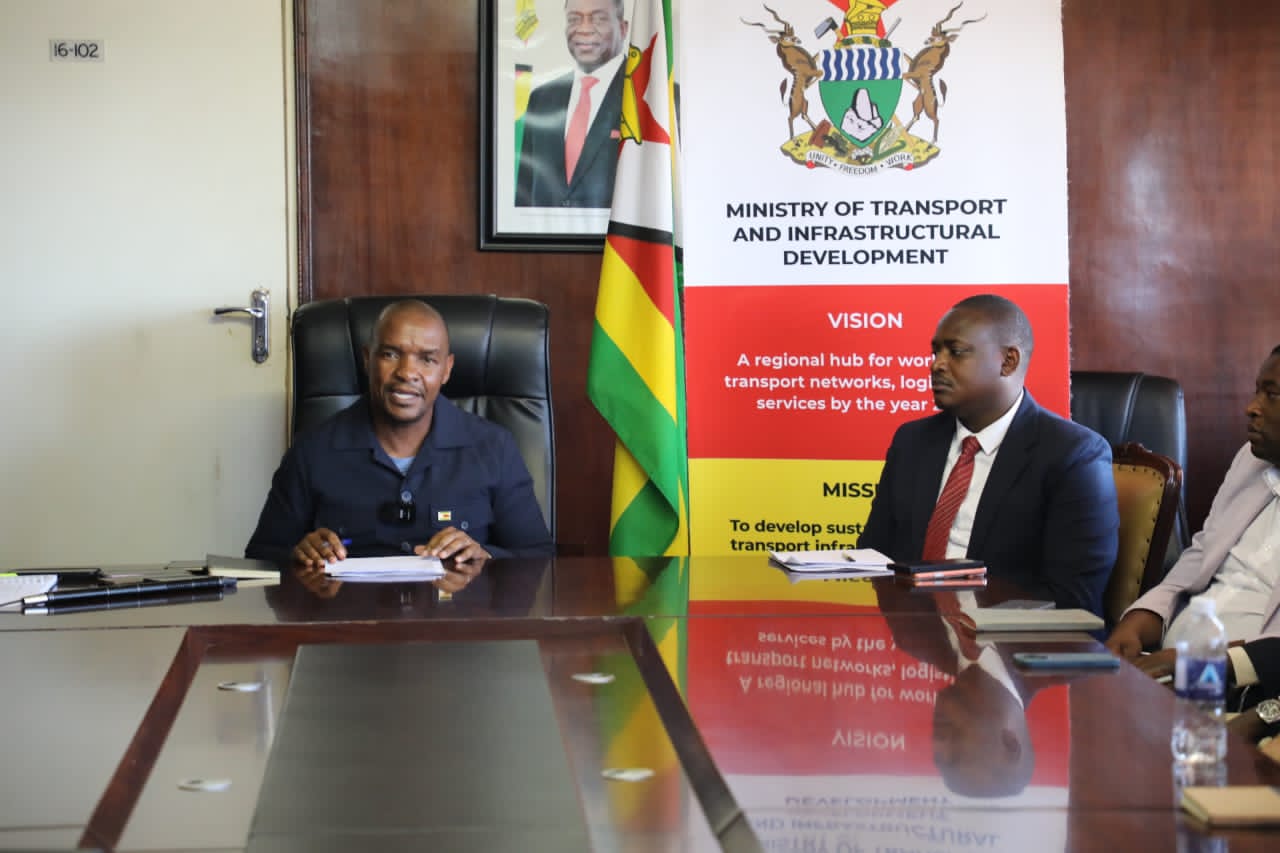
The extension was announced during a Monday engagement with the country’s road authorities and key stakeholders, aimed at further driving the ERRP in line with the infrastructure goals of the National Development Strategy Two (NDS2).
Transport and Infrastructural Development Minister Hon Felix Mhona said the extension reflects a holistic approach to road maintenance, ensuring that no community or location is left behind.
“We have extended the ERRP programme up to the end of December 2027. We want to further develop our roads. Our engagement has been benchmarked on a holistic approach to road maintenance in line with the President’s mantra that no one and no place should be left behind,” he said.
Director General of the Roads Infrastructure Development Agency (RIDA), Mr Christopher Shumba, highlighted the urgency of repairs following widespread road damage caused by seasonal rains.
“Most of our roads have been damaged by the rains, so we are escalating the programme to ensure immediate repair,” he said.
President of the Zimbabwe Builders Contractors Association, Dr Tinashe Manzungu, emphasised the role of private contractors in complementing government efforts.
“As contractors, we are contributing through various agreements with the Ministry so that we can adopt a holistic approach to maintaining our roads. We also need to support the fiscus as private players,” he said.
Local authorities, including rural district councils and urban municipalities, have been undertaking road rehabilitation projects using funding from the Zimbabwe National Roads Administration (ZINARA).
Bulawayo City Council Mayor, Councillor David Coltart, welcomed government plans to acquire asphalt plants, including one in Bulawayo, which will accelerate road works in urban centres.
“We have heard that government is acquiring asphalt plants, one of which will be in Bulawayo. This will help expedite our works as a council,” he said.
Secretary-General of the Association of Rural Councils of Zimbabwe, Mr Isaac Matsilele, noted the importance of equipping rural councils to achieve programme goals.
“We welcomed the extension of the ERRP and the need to equip our rural councils so that the desired objectives are achieved,” he said.
The extension of the ERRP underscores government’s commitment to robust infrastructure as a key pillar for achieving an upper middle-income economy by 2030.

