



Story by Tamuka Charakupa
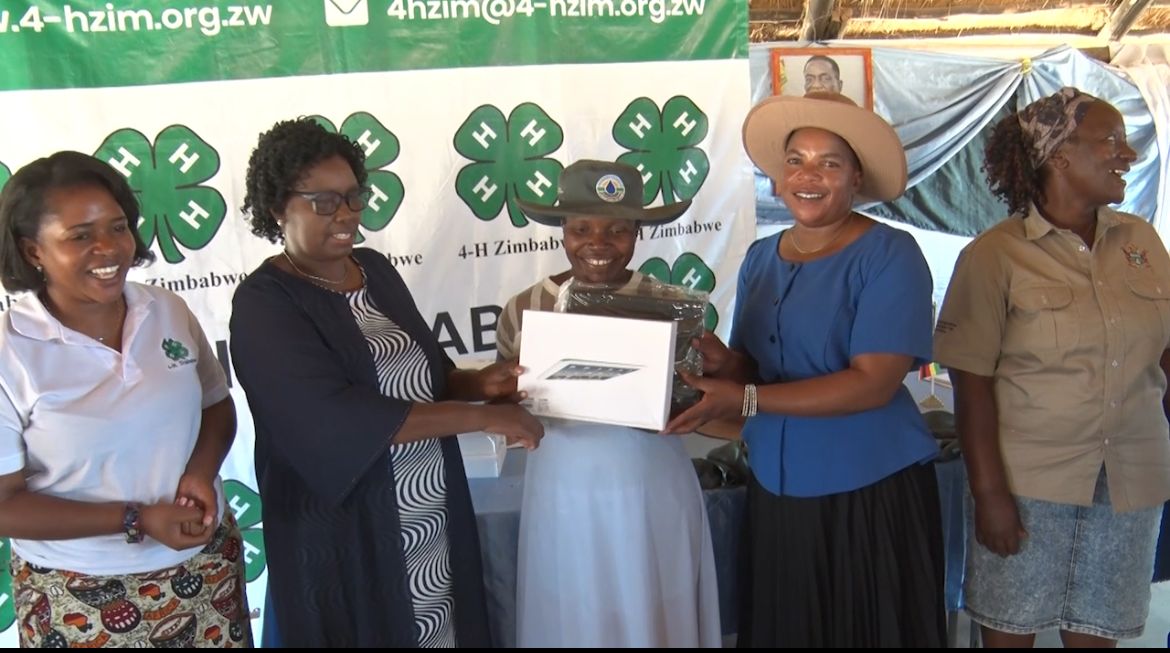
THE Government has handed over at least 27 mobile gadgets to agricultural extension officers in the Zvipani area of Hurungwe as part of efforts towards digitising the sector.
The handing over of the mobile gadgets to agricultural extension officers in Zvipani, Hurungwe, is the latest effort by the government towards complete digitisation of the agricultural sector.
The gesture, which comes at a time when the country is battling the effects of climate change has been commended by the beneficiaries as critical in information dissemination and data storage.
“Working in a rural environment is not easy because at times you get socked by the rains and all the papers get affected. This is how we lose vital information and with little chances of recovering,” said a beneficiary of the programme.
“We were given motorbikes which enhanced and improved our mobility challenges, and now we have just received tablets which means we can record, store, and disseminate information easily. Digitisation not only reduces manual labour but enhances productivity,” added another.
“This gesture by the government proves beyond any reasonable doubt that no place and no one is being left behind in national development. We want to thank the President for ensuring that all corners of the country are covered and the capacitation of extension workers guarantees increased food security.”
The government and its implementing partner, 4-H Zimbabwe, say the development is a critical intervention towards unlocking the full potential of agricultural extension workers.
“As a government, we will continue to ensure that all our extension workers have the right tools for the jobs, hence they were given motorbikes to ensure total coverage of their jurisdictions and now mobile gadgets to complement this noble gesture.
“These devices are loaded with various software that equip these cadres with current research that impact the way they conduct their duties. We are already giving them data and airtime, so usage of the gadgets have limited restrictions. The government cannot do it alone so we continue to invite partnerships like the successful one we had with 4-H Zimbabwe,” said the Provincial Director of Agricultural and Rural Development in the Ministry of Lands, Agriculture, Fisheries, Water and Rural Development, Mrs Medlinah Magwenzi.
“As 4-H Zimbabwe, we are coming on board to complement the government’s Rural Development 8.0 policy where focus is mainly on increasing production, rural industrialisation, and food security. Hence, we have handed over at least 27 gadgets to the government so that the digitisation drive reaches all corners.
“Our programming is also stretching towards sinking of boreholes aimed at expanding the village-based business units and to that end, we intend to put drip irrigation in selected wards for increased efficiency and use of water,” 4-H Zimbabwe, board chairperson, Mrs Wendy Madzura said.
Digitisation of all government services remains a priority amid increasing technological advancements with investments in the agricultural sector critical towards ensuring food security in the country.

