



Story by Kenias Chivuzhe
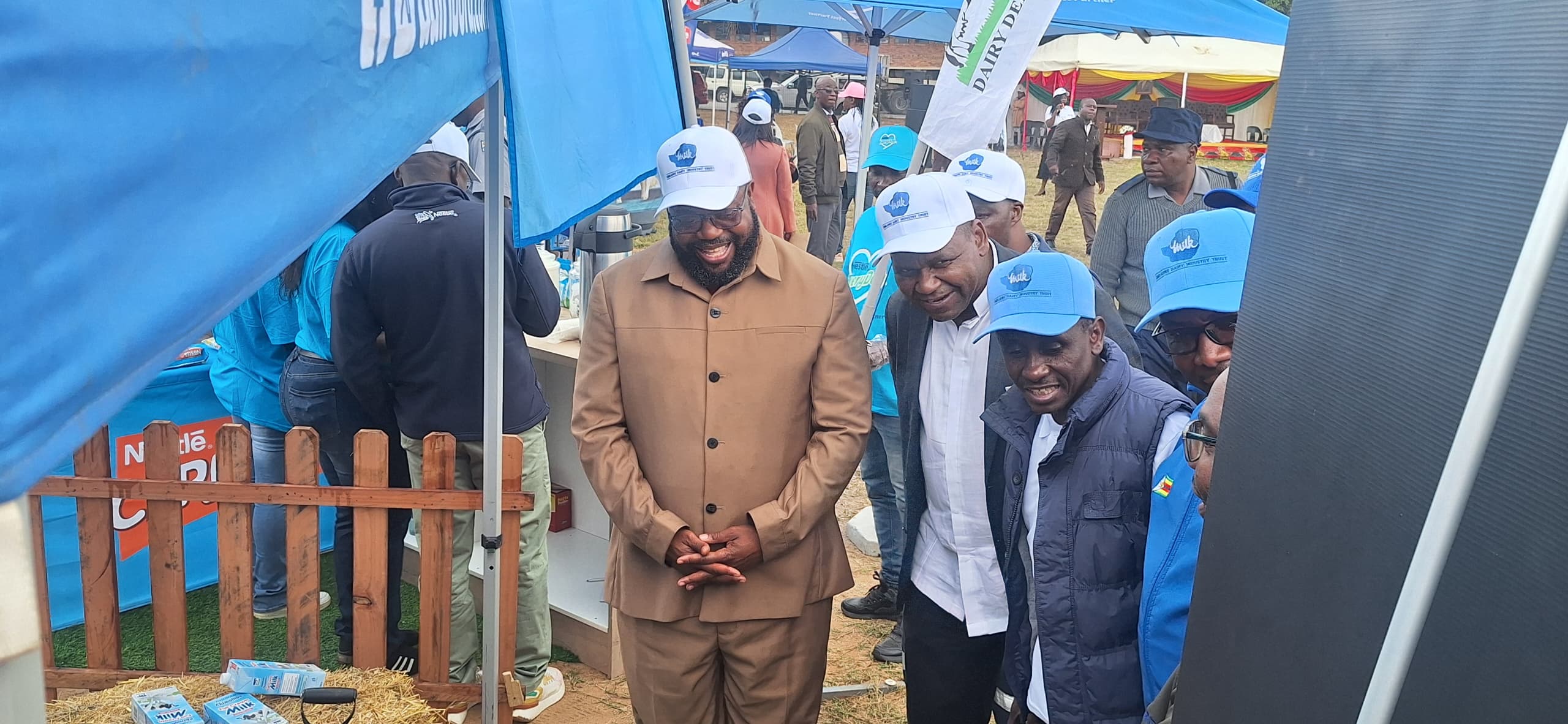
MUTARE-ZIMBABWE’S dairy sector continues on a positive growth trajectory, with stakeholders marking World Milk Day in Mutare by reaffirming their commitment to revitalising the industry through low-cost feed production, inclusive financing, and technology-driven solutions.
Held under the theme “Celebrating Dairy for a Healthy Future,” the commemorations brought together key players in the sector to evaluate progress and strategise on closing the gap between national milk demand and current production levels.
According to the Dairy Processors Association of Zimbabwe, local milk production stood at 115 million litres in 2024, against a national demand of 150 million litres.
Processors across the country have the capacity to handle over 400 million litres annually.
“All processors in Zimbabwe can process more than 400 million litres of milk. But in 2024, we only accessed 115 million litres. This leaves us with a deficit of 285 million litres. We need to improve productivity from the current average of 18 litres per cow per day to over 25 litres,” Dairy Processors Association, Mrs Tendai Maregere said.
Chief Dairy Officer in the Ministry of Lands, Agriculture, Fisheries, Water and Rural Development, Mr Edmore Waniwa, underscored the importance of supporting feed production as a means of lowering production costs and boosting output.
“There is a clear gap between production and demand. The Government is supporting farmers to produce their own feed, which will help reduce costs and increase productivity,” he noted.
Zimbabwe Dairy Industry Trust Chairperson, Mr Themba Mutsvairo, said the sector must embrace innovation to sustain growth.
“We must introduce drought-tolerant breeds, expand access to affordable financing, and invest in renewable energy solutions such as solar-powered cooling systems to reduce overheads,” he said.
Guest of honour, Manicaland Minister of State for Provincial Affairs and Devolution, Advocate Misheck Mugadza, reiterated Government’s commitment to bolstering the dairy value chain under Vision 2030.
“President Dr Emmerson Mnangagwa has consistently emphasised the importance of revitalising Zimbabwe’s dairy sector as a cornerstone of the nation’s agricultural and economic development. The Command Livestock Programme which led to distribution of heifers to farmers is his brain-child. The Presidential Fodder and Youth Livestock Scheme was launched to empower farmers to produce more milk, thereby contributing to the growth of the national dairy herd. I am reliably informed that a comparison of milk production in Zimbabwe in the year 2014 and the year 2024 indicates a 110% growth over the last decade. This achievement is a testament to the hard work and dedication of our dairy farmers and the support of our Government,” he said.
While Zimbabwe’s production is on the rise, national per capita milk consumption remains at a low 12 litres per year far below the World Health Organisation’s recommended 200 litres per person annually.
Globally, milk production reached 981 million tonnes in 2024, driven by increasing consumer demand, underscoring the potential for Zimbabwe to scale up its production and become more competitive in regional markets.
As efforts continue to strengthen the dairy ecosystem, stakeholders remain hopeful that with sustained support and innovation, Zimbabwe can bridge the production gap and significantly improve nutritional outcomes for its population.

