



Story by Abigirl Tembo, Health Editor
Zimbabwe joined the global community in marking International Childhood Cancer Day, with a call to action to increase support, early diagnosis and improved access to treatment for children battling cancer.
The day served as a platform to share stories of resilience, acknowledge the efforts of organisations like Kidzcan Zimbabwe and call for greater collective action to improve survival rates.
Cancer survivors and parents of children battling cancer shared their stories.
“My son was diagnosed with leukaemia in December,” said Ms Zinzile Mlalazi. “So we’ve been staying at the children’s village for the last month while he’s been getting his chemotherapy. He is five years old and I took him to the doctor when he had a very dry cough.
“What I would love to say to others who are struggling and who are going through the process as well is, after the treatment, no one would tell you that you had cancer before, so you have to live the best life that you could ever live because you never know, maybe we are living the life that we think we’re going to die soon or whatsoever, but I’ve realised that we have to live the best life.
“I would love to appreciate Kids Can mainly because if they didn’t come to my rescue, I don’t even know where I would be. Also in showing my gratitude to them, I decided to join in as a volunteer because I’m now a registered social worker so I decided to join in and then help them as a volunteer,” she said.
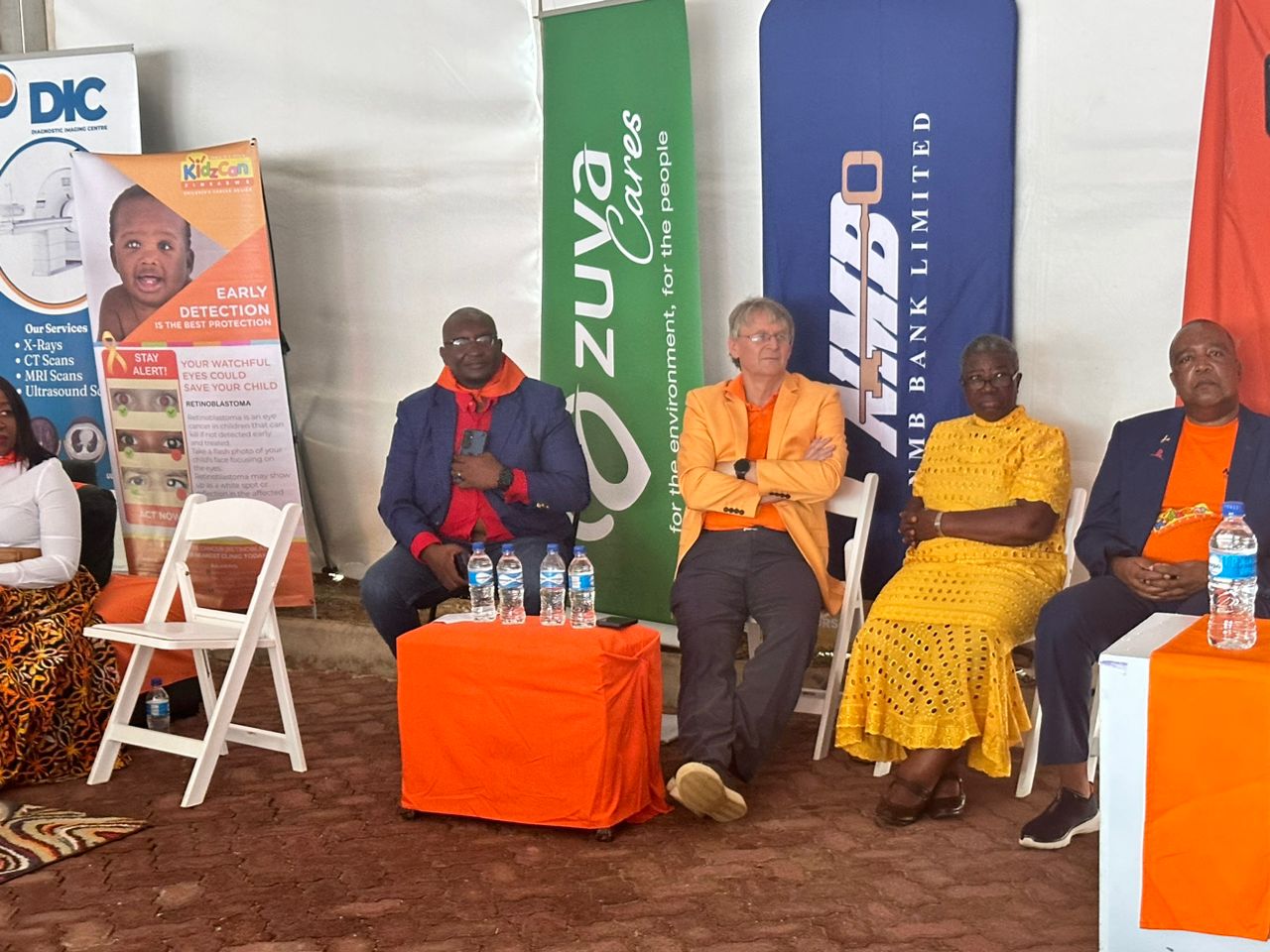
Kidzcan Zimbabwe board member Reverend Garry Cross emphasised the need for collective action to improve childhood cancer treatment outcomes.
“We need continued investment in early diagnosis, essential medicines, pediatric oncology training and family support services. So, a call to action. Have you seen the need? We have the solutions. Are you willing to join us and take action? Ladies and gentlemen, today is not just about reflecting on the challenges. It is about reaffirming our collective responsibility. My friends, it takes all of us.
“We have a saying, don’t we, in Africa? It takes a village. Yes. My friends, it takes a village to do what we want to do. It takes all of us. Together, we must strengthen our advocacy for policies that ensure sustainable funding for childhood cancer treatment. We must encourage research and innovation to improve the health of children. We must improve survival outcomes.
“And we need to expand our partnerships to enhance service delivery and ensure no child is left behind. Together. Arm in arm. Let us stand for our children. Let us be their voice. Let us work for Zimbabwe. A Zimbabwe where every child has a fighting chance at life,” he said.
Ministry of Health and Child Care NCDs Department Acting Deputy Director, Mr Lee Nkala highlighted the importance of educating the public about the impact of childhood cancer on families.
“Today provides a platform for educating, creating awareness to the public on the impact that childhood cancer has on the family as well as to explore the support network of those affected,” he said.
“This ought to help the government, the ministries and the family members to promote the role of all stakeholders, in particular family institutions on issues of prevention, care, management and health care. This also calls upon the government and key stakeholders to mobilise adequate resources with the view of prioritising childhood cancer prevention, management and control efforts.”
According to the Zimbabwe National Cancer Registry, the five most common childhood cancers are leukaemia, renal tumours, retinoblastoma, lymphomas and central nervous system tumors.

