



Tourism remains one of the world’s most powerful economic engines generating jobs, driving investment and revitalising communities. In China, domestic travel is proving to be a major force in economic development. In the first quarter of this year, Chinese residents made around 1.79 billion domestic trips, a year-on-year increase of 375 million.
But beyond national borders, China’s tourism momentum is also opening new doors for international cooperation, including with Africa.
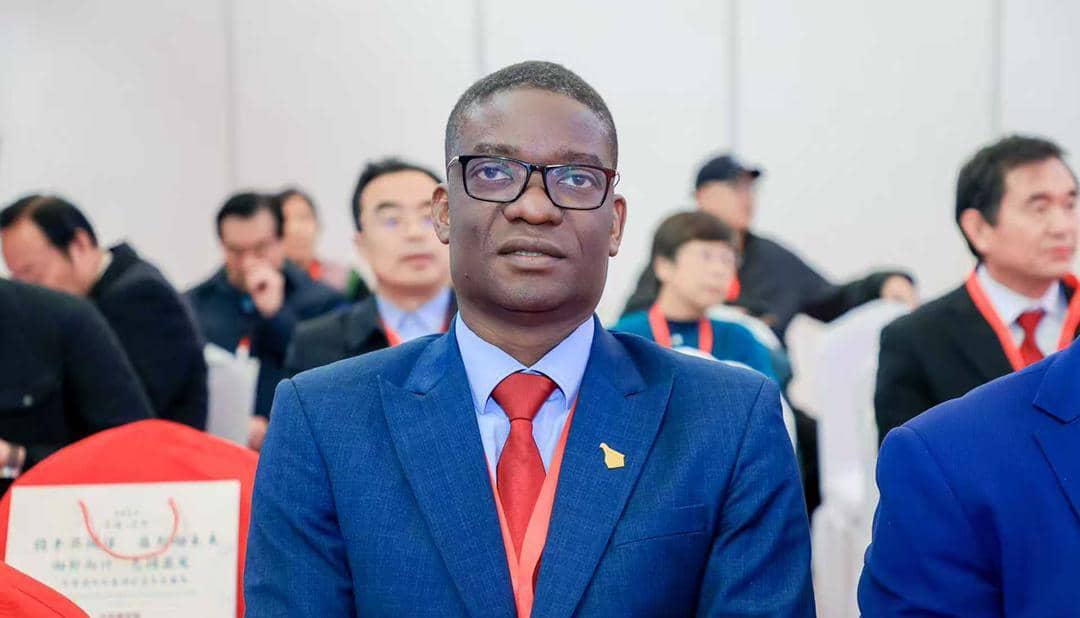
Zhou Mi, Senior Research Fellow at the Chinese Academy of International Trade and Economic Cooperation, and Stanley Banda, Tourism Attaché for Zimbabwe in China and ASEAN, discussed with China Africa Talk how tourism is transforming both economies and how stronger China-Africa collaboration could reshape global travel flows.
China Africa Talk: Could you tell us about Chinese domestic travel and with some examples and figures, how is it contributing to China’s economic growth?
Zhou Mi: It is true that tourism is one of our advantages, as you know that China has a very large population, so the people, if they are able to travel, to go to other places, I think that’s really a huge potential for development. Personally, I am a tour guide, so I would say it’s a great opportunity for us to go around in China and try to look at what is happening and try to experience some of the good foods. As you may know, China has a very huge demand for the different kinds of tourism. The experiences are really diversified. You can enjoy not only the beautiful sceneries but also the cultural experiences and that is really helping people to have some relief after we have so many pressures every day.
China Africa Talk: When you travel domestically, have you heard any testimonies from the people who you take these guests to, do they say anything about how maybe their local areas are improving owing to such domestic travel?
Zhou Mi: It is true that people are trying to do different kinds of improvements. For example, people who are going to host the guests from other cities can put those information on the platform like the Ctrip, a trip booking platform. It is connected by the e-commerce. It’s a kind of information that you can get before you reach there. During this year’s May Day holiday, I went to a fishing village in southern China and the family hotels require us to give them some good comments because they want to attract more people and with that they can improve and increase their room capacities. It’s very interesting because they are supporting their family based on this part-time job, because they are still depending on fishing.
China Africa Talk: Mr Banda, you are here in Beijing representing the Zimbabwe Tourism Authority. What role does tourism play in Zimbabwe’s economy, and do you think African countries are doing enough to exploit their tourism resources and strengthen their economies through local tourism?
Stanley Banda: As you know, tourism is one of the key drivers of our national economy and according to the blueprint of our National Tourism Recovery Programme, tourism is meant to increase employment, foreign currency generation and poverty alleviation. True to this aspiration, tourism in Zimbabwe continues to grow, outperforming key industries like mining and agriculture. We have seen in the past year that our tourism has contributed over 12% to GDP and this is remarkable. Maybe for now, let me just cherry pick some of the natural resources and the tourism resources that we have in Africa. When you talk of our pristine natural beauty and landscapes, it’s equal to none. Our hospitality is unique. All this is inspired by our rich cultural heritage. And of course, you cannot leave the freely roaming wildlife that continues to attract millions of visitors to the continent. But there is that missing link in our tourism in Africa, which we need to learn from countries like China, how they are doing it. I’m sure once we get it right, our tourism will also produce more.
China Africa Talk: China celebrates its 15th annual China Tourism Day on May 19, how influential is this event in promoting tourism in China?
Zhou Mi: Tourism is very diversified in China. Some places have their cultural advantages and others having their natural resources advantages. I think for the Tourism Day, it is a real good opportunity for different places in China to exchange their opinions and their experiences. In China, the Ministry of Culture and Tourism rank places of interests in different levels and these levels really are good labels for those places to attract tourists from different places. The Ministry is using several kinds of standards trying to make those places qualified for their ranks, including infrastructure, the food or even the ticket prices. The Ministry is using certain kinds of criteria to give some of these guidelines for those places to develop their tourism. For the national level we have the 5A rankings. It’s depending on their resources and abilities to accommodate the tourists So these are really good opportunities for those places to share the experiences with others and try to compete with each other.
China Africa Talk: Zimbabwe, like many countries on the continent, has embarked on intensive capacity building to strategically position the country’s tourism sector, how do we market Africa to Africans?
Stanley Banda: Firstly, Zimbabwe is promoting community based tourism, community heritage-based tourism, and our Ministry of Tourism and Hospitality Industry has been responsive to that need and they have identified key tenants of tourism which are mainly heritage based tourism. And these key tenants have also been further developed into clusters that drive our country’s tourism. Among these clusters is the culture and heritage tourism, religious tourism, sports tourism and business tourism, you name it. These clusters have been put so, so that you can attract and build tourism around various markets. When I look at the Chinese tourism, I think theirs is mainly based on culture and heritage. And hence, ours is also heritage based tourism.
China Africa Talk: What is the role of food culture in promoting local tourism in Zimbabwe and just how popular is this culture?
Stanley Banda: I’ve been following on social media, and there’s a lot of cooking going on there in Zimbabwe. When you talk of authenticity, you cannot ignore the allure of food culture, which is otherwise known as gastronomy tourism. This goes beyond just recognising the aspect of eating of food. But we are looking more at the interconnectivity of culture, heritage, and local norms, which are associated with food preparation, the ingredients that are used in preparing that food, and even the techniques of eating, the associations involved. So this is more of just a food. We have seen even the UN tourism has long been promoting this specialty branch of tourism called gastronomy tourism through symposiums and exchange programs, among other activities.
When it comes to this type of tourism, most countries still need to learn a lot from China. You know, when I was back home, I used to love Chinese food. And to me, Chinese food was just a collective term to just say, I would love to eat Chinese food. But guess what? From here, Chinese food is separated and you can actually choose Cantonese food, you can choose Inner Mongolia food, you can eat Zhejiang food, food from Beijing. It’s no longer just Chinese. It has different tastes.It’s no longer just Chinese food. It’s according to the regions. And my special Chinese food is obviously food from Hunan, which is known for its being spicy. So I think as Zimbabwe, we need to learn from that. And I’m happy a lot is happening through food cookout, so as to promote the culture of gastronomy tourism. And I’m happy that it has now ceased from just a traditional eating to something that is celebrated countrywide through promoting of this food culture. My wish, though, would be that it becomes something even like how you’re saying in the Chinese culture, where it moves from just being something that people just think it’s okay, this is just an event, but that it gets into your blood. I see ourselves getting there. Not long ago, it was just eating, but now it is now a celebration.
China Africa Talk: China has signed bilateral tourism cooperation documents with 31 African countries. How has this been mutually beneficial?
Zhou Mi: I think that in my understanding, these agreements are really important to give some signals to the market first, because when China’s tourism agents try to collect the people from China, they will know that all these places are suitable and eligible for the people to go, because Africa is very attractive for the wildness and also beautiful sceneries and even the food. So I think that has given a very important signal. Secondly, I think that will also bring the two sides together with more exchange of information, about the demands from the tourist side, and also the supply from the host side. So they can have a better understanding about each other and try to improve the infrastructure or some kind of software to better accommodate those people.
Thirdly, I think that is also helpful for us to give better possibilities for exchanging more information like advertisement. I think that will also help people to know more about Africa, because for many Chinese people, enjoy the beautiful and mysterious sceneries in Africa, but they maybe do not know quite well about the special place and special countries. So they can use these kinds of agreements to know more about those countries.
Stanley Banda: African countries can actually benefit through collaboration with China. And I’m happy to mention that Zimbabwe is one of the signatories of these protocols. And we have actually been accorded the approved destination status by China way back in 2003, as one of the initial countries, I mean, that we accorded this status back then. And ever since, we have been working with the Ministry of Culture and Tourism in its various activities and programs so that we can benefit more. Beyond signing of this protocol, the implementation is more important. We need to also collaborate as Africans, because gone are the days where we would just promote Zimbabwe or Victoria Falls just as a destination. We need to promote inter-regional travel, inter-regional tourism, promote packages to Africa so that we combine the destinations because it’s very hard for one to travel to Africa from China to visit one place or just to visit one country. So it makes more sense. It’s more valuable for them to visit maybe two or three or four countries and that is what we want through these initiatives. We need, through the Ministry of Culture and Tourism, they also have such platforms like the International Tourism Alliance of Silk Road Cities. And these are cities that are along the Silk Road and packaging of these cities along the Silk Road also promotes tourism within Silk Road cities. And I’m happy to also mention that Zimbabwe is one of the pioneer countries and member countries of the International Tourism Alliance of Silk Road cities. And more countries in Africa can also take advantage of these platforms, join these platforms, collaborate with China, so that we can benefit more from our collaborations with China. Another platform that we can also make use of is the World Tourism Cities Federation. Also a platform that China provides for us as Africans to collaborate and promote our tourism as a bloc so that we create more awareness in China about Africa as a must-visit destination.

