



An updated drought plan is essential
article by Kevin Tutani
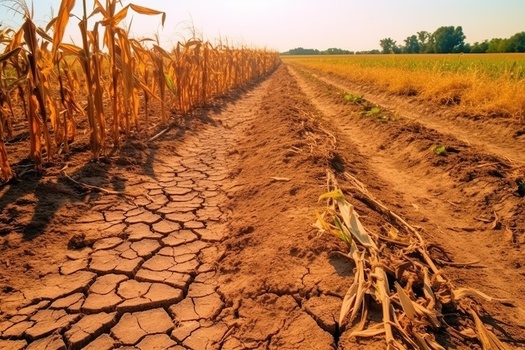
According to the Zimbabwe Red Cross Society, drought is the most common and high-impact natural hazard occurring in Zimbabwe, both in terms of frequency and the number of people affected. The organisation goes on to state that, droughts account for 7 out of the 10 top natural disasters in the country, since 1990. By definition, drought is the shortage of water which arises from low rainfall. Its effects are usually broadly felt. These include, poor crop harvests, higher food prices, death of people and livestock, reduced electricity generation capacity (hydroelectricity), increase in the spread of infectious diseases (such as cholera), child marriages, poor economic activity, unemployment and in some cases, it may lead to political unrest (civil or regional conflicts).
Zimbabwe’s 2023/24 grain cultivation season has become subject to El Niño weather events, which delayed the rainy season by almost 2 months. In a post-cabinet meeting, on 13 December, the Minister of Information updated the nation, outlining that farmers should ideally plant early-maturing crop varieties, since the rainy season is expected to be shorter than usual. Meteorological experts had predicted as early as June, that drier conditions would prevail in the Southern-African region, this cropping season. A national seasonal-outlook report was also released in September. It predicted that the bulk of Matabeleland North, parts of Midlands (particularly Gokwe North and South) and parts of Matabeleland South (particularly Bulilima), would receive below normal to normal rainfall, for the sub-season October-November-December.
While rich countries are also prone to drought, famines (acute shortages of food) have so far been non-existent there. This is because the advanced economies have greater resilience through irrigation systems, robust water infrastructure (dams, groundwater, desalination), strong currencies and ample food reserves, secured from previous successful agricultural seasons. However, this is not the same for developing countries such as Zimbabwe.
The importance of drought operating rules
To be fair, the government is intervening with some commendable policies and projects, in its quest to address the risks associated with drought. On a broader scale, the establishment of 21 major dam projects, alongside 71 small dams and weirs, is being pursued in order to improve agricultural productivity and make the country more resilient to unpredictable climatic changes. Short-term measures including the drilling of boreholes, hay bailing, enhanced animal health programs, provision of stock feed and food aid, are also being implemented. Last month (December), the Department of Civil Protection’s chief director, Mr. Nathan Nkomo, mentioned that his’ department, alongside other government Ministries were working on and implementing a humanitarian response plan for the expected 2023/24 dry conditions. At about the same time, the Minister of Lands, Agriculture, Water, Fisheries and Rural Development, Dr. Anxious Masuka, visited Bulilima in Matabeleland South, with the aim of assessing the water crisis there and to offer solutions. After his visit, officials from the Zimbabwe National Water Authority (ZINWA) subsequently drilled boreholes for livestock, human consumption as well as horticultural gardens, in the area. The Ministry of Agriculture is also working to monitor and ensure that, 70 000 hectares of farmland are placed under irrigation by the end of the summer cropping season. On the other hand, the Ministry of Social Welfare is reported to have its own response strategies, although minor details are available in the public domain, so far.
Although the government’s programs will be extremely helpful, it is somewhat unfortunate that the responses are still characterized by a few weak links. These have so far been costly for certain regions, such as Matabeleland South, for instance. For example, by the time that the Minister of Lands visited the area, about 7000 cattle had already succumbed and several areas where boreholes were drilled, did not have sufficient water, due to the extremely depleted water tables. The seed manufacturing company, Seed Co, also communicated that overall national seed-sales were down, since farmers had been demoralized by the imminent drought. Resultantly, only 95 156 hectares had been tilled by 10 December, compared to 465 707 hectares cultivated, by the same time, in the previous year. The available 235 000 tonnes of grain reserves (as of 10 December 2022), alongside the season’s forthcoming harvest, must satisfy domestic national demand of 2.2 million tonnes, throughout the year. Thus, in order to avoid disruptions to local grain and food markets, this year’s maize harvest has to be 2 million tonnes (complimented by the 235 000 grain reserves). Any shortfall will need to be fulfilled through imports.
Therefore, in order to improve the government’s response to future droughts, it is imperative to ensure that the country establishes drought operating rules (a drought strategy), which are always available for use at any time. This will go a long way to avert costly inadequacies and errors, associated with ad hoc (spontaneous) responses. Since droughts are expected to become more frequent, due to the impact of climate change, it will be essential to always have a practicable drought-response document at hand. The drought-plan, should then advise all Ministries of their obligations, so that none are negotiated in the midst of a crisis, when the country is already imperilled. Moreover, the plan should advise on measures to be implemented inside and also outside of, the drought season.
Interestingly, the Zimbabwe Red Cross Society had a plan on how to respond to drought as early as February, this year. In that month, the organisation had a disbursement of CHF 549 318 (US$610 353), assigned for its local drought response. The amount was set aside in order to respond to the earliest signs of drought in the country, which were being thoroughly monitored by the organisation. Therefore, if non-profit organizations can have the strategic and administrative capability to prepare for droughts in the country, the government should be found to be equally capable, or even better.
A relevant drought plan: Who does what?
Droughts can be complex in that, they bring with them more problems beyond just the scarcity of water. Thus, when crafting a comprehensive drought response, it will be vital to take stock of all its adverse effects in the country.
In essence, at the earliest prediction, the relevant government departments (Foreign Affairs, Finance, diplomatic missions) should initiate negotiations for sizeable disbursements of humanitarian aid, from multilateral institutions (UN, World Bank, etc), non-profit organizations (Oxfam, ActionAid, World Vision, Red Cross, etc) and bilateral partners (individual countries). This will be necessary for as long as the country is below middle-income status. Coordinating resources when the worst effects of the drought become noticeable, would be unfortunate because at that stage, donors would have already been swarmed by other regional countries in need (which are also subject to El Niño).
The Health Ministry should have a high level of preparedness to prevent and quickly resolve outbreaks of diarrheal diseases such as cholera before the drought ensues. Rapid and dynamic responsiveness will ensure that lives will be preserved.
On the other hand, the Ministry of Energy should ensure that Hwange Thermal Power Station is well-maintained and capable of supplying a flawless distribution of electricity to the national grid. This would offset the lower dam levels and reduced energy generation at the Kariba hydroelectricity power station. All thermal units at Hwange should be assessed and prepared at the earliest indication that a drought is certain in the following year. A failure to work on this, would be further detrimental to the economy, as unreliable power supplies can stunt growth. A drought can ultimately turn into a recession or economic depression, if such matters are not diligently attended to. A lack of good harvests alongside excessive blackouts are largely responsible for the inflation and economic depression of 2008, in Zimbabwe.
The Local Government Ministry, may need to assess the competency of City councils with regards the implementation of water rationing, in affected communities. If the “water-shedding” is communicated beforehand and does not last for more than a few hours, it can result in water savings which can enable reservoirs (lakes and dams) to last longer or until the next rainy season. It will also be crucial to ensure that all municipalities have replaced damaged water distribution pipes and broken metres, in order to restrict wastage and financial losses. These measures may be used in collaboration with educational and publicity campaigns which promote water conservation. It is vital to state that, a failure to introduce rationing before there is a crisis, may result in residents having to go for days or even weeks without water, when reservoirs become depleted.
“No-drop” monitoring programmes where council officials inspect for leakages and encourage residents (or businesses) to close them off, or sealing themselves, then charging it to their water bill, or rates, may also be essential in limiting resource wastage. Additionally, conservation should be encouraged long after the threat of drought is gone. This will add to the resilience of the urban areas and keep them prepared for the next drought, regardless of its severity.
It is reported that, in urban areas, only 15% of rainwater enters the ground. This is a stark difference from 50% groundwater infiltration, realized in rural areas. The pavements, roads, and other infrastructure in urban areas, result in water runoff, where the water eventually flows into rivers, of which most rivers dispense their contents into tributaries leading to the seas. Therefore, the Ministry of Local Government and Public Works should improve its diligence and ensure that, going forward, no new developments are built on wetlands. Since wetlands are responsible for replenishing groundwater, this should be considered as a matter of chief importance.
Additionally, stiff tariffs for heavy water users may be introduced during a drought year, or a few months before. This means that restaurants would reduce their pasta and boiled vegetables orders, for example. Concurrently, other industrial and residential users will begin to use the resource equally sparingly, as well. Water reclamation can also be encouraged as the councils buy grey water (used water from washing, bathing, etc) for further processing and redistribution, or strongly encourage its re-use by the residents. Electronic billboards which show reservoir levels and city-wide water usage maps, may also prove useful if the situation becomes acute.
Already, the Ministry of Lands, Agriculture, Water, Fisheries and Rural Development is encouraging farmers to plant early-maturity seed varieties and the fairly drought-resistant, traditional grains. The Ministry should also strive for a wider use of drip irrigation technologies in local agriculture. Globally, agriculture is reported to use up to 70% of total freshwater consumption. Thus, water-savings in farming will improve the country’s resilience and adaptability, in times of crisis.
Additionally, livestock ranchers will need to be informed of the importance of selling young, weak and old animals, when a drought is oncoming. This will be a better option than losing herds to lack of water and pastures. Ultimately, this will offset the higher price of grain for human consumption, since the oversupply of meat will make it more affordable.
Borehole drilling and rehabilitation should also continue long after the drought is gone and should be carried out at both central and local government levels. In this regard, the Presidential Borehole Drilling Scheme stands out as a commendable measure, which will add more resilience to the nation’s adaptability. Pipelines which draw water from the major dams, to some of the most arid settlements, far-off, will prove useful in ameliorating the worst effects of droughts, in the future.
The Ministry should also ensure that as soon as the cropping season nears its end, it establishes reliable estimates of the country’s forthcoming harvest. This will be useful in order to determine whether imports of grain will be necessary and how much will be needed. If imports will be vital, then they should be expeditiously arranged. Promptly acquiring imports will circumvent (bypass) steeper grain prices on the markets, in the later parts of the year, since the whole of SADC may have subdued harvests this season.
Villagers will also need education on conservation and the various measures which can be used to improve infiltration of rainwater into the ground. These may include reforestation, afforestation and agroforestry, which involves the establishment of crops, trees, vegetation and livestock on each farm, regardless of its geographical region. Agroforestry has the further advantage of creating a microclimate, whereby the farmed area receives more rainfall than the surrounding regions, owing to its balanced ecological conditions.
In order to promote the viability of arid regions, the Ministry of Finance, Economic Development and Investment Promotion, should establish more favourable Special Economic Zone incentives for those areas. This will assist in reducing their dependency on rainfall, for economic activity. In areas where economic and infrastructural development are unthinkable due to aridity, it may be crucial for the department of Social Welfare to relocate the residents, so that their wellbeing is assured.
The departments of Education and Social Welfare should monitor school drop-out rates more diligently and pre-set campaigns and measures to deter child marriages.
Conclusion
Ultimately, there is a need to have a multi-sectorial and updated response to drought. This will streamline government measures and avert the evolution of oncoming droughts, into fully-fledged crises. Creating awareness on the importance of water conservation, will also keep the nation physically, mentally and administratively prepared for the next drought. The various innovative solutions crafted before the drought ensues, with ensure that its worst effects will not be experienced. Since drought is a weather phenomenon, the strategies should also be flexible enough to switch budget commitments to other government departments, if the course of the drought is not in line with initial estimates. Once the country has an expertly drafted drought plan, it can expand it to integrate its peers within the SADC region.
Kevin Tutani is a political economy analyst- [email protected]

