



Story by Yolanda Moyo
THE commissioning of the Kasambabezi Border Post in Binga marks a major milestone in the Second Republic’s drive to expand infrastructure, improve regional connectivity and unlock economic opportunities in previously marginalised communities.
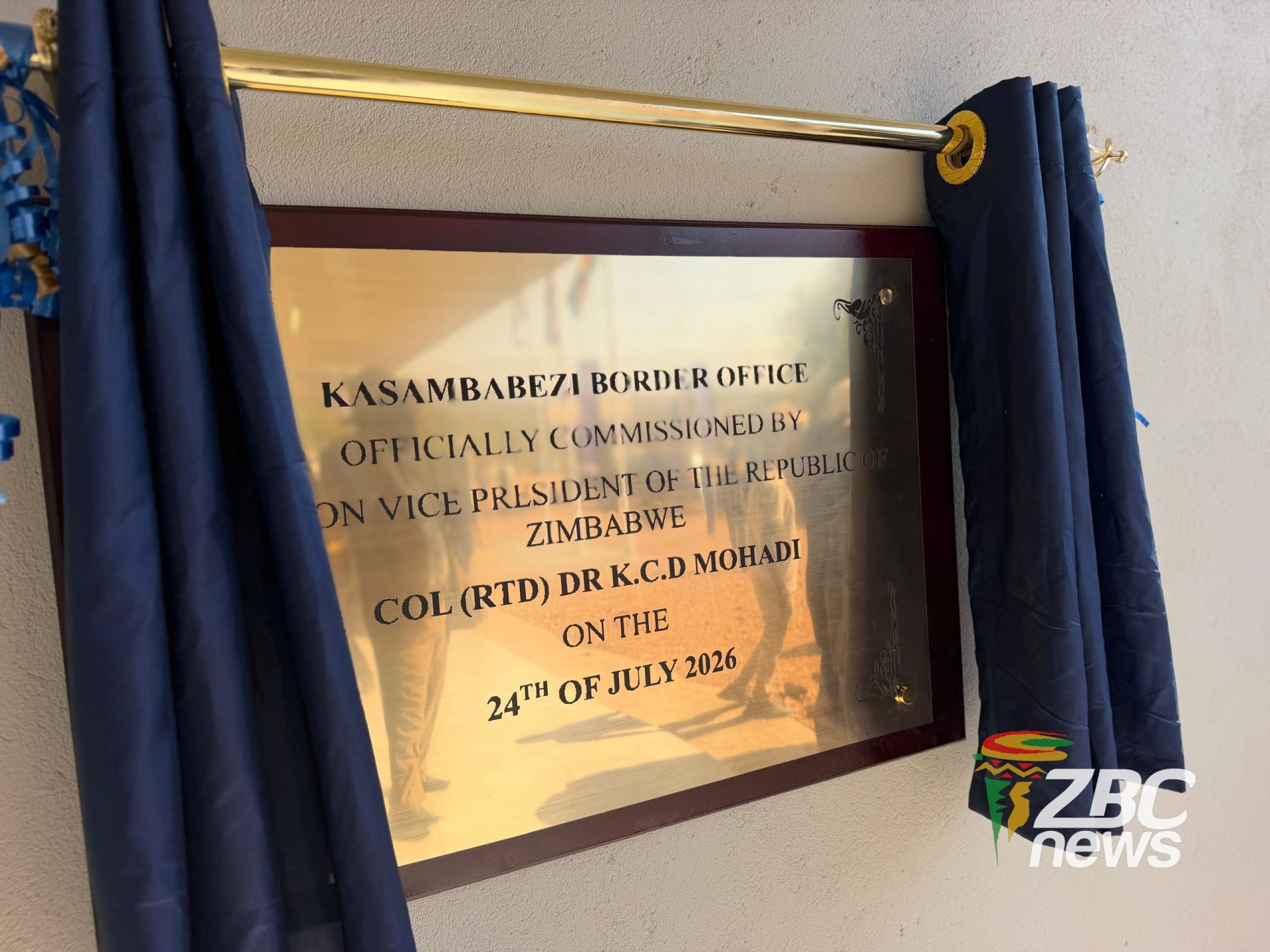
Vice President Colonel (Retired) Dr Kembo Mohadi officially opened the facility on Friday, with the border post expected to strengthen cross-border trade between Zimbabwe and Zambia, improve revenue collection and support regional integration under the African Continental Free Trade Area (AfCFTA).
For communities on both sides of the Zambezi River, the border post provides a long-awaited legal crossing point, allowing families with shared cultural and family ties to travel safely while conducting business.
“Before the border post opened, travelling was difficult. Now we pass through immigration, get our passports stamped and cross legally. Many of us have parents, children and relatives on the other side, so this has made life much easier while allowing us to follow the law,” a traveller said.
After completing immigration formalities, travellers cross the river by boat into neighbouring Zambia, but local leaders say permanent transport infrastructure remains a priority.
“This border has brought hope because families can now move freely and safely. The next important step is to establish a ferry service that can provide reliable transport across the river and support increased movement of people and goods,” said Chief Siansale.
Binga North legislator Honourable Muchimba Chineka echoed the call, saying, “This border post is opening opportunities for our communities and strengthening regional integration. Our next priority is a proper ferry service that can safely and efficiently transport more people and goods as traffic continues to grow.”
The project was delivered through a partnership between the government and strategic partner GP Garsu Pasaulis as part of efforts to improve infrastructure in remote communities.
Minister of Home Affairs and Cultural Heritage Honourable Kazembe Kazembe said the facility addresses longstanding challenges of illegal crossings and smuggling while improving service delivery.
“For decades, the absence of a formal border crossing in this district not only bled the national fiscus through smuggling but also exposed local people to danger as they crossed the mighty Zambezi River using unsafe routes,” he said.
Kazembe said construction began in October 2025 and was completed in May this year.
“The new border post will facilitate the legal movement of people, allowing them to maintain cultural ties and conduct business with dignity. As a ministry, we still have one more project to complete – the construction of the Registrar General’s office,” he added.
Vice President Mohadi said the facility is part of the government’s broader infrastructure programme under Vision 2030 and the National Development Strategy 2.
“Our border posts are not merely transit points; they are strategic national assets through which trade, investment, tourism and regional integration flow,” he said.
He said the project reflects government’s commitment to ensuring development reaches all parts of the country.
“For too long, Binga District sat on the margins of major infrastructure development. Under the Second Republic, development is no longer dictated by proximity to the capital but by national priority. Binga is rising,” he said.
The Vice President said the border post would stimulate economic activity, create business opportunities and strengthen Zimbabwe’s ties with Zambia.
“The impact of this border post extends beyond bricks and mortar. It will stimulate economic activity, support cross-border trade, create downstream opportunities for the Binga community and optimise revenue collection for the national treasury,” he said.
He also urged immigration and revenue officials stationed at the facility to uphold professionalism and integrity.
“Infrastructure alone does not develop a country; it is the integrity, professionalism and patriotism of the men and women in public service that make the real difference,” he said.
According to the Department of Immigration, the border post is already processing an average of 2,000 travellers daily, highlighting growing demand for formal cross-border transit in the region.

