



Story by Memory Chamisa
THE Government is actively coordinating the repatriation of its citizens in South Africa as anti-migrant tensions persist in the neighbouring country.
According to statistics from the Immigration Department, the majority of returnees are women and children who constitute 74 per cent and are vulnerable to protection risks.
It is against this background that this Monday, the Minister of Women Affairs, Community, Small and Medium Enterprises Development led a delegation on a High-Level Joint Sectoral Response Mission to Beitbridge Border Post to assess and coordinate Gender-Responsive Reintegration and Gender Based Violence Interventions for Zimbabwean Returnees.
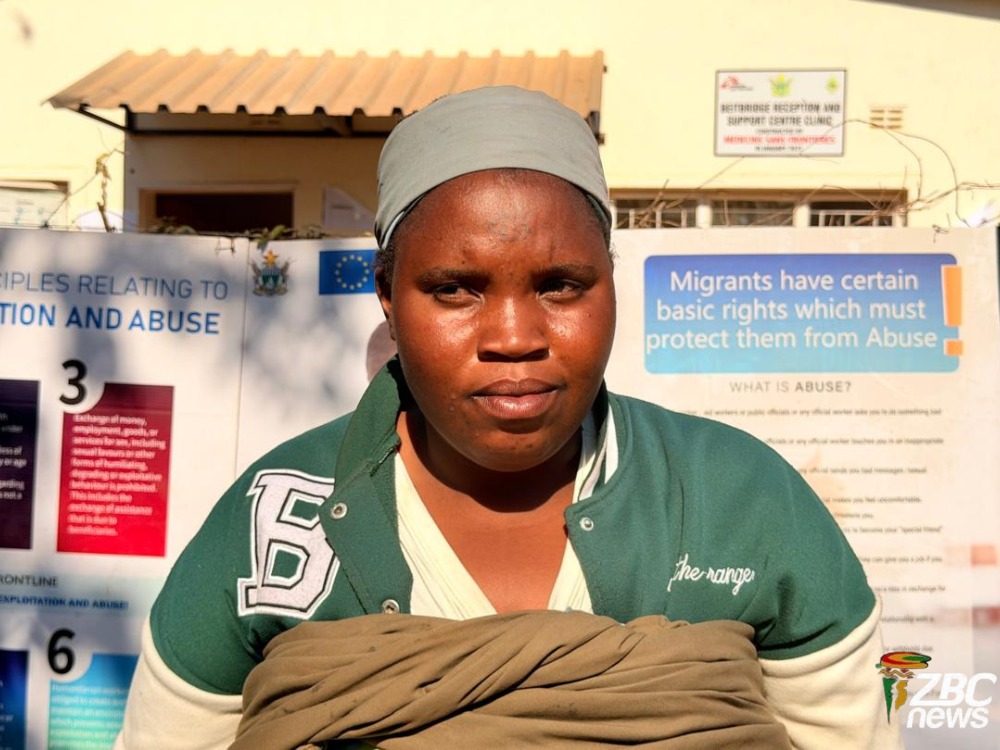
For Mrs Chipo Chabanga, the journey back to Zimbabwe was marked by uncertainty and loss after she fled South Africa with her children, leaving behind their belongings and her husband, who remained behind to recover what he could.
“I came with my kids, and we had nothing on us as we had to flee from South Africa, leaving everything behind. We left our furniture, clothes, and my husband is still there trying to salvage the few belongings that he can manage. The journey back home has been painful, but it’s better to be here alive than being burnt or killed in South Africa.
“I now have the task of stitching our lives to some normalcy and this place has been helpful since the day we arrived. I’m in transit to Chipinge; that’s where our parents have a homestead. Though they’re late, at least we have somewhere we can start afresh. For the children, the adjustment is going to be difficult, but I take solace in the Government’s support, and I know we are going to be okay,” she narrated.
Minister of Women Affairs, Community, Small and Medium Enterprises Development, Senator Monica Mutsvangwa said Government remains committed to ensuring that returning citizens receive the necessary support to rebuild their lives safely and with dignity.
“I am particularly concerned that these circumstances exacerbate the vulnerability of women and children to violence. The dangers do not cease upon crossing the border; they persist during transit and escalate when they reach home,” she said.
“The loss of livelihoods is a major underlying cause of tension and violence within families and communities, creating an environment where abuse, exploitation and harm can thrive. It is our duty to break this cycle and ensure that our returnees do not trade one form of danger for another.
“In response to this, the Government of Zimbabwe, working in lockstep with our dedicated partners, is fully committed to ensuring that every returning citizen receives the comprehensive assistance they need to reintegrate safely and with dignity. We will not abandon you in your time of need. Our focus is not merely on providing immediate relief, but on building a sustainable foundation for your future in Zimbabwe.”
For Development partners, Beitbridge Border Post represents far more than a mere entry point but stands as a vital place of hope and also a place of deep vulnerability for Zimbabwean citizens returning home.
UNFPA Country Representative Ms Miranda Tabifour said support programmes are focused on restoring dignity, strengthening protection systems and creating pathways for long-term reintegration.
“First, we are committed to the immediate restoration of dignity. The 800 Dignity Kits we hand over today are a tangible symbol of that commitment. For every woman and adolescent girl receiving one, these kits provide essential health and hygiene supplies as well as self-worth that serve as the first step toward restoring the sense of self-worth that is often stripped away during crises.
“Second, we are committed to safety and protection. We are strengthening referral pathways and support mechanisms for survivors of GBV. Third, we are committed to the long-term sustainability of reintegration,” she said.
Over 100 000 Zimbabweans have since returned home from South Africa as of May 2026.His Excellency President Dr Emmerson Mnangagwa authorised exemptions allowing returning families to import one personal motor vehicle and business equipment duty-free.
The Government, in partnership with UNFPA Zimbabwe as part of the broader sectoral joint response initiative, has prioritised the distribution of Dignity Kits.
These kits contain essential menstrual health and hygiene supplies, addressing a critical and often overlooked need.
The kit ensures that upon their arrival, women and girls can manage their health with privacy and dignity, reaffirming that their well-being matters.

