



Story by Bruce Chahwanda, Political Editor
POLITICAL independence without economic freedom remains unfinished business, President Emmerson Mnangagwa has said, urging Zimbabweans to take greater responsibility for national development while calling on ZANU PF to honestly assess its performance and address shortcomings as the country advances towards Vision 2030.
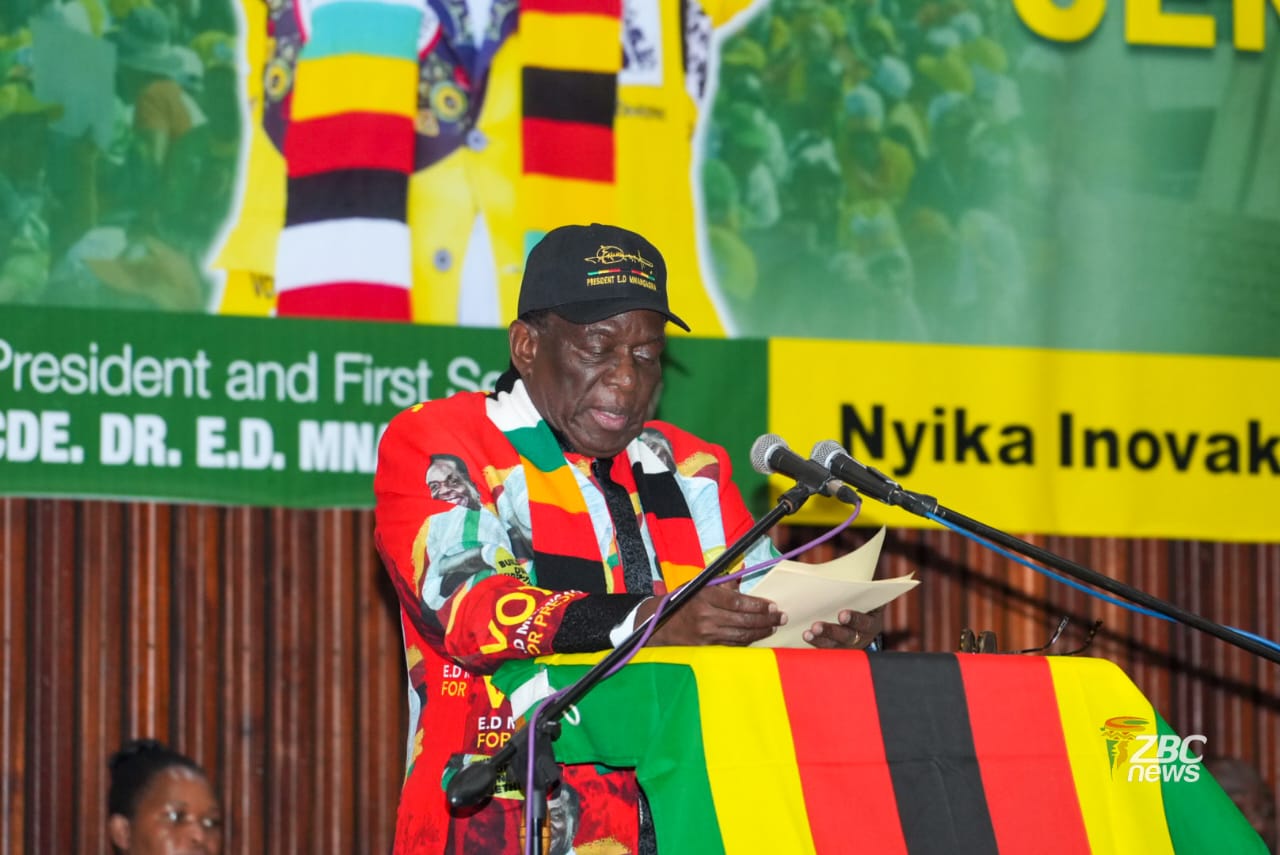
Addressing the party’s 131st Ordinary Session of the Central Committee, President Mnangagwa said the Second Republic’s empowerment and wealth creation agenda was anchored on ensuring that political liberation translated into lasting economic prosperity.
“Under the Second Republic; our empowerment and wealth creation programmes are premised on the principle that ‘political independence without economic independence is incomplete’.”
While acknowledging support from Zimbabwe’s international partners, the President stressed that the responsibility for national development ultimately rested with Zimbabweans.
“We are grateful to friends who partner us in various fields. However, the burden of development rests on our shoulders, this must be the truth known by every Zimbabwean, from the young to the old. ‘Nyika inovakwa, inotongwa inonamatirwa nevene vayo/Ilizwe lakhiwa, libuswe, likhulekelwe ngabanikazi balo.'”
He said the country’s journey towards attaining upper middle-income status by 2030 remained firmly on course.
“The ongoing journey towards Vision 2030 to become an Upper Middle-Income Society is irreversible.”
President Mnangagwa pointed to sustained growth across key sectors of the economy, saying local capacity and increased productivity were driving Zimbabwe’s transformation.
“We are building our roads using Zimbabwean companies, achieving food security and sovereignty through tilling our land, increasing production and productivity. Record-breaking growth in the agriculture, mining, manufacturing, energy, tourism and ICTs sectors, among others, is being witnessed. This is how we create employment and modernise our economy.”
The President also challenged party leaders to embrace accountability by recognising both achievements and shortcomings in implementing programmes.
“Where we have succeeded, let us celebrate and purposefully replicate for the collective good of our people. Where we have faced challenges, let us honestly introspect and make timely and appropriate interventions.”
He said the Central Committee’s deliberations carried significant national importance because decisions taken by the party shaped policy and development across the country.
“The decisions we make today and at every meeting reverberate across our party and every sector of the country. Deliberations must be approached with the gravity deserved.”
President Mnangagwa urged members to remain guided by the party constitution, saying its founding mission of empowering citizens and improving livelihoods should remain unchanged.
“Our vision is to remain a mass revolutionary Party committed to the empowerment and improving the quality of life for our people. This DNA should never be altered.”
President Mnangagwa said the revolutionary struggle demanded continuous commitment from every generation.
“The work of the revolution is never complete. It is a continuous process which demands each generation to play their respective role to guarantee that the flame of freedom and independence keeps on burning, forever.”
He said the Central Committee remained entrusted with advancing Zimbabwe’s national interests and protecting its sovereignty, peace and unity.
“We have the duty bestowed on us by history, the Party Constitution as well as our collective choices, to advance the national interest and people’s aspirations for socio-economic development and prosperity.”
The President also highlighted the impact of the party’s new empowerment models, saying programmes targeting women, youth and war veterans were expanding economic participation and financial inclusion.
He said the Women’s League was spearheading initiatives that had increased women’s self-reliance through agriculture, aquaculture, horticulture, mining, construction, manufacturing value chains, agro-processing and logistics, while financial inclusion initiatives for women, youth and war veterans continued to be scaled up.

