



Online Reporter
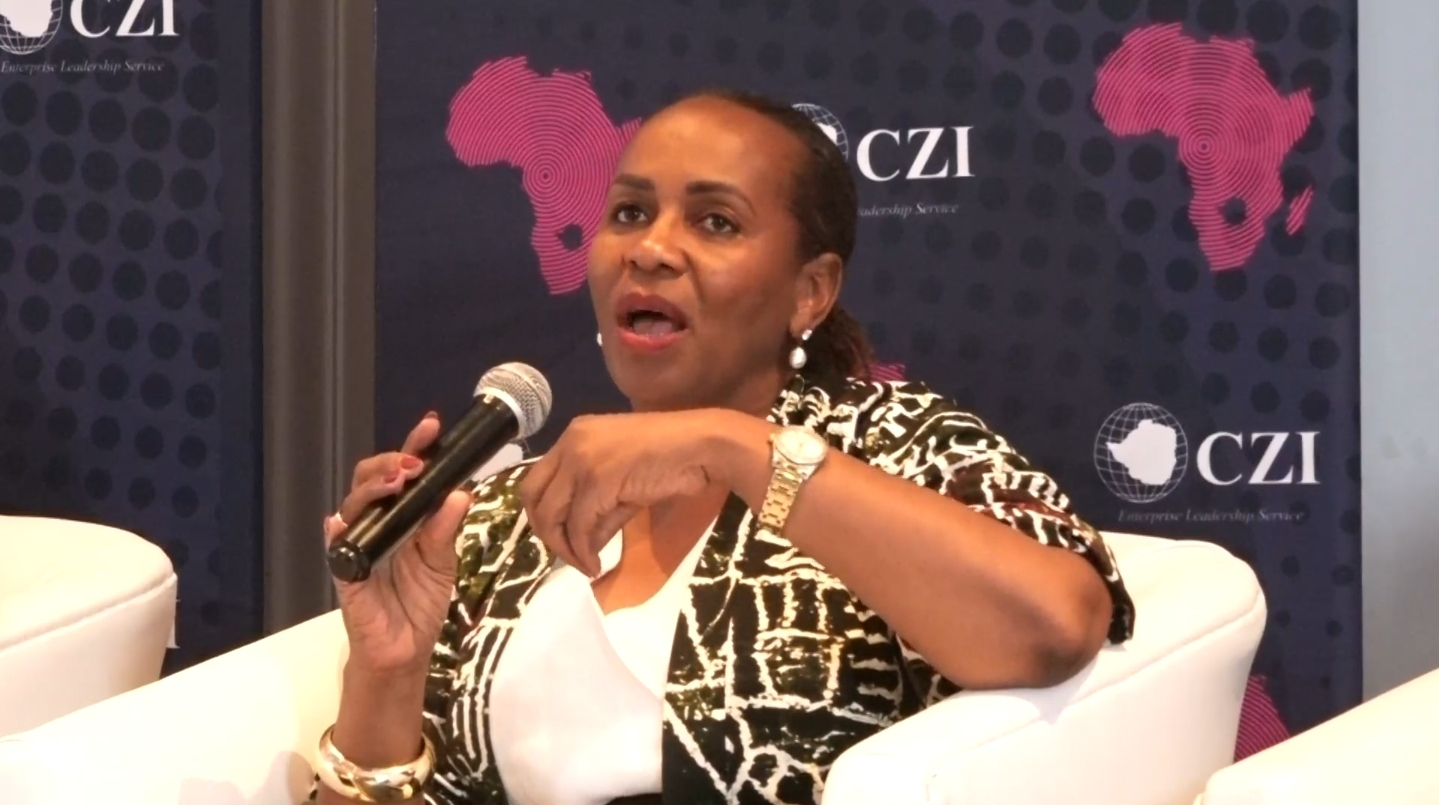
ZIMBABWE’S improving ease of doing business environment is creating new opportunities for manufacturers to expand and invest, but high financing costs continue to constrain growth, Grobbie BEST Foods Chief Executive Officer Mrs Nancy Guzha has said.
Speaking at the launch of the 2025 Confederation of Zimbabwe Industries (CZI) Manufacturing Sector Survey Report in Harare, Mrs Guzha said recent government measures aimed at reducing the cost of doing business are already delivering positive results for industry.
“We have had the scene set for us to perform,” she said. “For example, licences such as Agricultural Marketing Authority (AMA) and National Biotechnology, where last year we were paying US$1 000, we are now paying US$250.”
Mrs Guzha said the reduction in licensing fees, combined with growing investment and strong consumer demand, has created a favourable environment for manufacturing growth.
“We are seeing positivity. We are seeing good business-to-business support and consumer demand is there. All in all, I think it looks bright for us,” she said.
However, she identified access to affordable capital as the most pressing challenge facing local businesses.
“Funding is a critical one,” said Ms Guzha. “Anyone who has worked in a multinational business and then comes back into Zimbabwe and looks at interest rates of 18% plus, plus, plus and finally it is going to be 22%, your blood just kind of curdles because you know that the true cost of the US dollar has got to be sitting around 5 to 8%.”
She said lower-cost financing would unlock investment and stimulate broader industrial growth.
“If we can get funding to be affordable, then you will stimulate industry,” she said.
Drawing from her experience in multinational corporations including Unilever, where she oversaw operations in Zimbabwe, Zambia, Malawi and Mozambique, Mrs Guzha said Zimbabwe has consistently outperformed expectations despite economic headwinds.
“When you looked at revenue and profit, Zimbabwe was consistently 65 to 70%,” she said. “So I knew something was happening here which people did not understand.”
She said those observations convinced her to leave corporate employment and establish her own manufacturing business.
“I could see a real business opportunity. There is money here,” she said. “Within this value chain there are people who have got money to spend.”
Mrs Guzha said Grobbie BEST Foods, which is only 14 months old, has already secured contracts worth hundreds of thousands of dollars and is finalising additional deals.
“A business that is 14 months old should not be able to walk into a boardroom, do a presentation and walk out with a contract for US$1 million or US$600 000. But that is what we are doing,” she said.
She attributed part of that success to demand from businesses seeking reliable local suppliers capable of delivering quality products consistently.
The entrepreneur also highlighted agriculture as a critical enabler of industrial growth, particularly for agro-processing companies.
“We have got to get agriculture right,” she said. “My crop is maize, but I am not able to run my facility and deliver what I need to do to my market, especially business-to-business, if I have only local maize.”
Mrs Guzha said improving both the quality and quantity of agricultural output would benefit farmers and manufacturers alike.
“A kernel of maize is not a kernel of maize. It depends on what you have done to that kernel of maize. We need to get our farmers getting the right quality and the right quantity out,” she said.
She argued that greater value can be extracted from agricultural commodities through processing rather than focusing solely on primary production.
“I am not in the business of milling. I am in the business of grain transformation,” said Guzha. “If I can get grits, if I can get oil and other products, then now I am in business.”
She said manufacturers must continue innovating and maximising value addition opportunities if they are to remain competitive.
“When you look at what you are doing, do not just say this is what I am doing. Ask what else can I do to add value to what I am doing,” she said.
Mrs Guzha also commended support from government institutions and industry bodies, saying policies under the National Development Strategy 2 (NDS2) are helping position manufacturing for sustained growth.
“I think in NDS2 you can see that government is really behind manufacturing,” she said.
Looking ahead, she expressed confidence that continued investment, policy support and innovation will drive higher capacity utilisation and stronger industrial performance.
“I think we are going to continue seeing growth because we are seeing investment,” said Guzha. “There is so much positivity about the way forward.”

