



Story by Panashe Nagoli
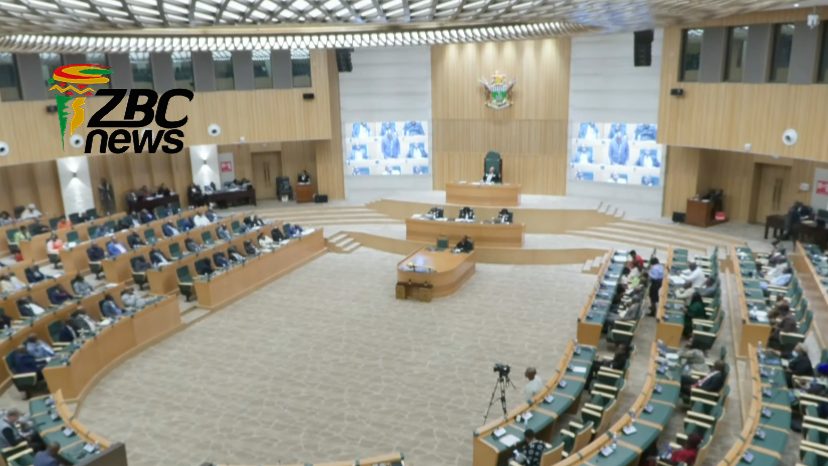
DEBATE on the Constitutional Amendment No. 3 Bill gathered momentum in Parliament on Wednesday, with legislators advancing economic, governance and electoral arguments in support of the proposed constitutional reforms.
A key theme that emerged during the debate was the economic impact of frequent elections, with lawmakers arguing that shorter electoral cycles can discourage investment and divert resources away from development priorities.
One legislator told the House that election periods often create uncertainty among potential investors.
“Every time I travel to do business, the first question I am asked is when the next election is and if it is near, you are likely to lose that deal, as investors generally are critical of elections. An extended electoral cycle will lead to more investors,” he said.
The debate also focused on governance and continuity in leadership, with some legislators arguing that longer electoral cycles would provide governments with sufficient time to implement long-term development programmes.
“Structural governance teaches us that success cannot be divorced from the head of the organisation. If we look at everything we are seeing from the construction boom, single-digit inflation and improvements in the healthcare system, this is all owing to the President, and as such, he should be given ample time to work,” another legislator said.
Support for proposed changes to electoral administration continued to dominate proceedings, with Members of Parliament from across the political divide backing reforms aimed at strengthening the management of elections.
Several legislators endorsed proposals to transfer responsibility for the voters’ roll to the Registrar-General’s Office, arguing that the move would improve efficiency and accuracy.
“The voters’ roll is full of dead people as we speak today, which greatly impacts the electoral process. This Bill is a response to this challenge and the management of the voters’ roll, if moved to the Registrar-General’s Office, will improve efficiency,” a legislator said.
The proposal for Parliament to elect the President also attracted support from some lawmakers, who argued that legislators already carry significant constitutional responsibilities.
“As parliamentarians, we already have a role to play in crafting national laws. If we do that every day, why should we not elect the President? We already have the power to remove a President; it only makes sense that we elect one,” another member said.
Others highlighted the financial burden associated with conducting regular elections.
“Elections cost money and come with problems. If we extend the electoral cycle, it makes constitutional and fiscal sense, allows more time for development and, if the presidential election is conducted in Parliament, electoral violence will be eliminated,” another legislator argued.
While broad support emerged for several provisions of the Bill, Parliament maintained its bipartisan position on the Zimbabwe Gender Commission, with legislators once again opposing proposals to transfer its functions to the Zimbabwe Human Rights Commission.
Members from across the House argued that the commission has played a critical role in advancing gender equality and expanding opportunities for women.
“This commission must actually be given more resources rather than be disbanded because, through its work, we are seeing more women in positions of national leadership,” one legislator said.
Another added: “The Zimbabwe Gender Commission has done a lot of important work over the years and it must be allowed to continue.”
A female parliamentarian also defended the commission’s role in promoting women’s empowerment.
“As a female leader, because of the efforts of the commission to pursue gender equality across all sectors, if we disband it, who will stand for the girl child?” she asked.
Once debate concludes, the Bill will move to the Committee Stage, where lawmakers will consider it clause by clause before the Minister of Justice, Legal and Parliamentary Affairs, Honourable Ziyambi Ziyambi, responds to submissions ahead of a vote on the proposed legislation.

