



Story by Yolanda Moyo
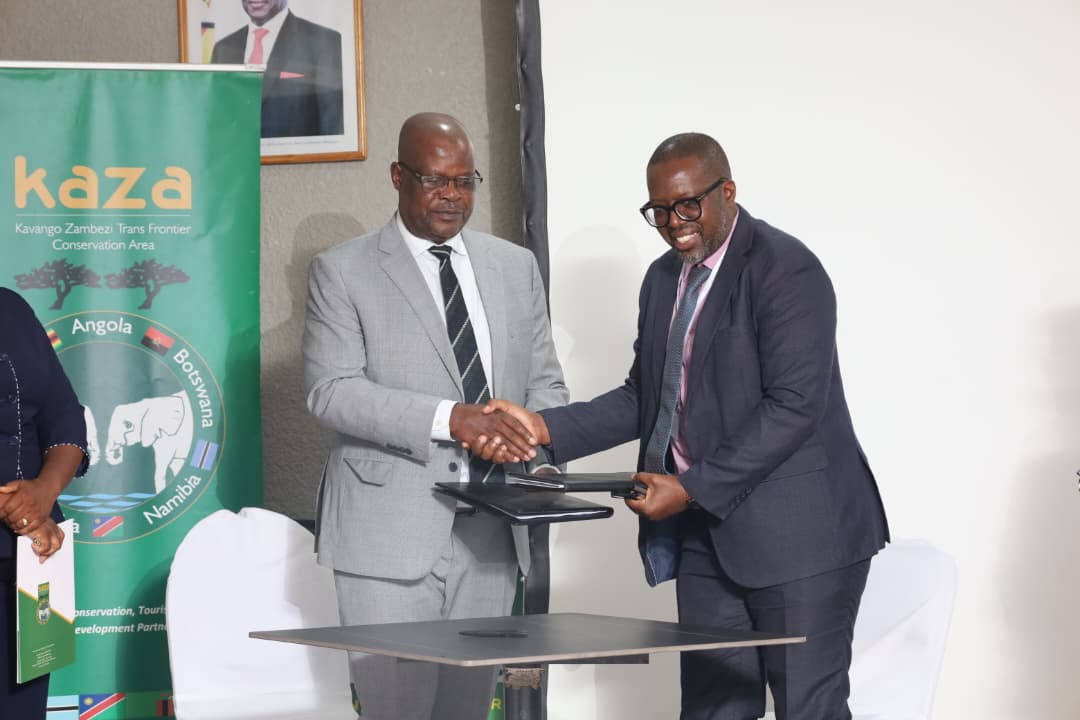
A new €6 million funding agreement for the Kavango-Zambezi Transfrontier Conservation Area (KAZA TFCA) has been signed, reaffirming regional commitment to one of Africa’s largest conservation landscapes spanning five Southern African countries.
The signing of the Phase Four appraisal mission marks the continuation of a regional partnership involving Zimbabwe, Zambia, Botswana, Namibia and Angola under the KAZA TFCA programme.
The latest funding phase seeks to consolidate gains achieved in previous programmes while strengthening institutional systems, addressing human-wildlife conflict and enhancing long-term sustainability initiatives across the conservation landscape.
KAZA TFCA Executive Director, Dr Nyambe Nyambe said the new phase follows years of consultations among member states and will focus on strengthening cross-border conservation structures and operational capacity.
“The signing of the Phase Four appraisal mission confirms the priorities and scope of the programme going forward. This phase is largely a consolidation stage where we are focusing on cross-sector interventions, institutional development mechanisms and strengthening national committees and TFCA units within member states,” he said.
Zimbabwe is expected to channel its allocation towards improving wildlife protection infrastructure and reducing tensions between communities and wildlife in affected areas.
Out of the €6 million regional funding envelope, Zimbabwe is set to receive close to €700 000.
ZimParks Director General, Professor Edson Gandiwa said the funds will support critical conservation and law enforcement interventions.
“Previous KfW allocations financed major infrastructure projects, including the near-complete Hwange One Stop Pavilion and rehabilitation works such as the Maitengwe Dam repairs. Zimbabwe is expected to receive just under €700 000, which will be directed towards wildlife conservation, ranger accommodation, vehicles for law enforcement, human-wildlife conflict management, as well as research and monitoring,” he said.
Professor Gandiwa added that the funding will help ensure resources are directed towards priority conservation areas while strengthening the country’s capacity to protect wildlife and support communities living near protected areas.
The KAZA TFCA is regarded as the world’s largest terrestrial transfrontier conservation landscape, allowing wildlife to move freely across borders while promoting sustainable development opportunities for communities within the region.

