



Story by Abigirl Tembo, Health Editor
THE Government has launched Phase Two of its nationwide health infrastructure expansion programme, backed by a US$12.5 million Treasury allocation aimed at strengthening primary healthcare services in rural and underserved communities.
The second phase covers four health centres, Manhize in Chivhu, Rudhanda in Zaka, Paradza in Chivi South and Lady Stanley in Bulilima District, as authorities intensify efforts to decentralise quality healthcare services.
In Bulilima, the proposed Lady Stanley Health Centre is expected to ease pressure on existing facilities and reduce travel distances for surrounding communities.
Residents welcomed the development, saying it signals inclusive national growth.
“This development shows that our area has not been forgotten. A modern facility here will benefit many wards and even people from neighbouring districts.
“We are excited as young people because this will improve healthcare in our community. It gives us confidence that rural areas are also being prioritised.
“We are very happy that a modern health facility is going to be built here. It means we will no longer struggle to travel long distances for proper treatment,” villagers said.
The local legislator, Honourable Dingumuzi Phuti, described the project as a critical intervention for the district.
“The coming in of a new health facility is going to go a long way in assisting almost six wards around this place, as well as wards across the river in Matabeleland North, which is the neighbouring district, of Tsholotsho so this new institution to be built here is indeed a welcome development and will benefit a lot of people,” he said.
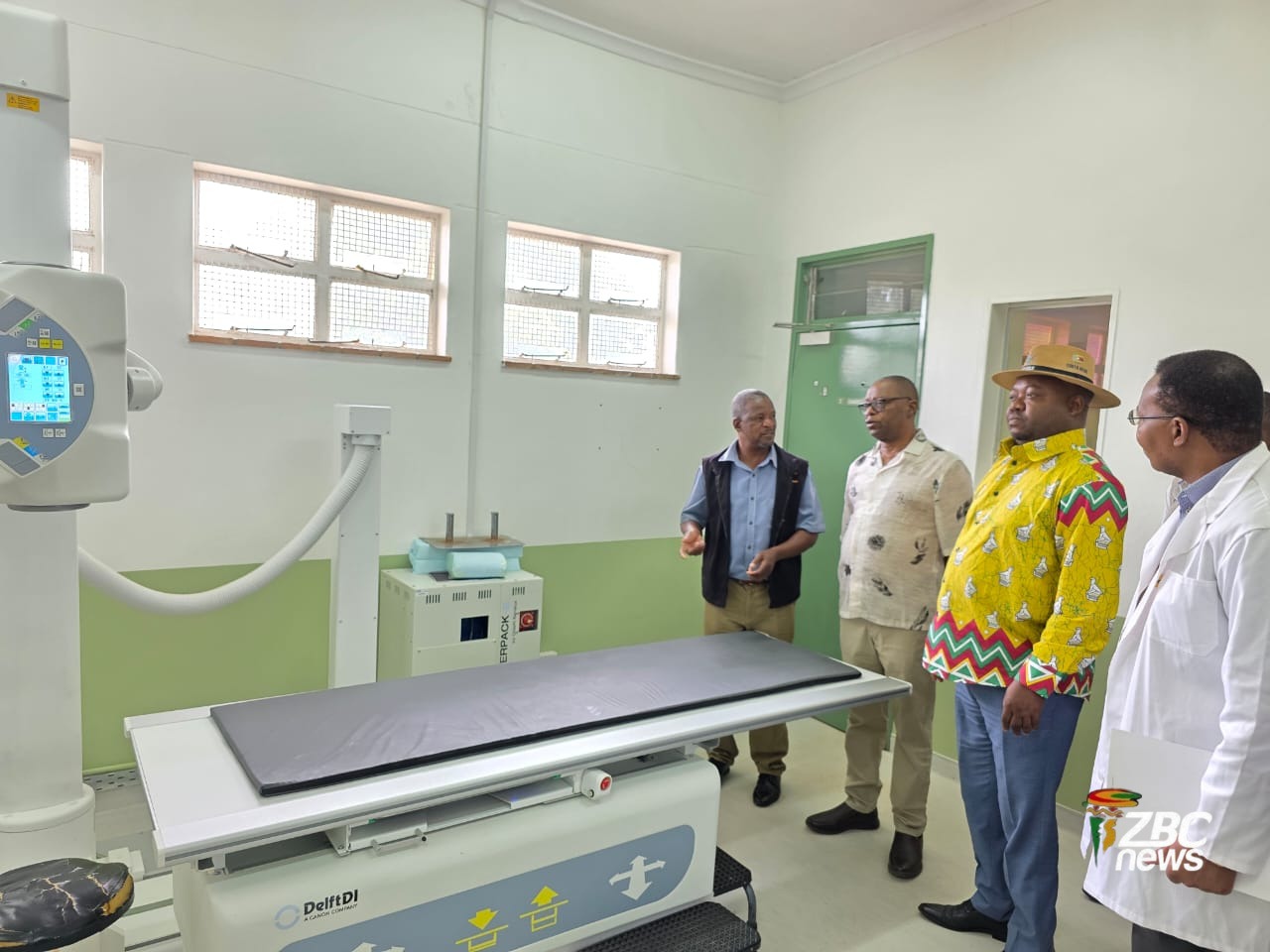
Minister of Health and Child Care, Douglas Mombeshora, confirmed that groundwork is underway for a 20-bed mini-hospital under the NMS project, with full construction expected to commence once water infrastructure is finalised.
“Here, the most important thing where we are now, just behind me, is a site where we are going to construct a 20-bed mini hospital through the NMS project. We have already paid in full for the construction of that hospital. The delays were due to problems with water availability. They did not manage to get a site for sinking a borehole within this institution. So they have finally managed to get a site for a borehole. About two kilometres from here, near a river which is down there. I had a meeting with the NMS on Monday, where I said they should pump the water from two kilometres to here. And I think work is already in progress to make sure the water will be here.
They have put the piping up to this site. What is left is now to put the tanks and then construction can start. That will actually help the Lady Stanley Rural Hospital to increase its service to the population because they will now have water. I understand the Rural District Council also has a borehole which has been sunk So we are now looking at doing the treatment for that water so that it can be suitable for human consumption and we are also looking at other issues here to make sure that the mortuary will be functioning the drug supplies improve we were surprised that there were no medicines for diabetics and but they are there in stock so it’s just an administrative issue and we’ve asked the DMO and PMD to assist so that all those things are available so i think in short we are pleased with the progress that is happening now and we hope that 20 bed hospital will be operational before the end of this year,” said Minister Mombeshora.
Construction at Manhize is at an advanced stage, while sites at Rudhanda and Paradza have been confirmed, with water infrastructure works underway ahead of full-scale building.
Phase Two follows the completion of Phase One, which saw over US$11 million invested in facilities including Stoneridge in Harare and Cowdray Park in Bulawayo, Mataga in Mberengwa and Runyararo in Manicaland Province, expanding access to primary healthcare.
Authorities say the expansion programme is designed to build resilient and modern health infrastructure, ensuring that development reaches communities beyond urban centres.